A Chemoenzymatic Method To Systematically Quantify Core Fucosylation Stoichiometry of Glycoproteins and Reveal Its Roles in EMT and Embryonic Development
Senhan Xu, Xing Xu, Kejun Yin, Ronghu Wu

TL;DR
This paper introduces a new method to measure core fucosylation levels in glycoproteins and shows how these levels vary in different cell compartments and during development and cancer.
Contribution
A chemoenzymatic method to systematically quantify core fucosylation stoichiometry in glycoproteins.
Findings
Core fucosylation levels vary significantly across subcellular compartments, with the lowest in lysosomes and highest in the extracellular matrix.
Glycosylation sites with more aromatic and hydrophobic residues show lower core fucosylation stoichiometry.
Core fucosylation changes during EMT and is higher in embryonic kidney cells compared to kidney cancer cells.
Abstract
Core fucosylation of N-glycoproteins plays pivotal roles in regulating many cellular events such as receptor–ligand binding and cell adhesion. Here, we developed a chemoenzymatic method combining selective enrichment, enzymatic reactions, and multiplexed proteomics to systematically quantify the core fucosylation stoichiometries of glycoproteins in human cells. The results demonstrated that the core fucosylation stoichiometries vary dramatically in different subcellular compartments with the lowest in the lysosome and the highest in the extracellular matrix. Different core fucosylation stoichiometries were observed among glycosylation sites in various protein domains, and more aromatic and hydrophobic residues neighboring glycosylation sites are associated with lower core fucosylation stoichiometry. The method was applied to quantify the core fucosylation stoichiometry changes in the…
Genes, proteins, chemicals, diseases, species, mutations and cell lines named across the full text — each resolved to its canonical identifier and authoritative record.
Click any figure to enlarge with its caption.
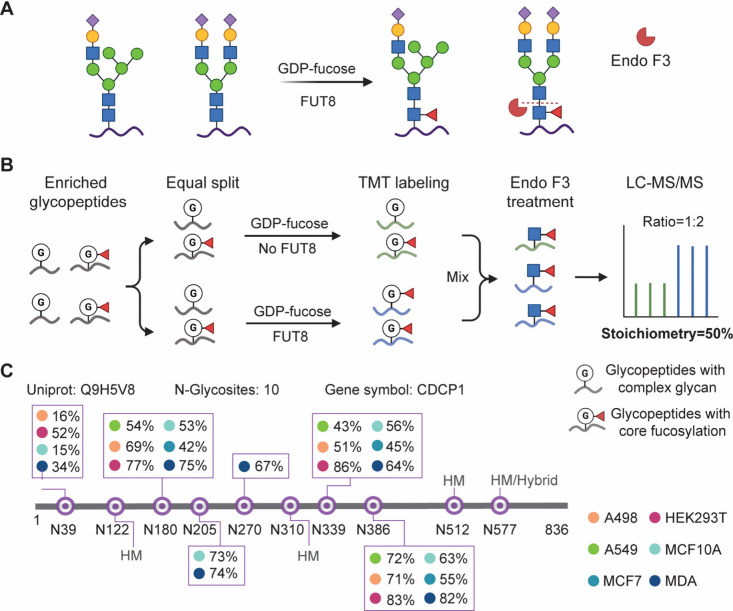 Figure 1
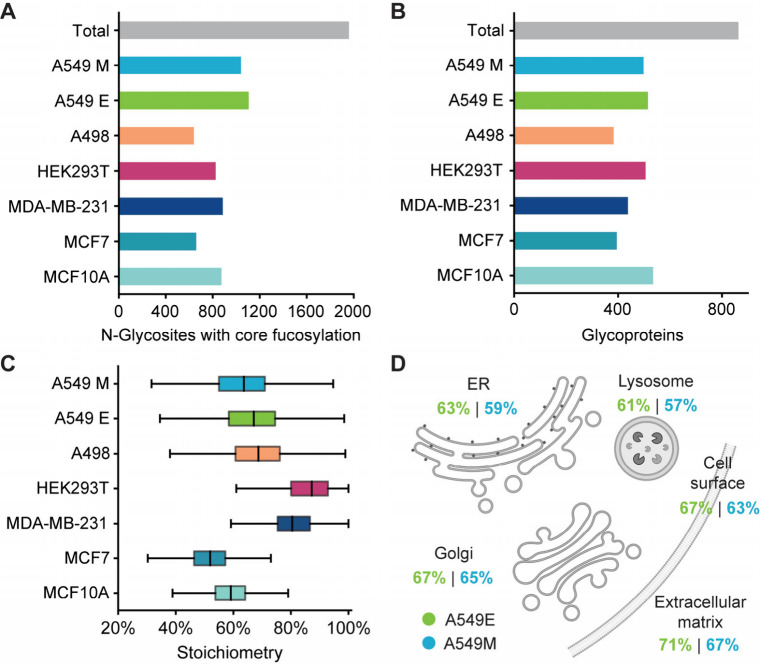 Figure 2
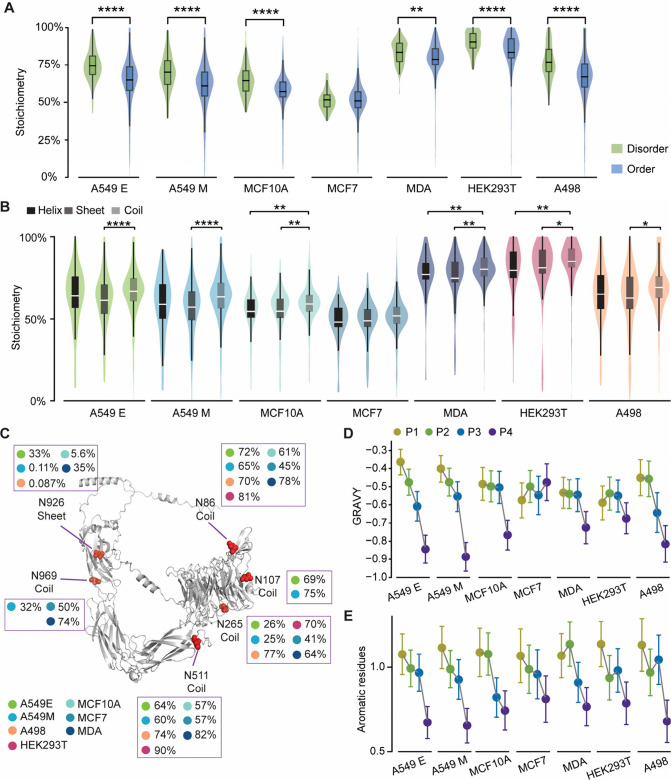 Figure 3
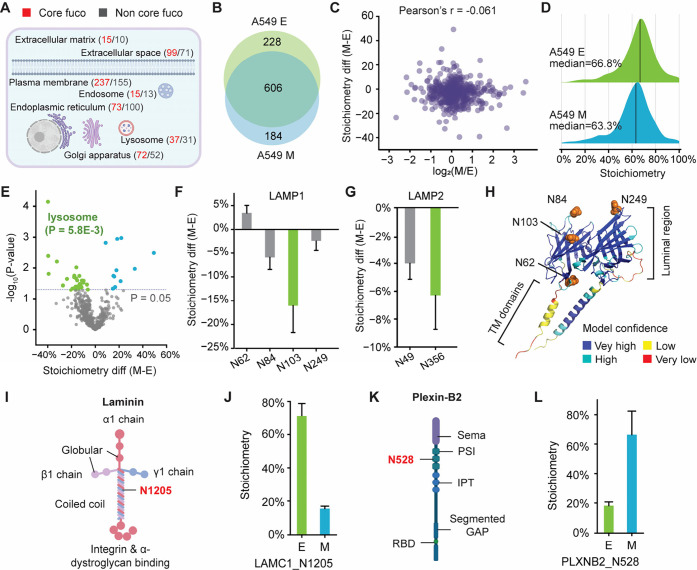 Figure 4
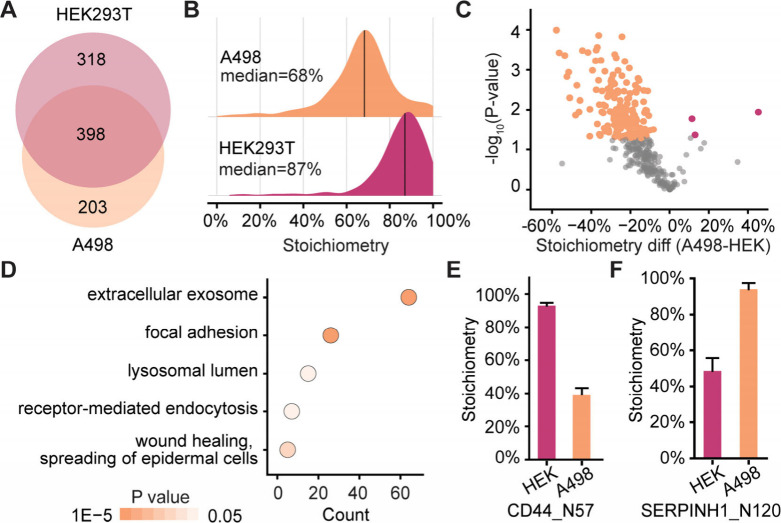 Figure 5
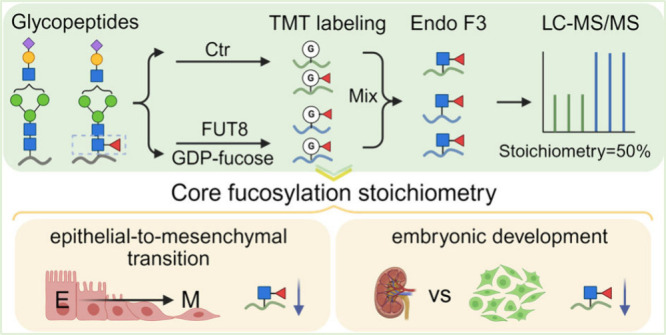 Figure 6
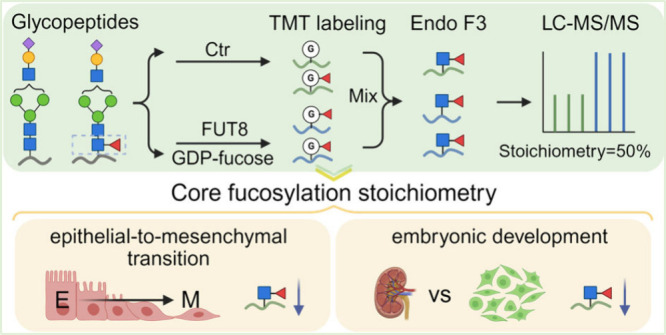 Figure 7
Peer Reviews
No public reviews on file for this paper yet. If you reviewed it on a platform where reviews are public (OpenReview, ICLR, NeurIPS, ICML), you can paste yours below so the community can read it here.
Videos
No videos yet. Explain this paper in a talk, walkthrough, or lecture? Add one.
Taxonomy
TopicsGlycosylation and Glycoproteins Research · Infant Nutrition and Health · Galectins and Cancer Biology