Distribution and function of prokaryotes involved in mercury methylation, demethylation, and reduction in the western North Pacific Subtropical Gyre
Yuya Tada, Ryota Nakajima, Minoru Kitamura, Kohji Marumoto

TL;DR
This study explores how prokaryotes in the western North Pacific Subtropical Gyre contribute to mercury methylation, demethylation, and reduction, revealing key microbial players and their environmental roles.
Contribution
The study is the first to simultaneously analyze mercury-related genes in open-ocean samples, linking microbial activity to mercury cycling.
Findings
Methylmercury concentrations increased with depth, correlating with microbial respiration in mesopelagic layers.
Nitrospina lineage was identified as dominant mercury methylators, linked to nitrogen cycling pathways.
Diverse lineages with merB and merA genes suggest co-occurring demethylation and reduction processes.
Abstract
Methylmercury (MeHg), a bioaccumulative neurotoxic heavy metal, substantially threatens environmental and human health. In natural environments, MeHg formation and degradation are primarily mediated by microorganisms containing hgcAB, merA, or merB genes. However, these genes have not been simultaneously analyzed in open-ocean samples. This study aimed to investigate the distribution and phylogeny of functional genes associated with mercury (Hg) methylation (hgcA and hgcB), demethylation (merB), and reduction (merA), as well as dissolved total Hg (THg) and MeHg concentrations in the western North Pacific Subtropical Gyre (WNPSG) using metagenomic analysis. Although THg levels varied across sampling sites, MeHg concentrations consistently increased with depth. A strong correlation between dissolved MeHg and apparent oxygen utilization indicated a link between Hg methylation and microbial…
Genes, proteins, chemicals, diseases, species, mutations and cell lines named across the full text — each resolved to its canonical identifier and authoritative record.
Click any figure to enlarge with its caption.
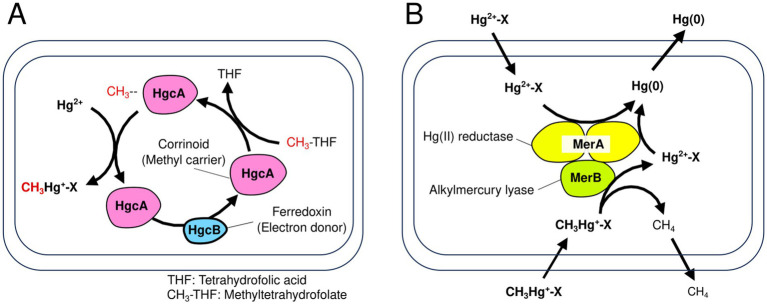 Figure 1
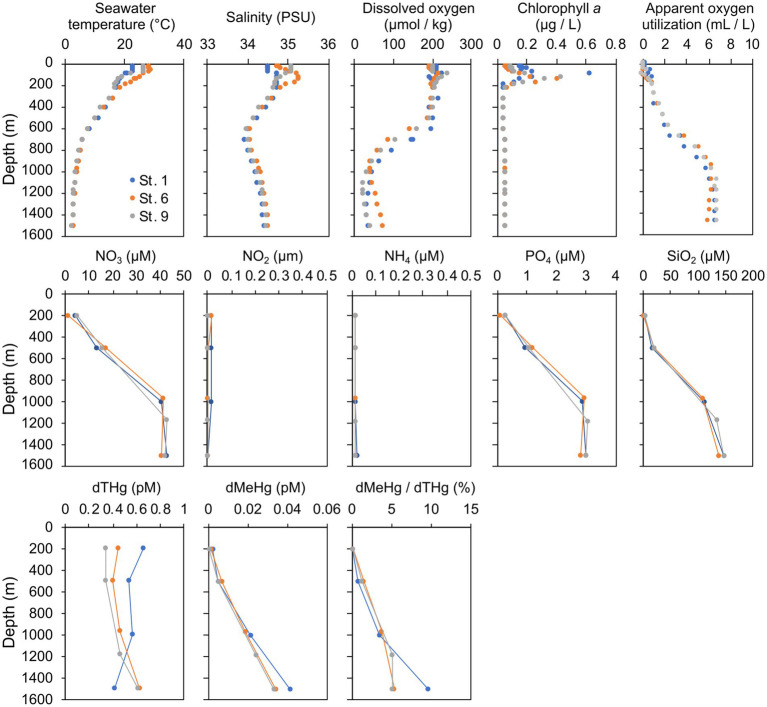 Figure 2
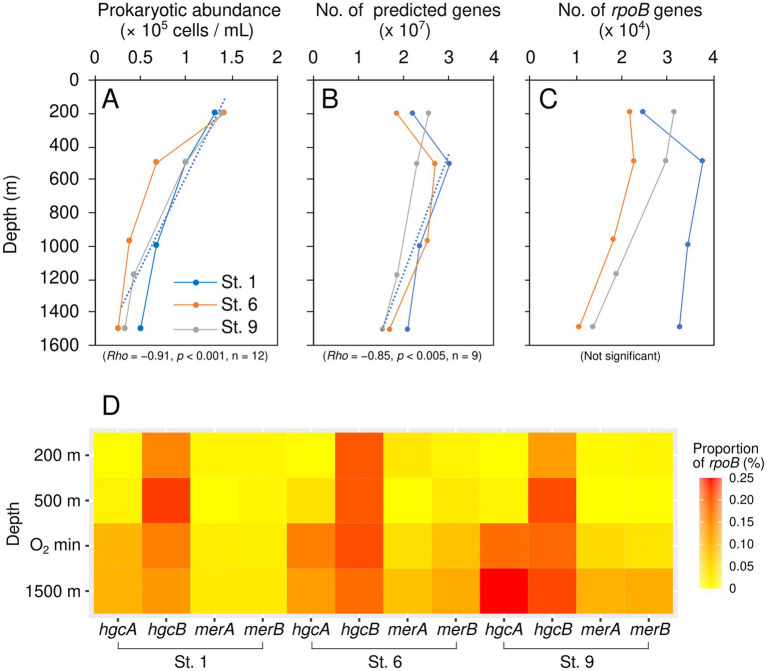 Figure 3
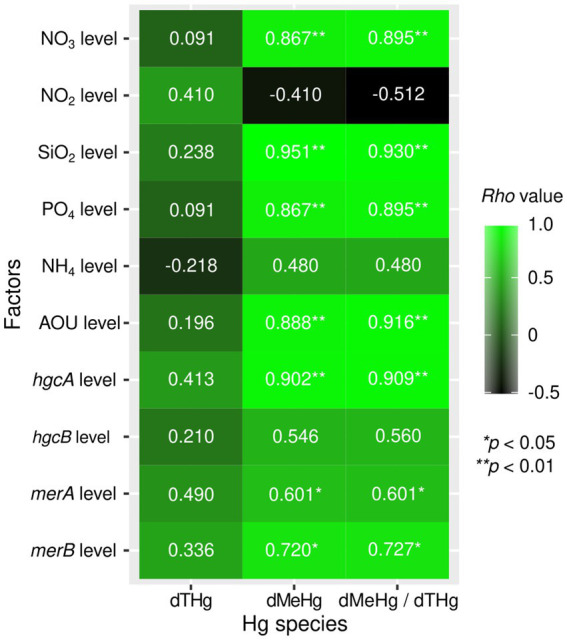 Figure 4
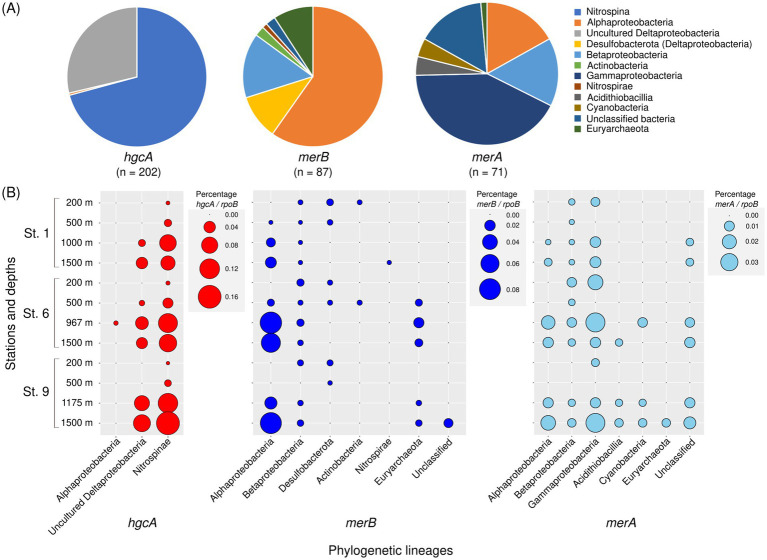 Figure 5
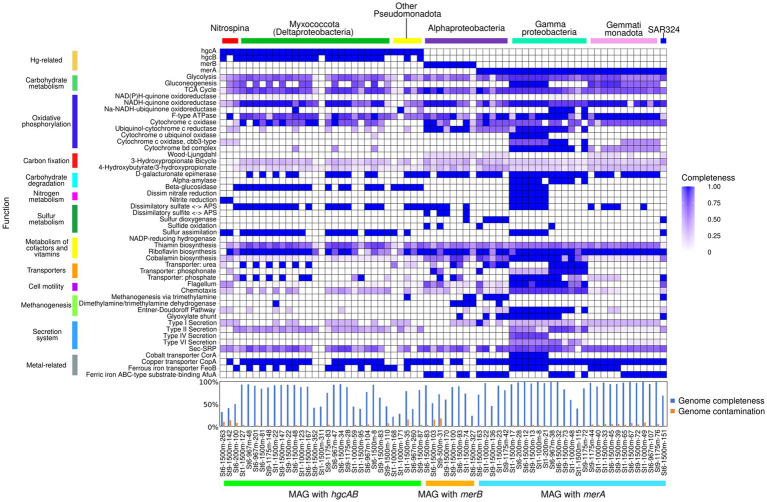 Figure 6
Peer Reviews
No public reviews on file for this paper yet. If you reviewed it on a platform where reviews are public (OpenReview, ICLR, NeurIPS, ICML), you can paste yours below so the community can read it here.
Videos
No videos yet. Explain this paper in a talk, walkthrough, or lecture? Add one.
Taxonomy
TopicsMercury impact and mitigation studies · Per- and polyfluoroalkyl substances research · Marine and coastal ecosystems