Burn Selection: How Fire Injury Shaped Human Evolution
Joshua Cuddihy, Yuemin Li, Isobel Fisher, Zoltan Takats, Dominic Friston, Declan Collins, Marcela Vizcaychipi, Matteo Fumagalli, Istvan Nagy, Armand Leroi

TL;DR
Humans and their ancestors faced unique risks of burn injuries from fire use, which may have driven genetic adaptations in wound healing and inflammation.
Contribution
The Burn Selection Hypothesis introduces burn injury as a novel evolutionary pressure specific to humans.
Findings
Genes related to burn injury response show signs of accelerated evolution in humans.
Burns are proposed as a selective force shaping human adaptations and maladaptive responses to injury.
The hypothesis reframes fire mastery as both a benefit and a cost in human evolution.
Abstract
The mastery of fire transformed human evolution through advantages spanning diet, behavior, physiology, and ecology. While these benefits are well established, here we highlight a previously overlooked cost — and selective pressure — unique to humans: high‐temperature burn injury. Unlike other species, humans and their hominin ancestors have faced increased lifetime risk of burns, which we argue has driven genetic adaptation. Drawing on comparative genomic evidence across primates, we suggest that genes associated with burn injury response — relating to wound healing and inflammation — show signs of accelerated evolution in humans. We propose that recurrent exposure to burns acted as a selective force in our lineage, helping to explain both beneficial adaptations and paradoxical maladaptive responses to severe injury. By framing burns as an evolutionary pressure, the Burn Selection…
Genes, proteins, chemicals, diseases, species, mutations and cell lines named across the full text — each resolved to its canonical identifier and authoritative record.
Click any figure to enlarge with its caption.
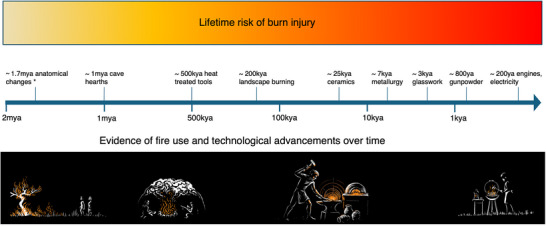 Figure 1
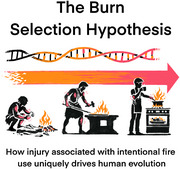 Figure 2
 Figure 3
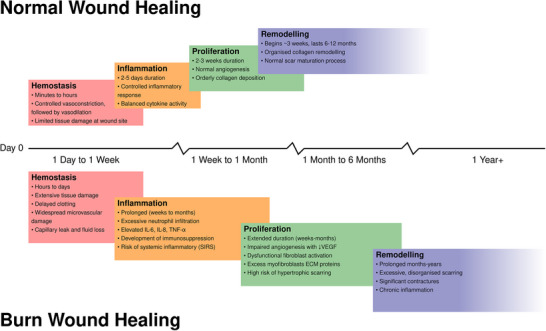 Figure 4
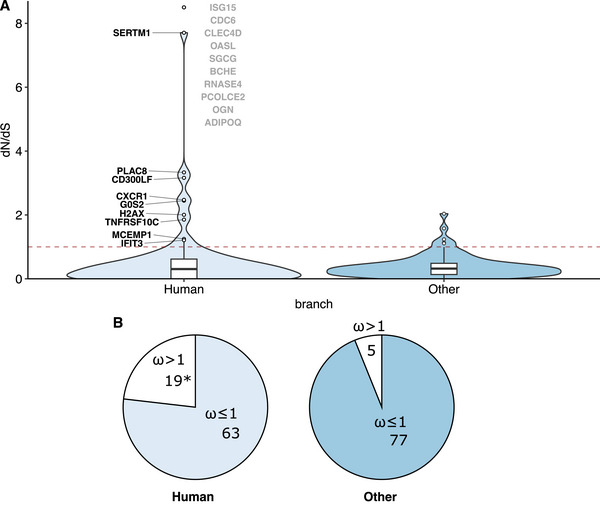 Figure 5
Peer Reviews
No public reviews on file for this paper yet. If you reviewed it on a platform where reviews are public (OpenReview, ICLR, NeurIPS, ICML), you can paste yours below so the community can read it here.
Videos
No videos yet. Explain this paper in a talk, walkthrough, or lecture? Add one.
Taxonomy
TopicsBurn Injury Management and Outcomes · Wound Healing and Treatments · Injury Epidemiology and Prevention