The utility of the Attitudes Toward Mathematics Inventory—Short Form for Children for assessing attitudes toward mathematics in primary school children
Laura Di Leonardo, Maria Anna Donati, Kimmo Vehkalahti, Caterina Primi

TL;DR
This study evaluates a short form of a math attitude inventory for primary school children, confirming its reliability and exploring its relationship with math anxiety and competence.
Contribution
The study confirms the ATMI-SF's validity for assessing math attitudes in children and explores gender differences and relationships with math anxiety.
Findings
The four-factor structure of the ATMI-SF was confirmed with good internal consistency and gender invariance.
Gender differences and trends in math attitudes were identified.
Math attitudes were found to have reciprocal relationships with math anxiety and competence.
Abstract
According to the Expectancy-Value Theory, attitudes toward mathematics consist of a combination of expectancy of success and task values, including intrinsic, utility, and attainment value, along with associated costs. To analyze this construct in children, understand its relationship with other constructs, and design targeted interventions, appropriate measurement is essential. This study examined the suitability of the Attitudes Toward Mathematics Inventory—Short Form (ATMI-SF), a brief measure that allows for the assessment of the key components of attitudes as defined by the Expectancy-Value Theory, in primary school children. The sample consisted of 798 Italian children (50.5% female; Mage = 9.01, SD = 0.91). The four-factor structure was confirmed, with evidence of gender invariance and good internal consistency. Gender differences and trends in attitudes were explored. The…
Genes, proteins, chemicals, diseases, species, mutations and cell lines named across the full text — each resolved to its canonical identifier and authoritative record.
Click any figure to enlarge with its caption.
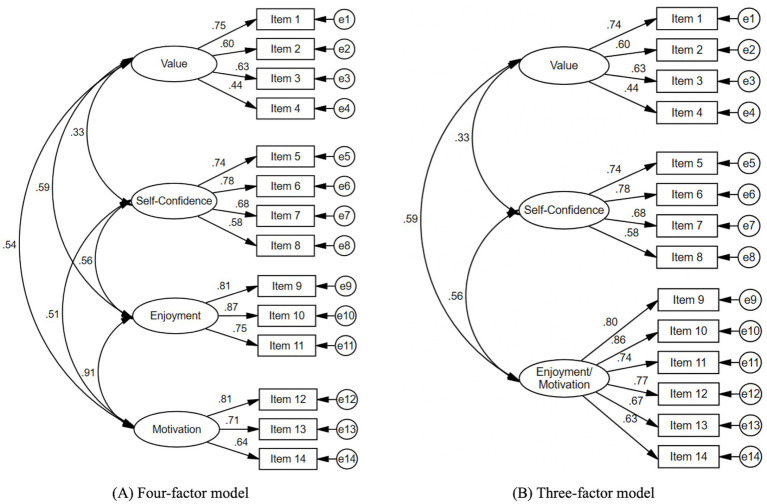 Figure 1
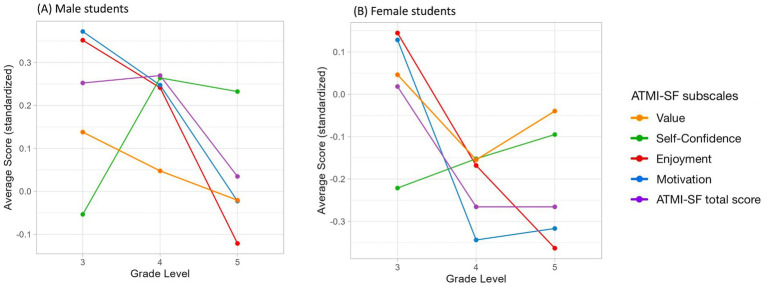 Figure 2
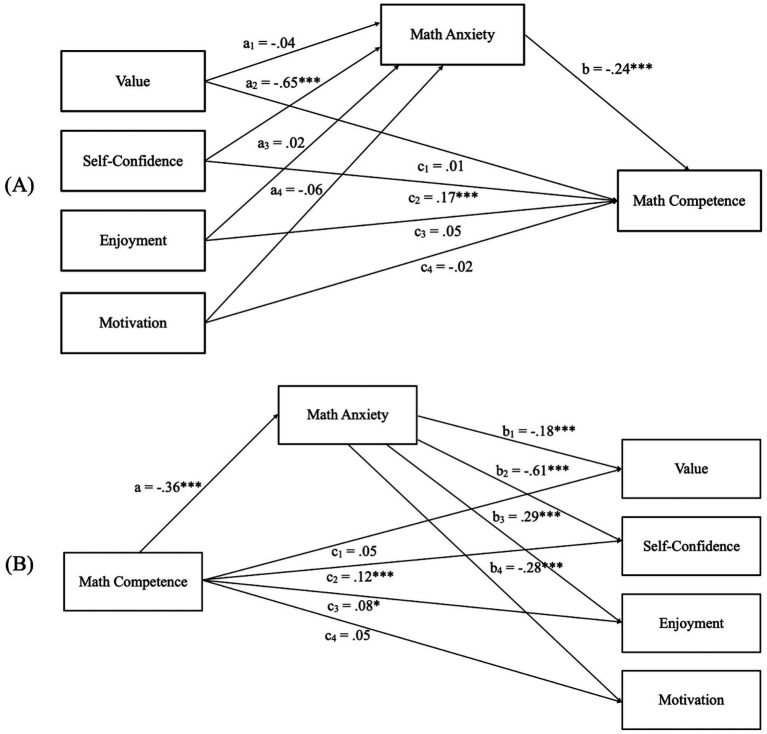 Figure 3
Peer Reviews
No public reviews on file for this paper yet. If you reviewed it on a platform where reviews are public (OpenReview, ICLR, NeurIPS, ICML), you can paste yours below so the community can read it here.
Videos
No videos yet. Explain this paper in a talk, walkthrough, or lecture? Add one.
Taxonomy
TopicsEducation, Achievement, and Giftedness · Psychometric Methodologies and Testing · Educational Strategies and Epistemologies