Relationship between lacrimal gland changes and corneal parameters in patients with primary Sjögren’s syndrome and non-Sjögren’s syndrome-related dry eye
Wenyan Zhou, Chang Liu, Bo Yang, Jingyi Li, Haozhe Yu, Zhongqiang Yao, Xiaojun He, Shumin Wang, Yun Feng

TL;DR
This study explores how changes in the lacrimal gland relate to corneal issues in patients with Sjögren’s syndrome-related dry eye compared to non-Sjögren’s dry eye.
Contribution
The study introduces a novel multimodal imaging approach to map structural-functional relationships in Sjögren’s syndrome-related dry eye.
Findings
SSDE patients showed increased nerve tortuosity, dendritic cell density, and parenchymal echogenicity compared to NSSDE.
Lacrimal gland area was an independent risk factor for corneal nerve depletion in dry eye patients.
Dendritic cell density and activation strongly predicted SSDE with high AUC values.
Abstract
Primary Sjögren’s syndrome(pSS) is characterized as an autoimmune disorder mostly involving exocrine glands and pSS related dry eye (SSDE) contributes to a severe subtype of dry eye disease (DED). Emerging imaging tools for ocular surface evaluation such as lacrimal gland ultrasonography (LGUS) and in vivo confocal microscopy (IVCM) remain underutilized in diagnosing the SSDE. This study aims to investigate LGUS-IVCM correlations to map structural-functional relationships in SSDE patients. This prospective cross-sectional study enrolled 27 SSDE patients and 12 non-pSS related dry eye (NSSDE) controls, utilizing IVCM and LGUS to assess corneal nerve morphology, immune cell activity, and glandular structural parameters. SSDE patients exhibited greater nerve tortuosity (p = 0.003), dendritic cell density (p < 0.001), and parenchymal echogenicity alterations (p = 0.013) versus NSSDE. For…
Genes, proteins, chemicals, diseases, species, mutations and cell lines named across the full text — each resolved to its canonical identifier and authoritative record.
Click any figure to enlarge with its caption.
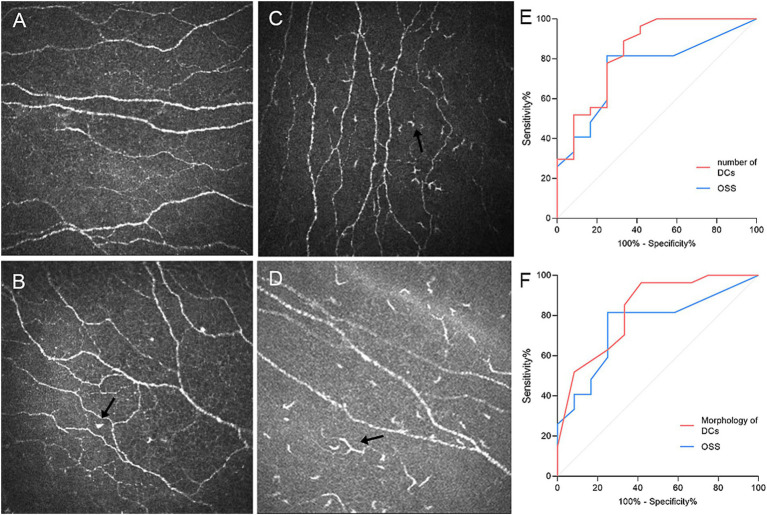 Figure 1
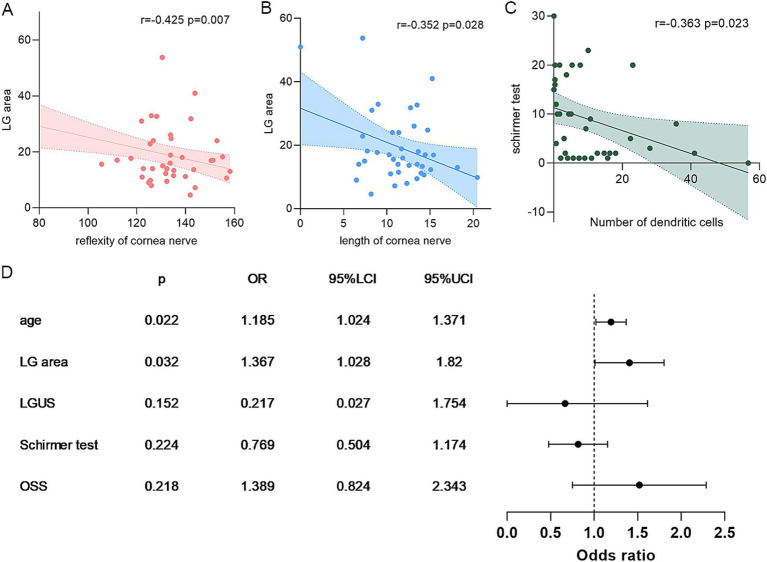 Figure 2
Peer Reviews
No public reviews on file for this paper yet. If you reviewed it on a platform where reviews are public (OpenReview, ICLR, NeurIPS, ICML), you can paste yours below so the community can read it here.
Videos
No videos yet. Explain this paper in a talk, walkthrough, or lecture? Add one.
Taxonomy
TopicsOcular Surface and Contact Lens · Salivary Gland Disorders and Functions · Ocular Diseases and Behçet’s Syndrome