Missing Value Imputation With Adversarial Random Forests—MissARF
Pegah Golchian, Jan Kapar, David S. Watson, Marvin N. Wright

TL;DR
MissARF is a new machine learning method for filling in missing data that works well and is fast.
Contribution
MissARF introduces a novel imputation method using adversarial random forests for efficient and accurate missing value estimation.
Findings
MissARF performs comparably to state-of-the-art imputation methods in terms of quality.
MissARF offers fast runtime and no additional costs for multiple imputation.
Abstract
Handling missing values is a common challenge in biostatistical analyses, typically addressed by imputation methods. We propose a novel, fast, and easy‐to‐use imputation method called missing value imputation with adversarial random forests (MissARF), based on generative machine learning, that provides both single and multiple imputation. MissARF employs adversarial random forest (ARF) for density estimation and data synthesis. To impute a missing value of an observation, we condition on the non‐missing values and sample from the estimated conditional distribution generated by ARF. Our experiments demonstrate that MissARF performs comparably to state‐of‐the‐art single and multiple imputation methods in terms of imputation quality and fast runtime with no additional costs for multiple imputation.
Genes, proteins, chemicals, diseases, species, mutations and cell lines named across the full text — each resolved to its canonical identifier and authoritative record.
Click any figure to enlarge with its caption.
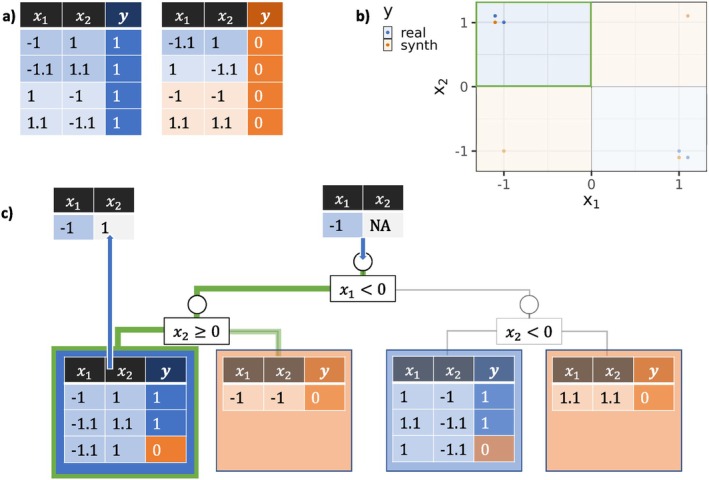 Figure 1
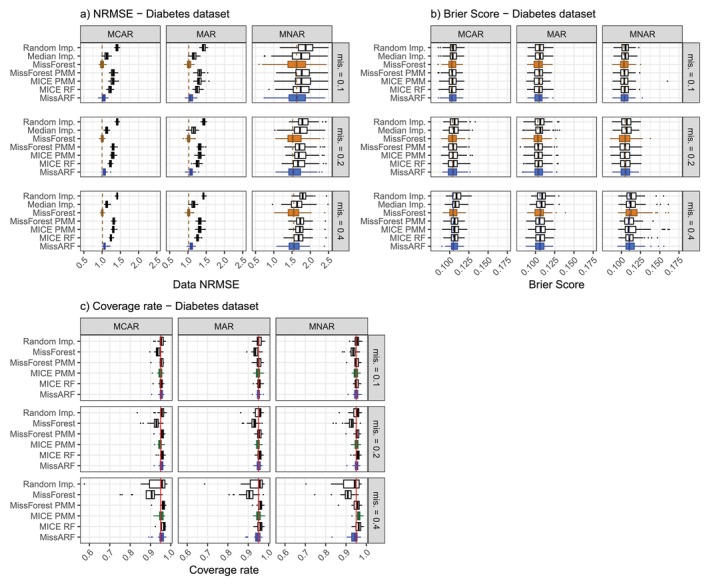 Figure 2
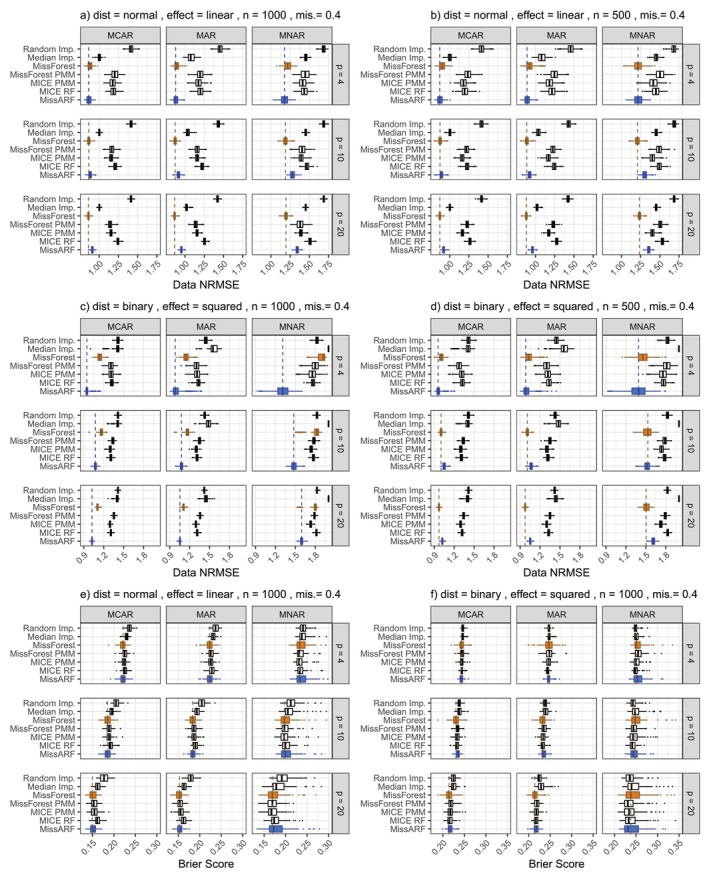 Figure 3
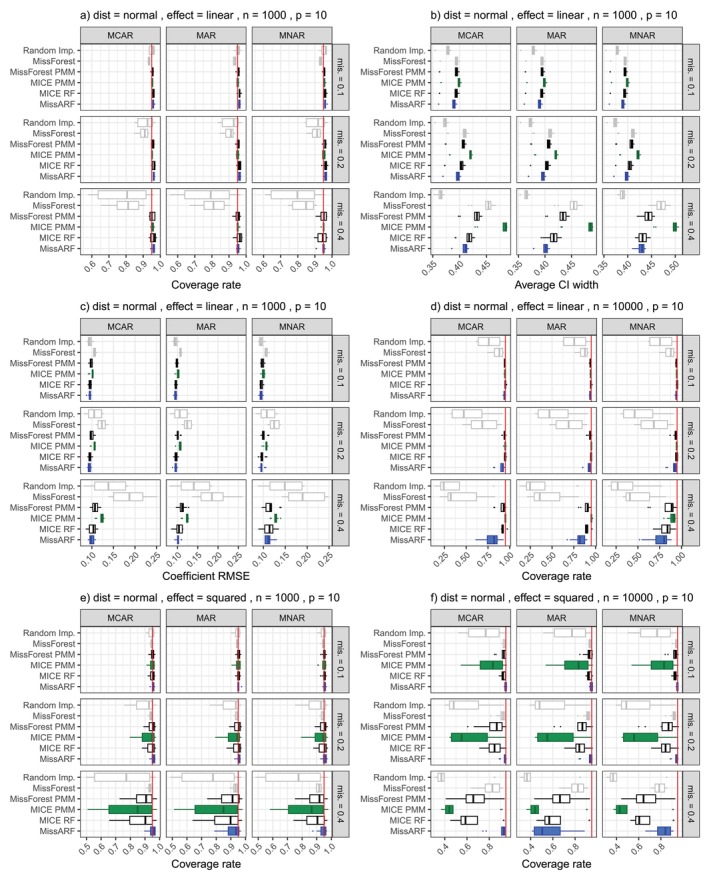 Figure 4
Peer Reviews
No public reviews on file for this paper yet. If you reviewed it on a platform where reviews are public (OpenReview, ICLR, NeurIPS, ICML), you can paste yours below so the community can read it here.
Videos
No videos yet. Explain this paper in a talk, walkthrough, or lecture? Add one.
Taxonomy
TopicsGenerative Adversarial Networks and Image Synthesis · Markov Chains and Monte Carlo Methods · Statistical Methods and Bayesian Inference