Synthesis of the Proposed Structure of Celacarfurine and Analogues Using Sequential Cascade Ring Expansion Reactions
Jerry K. F. Tam, Lachlan J. N. Waddell, Kleopas Y. Palate, Adrian C. Whitwood, Alexandra Longcake, Michael R. Probert, Gideon Grogan, Benjamin R. Lichman, William P. Unsworth

TL;DR
This paper describes the first synthesis of the proposed structure of the alkaloid celacarfurine and its analogues using a new method.
Contribution
A new synthetic strategy using sequential cascade ring expansion reactions was developed for making celacarfurine and its analogues.
Findings
The proposed structure of celacarfurine was successfully synthesized.
A series of macrocyclic analogues were generated using the same strategy.
The physical and spectroscopic data of the synthetic product did not match the natural alkaloid.
Abstract
The first synthesis of the proposed structure of spermidine derived macrocyclic alkaloid celacarfurine is described. A versatile synthetic strategy has been developed based on sequential cascade ring expansion reactions, with high dilution conditions not needed for any of the steps. The same general strategy was also used to generate a series of macrocyclic analogues. The physical properties and spectroscopic data obtained for our synthetic product do not match those reported for the isolated alkaloid.
Genes, proteins, chemicals, diseases, species, mutations and cell lines named across the full text — each resolved to its canonical identifier and authoritative record.
Click any figure to enlarge with its caption.
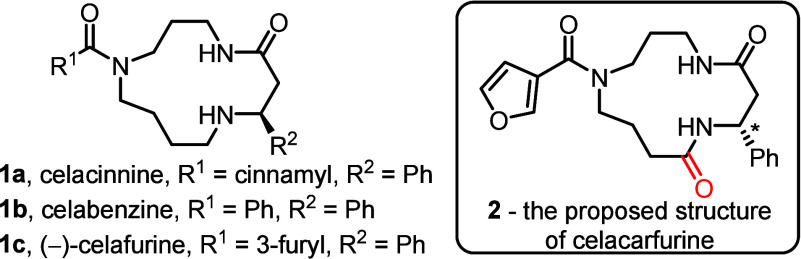 Figure 1
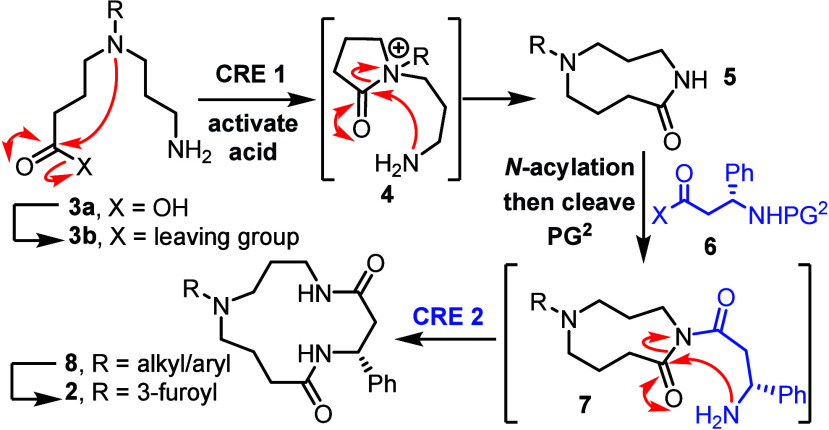 Figure 2
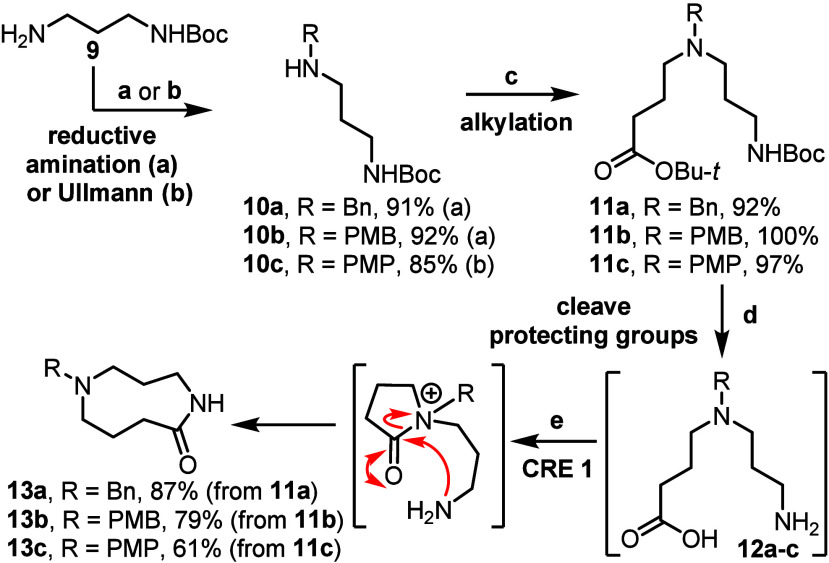 Figure 3
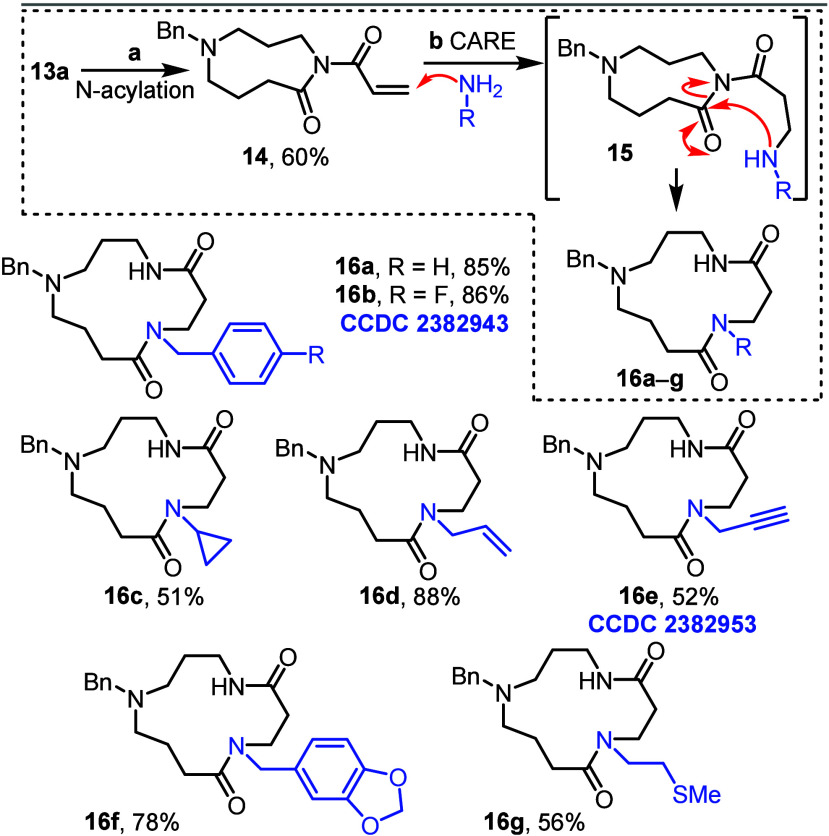 Figure 4
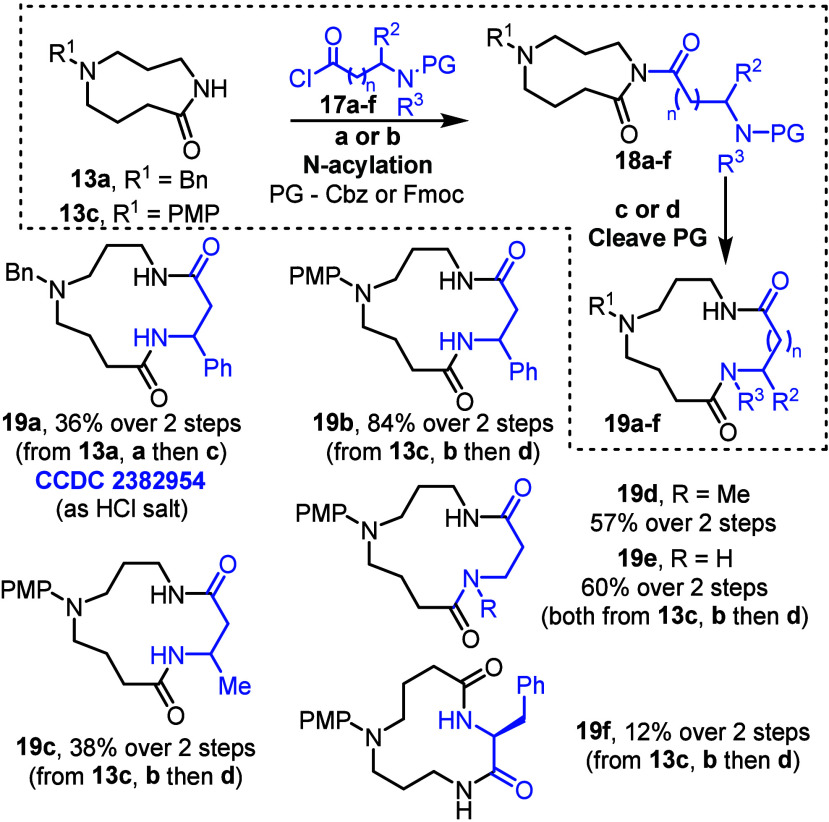 Figure 5
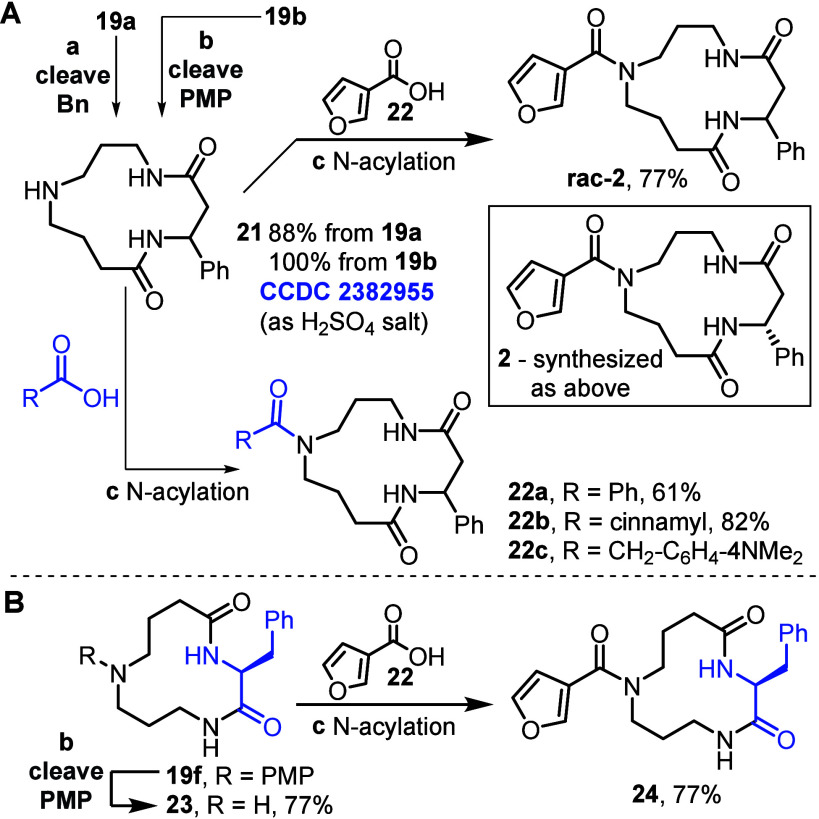 Figure 6
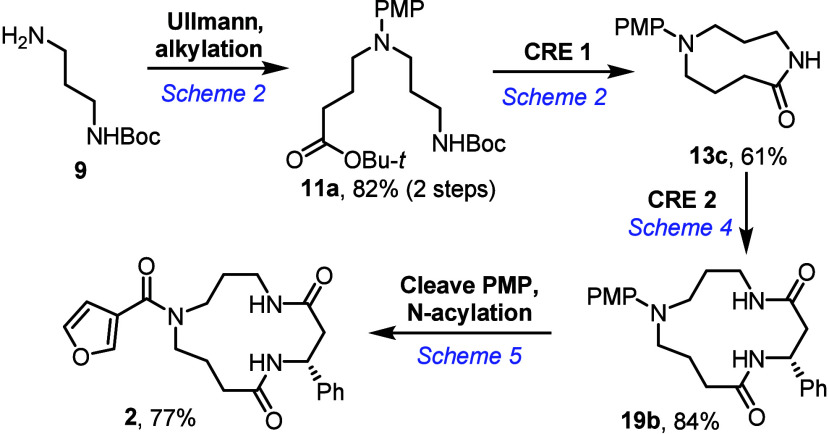 Figure 7
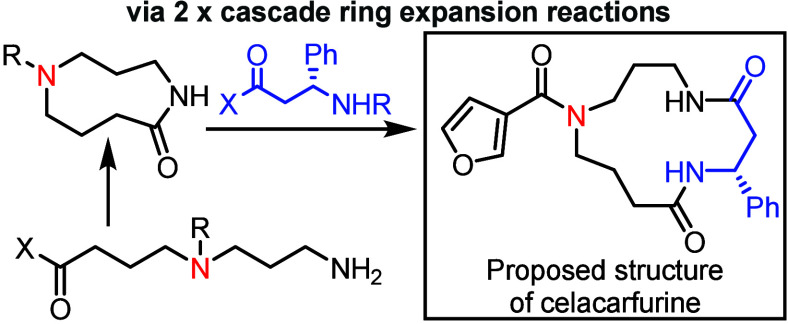 Figure 8
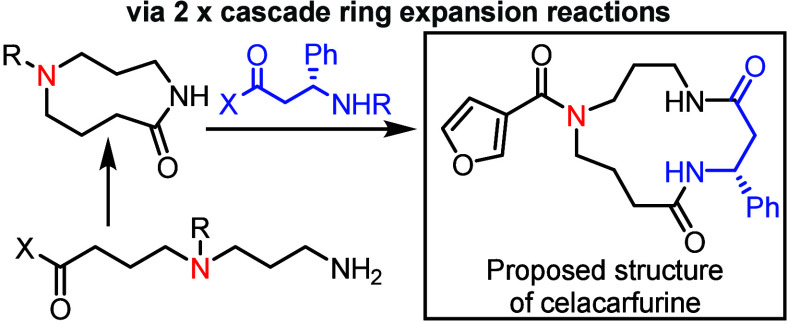 Figure 9
- —University of York10.13039/100009001
- —Engineering and Physical Sciences Research Council10.13039/501100000266
- —Biotechnology and Biological Sciences Research Council10.13039/501100000268
Peer Reviews
No public reviews on file for this paper yet. If you reviewed it on a platform where reviews are public (OpenReview, ICLR, NeurIPS, ICML), you can paste yours below so the community can read it here.
Videos
No videos yet. Explain this paper in a talk, walkthrough, or lecture? Add one.
Taxonomy
TopicsPolyamine Metabolism and Applications · Cholinesterase and Neurodegenerative Diseases · Natural Compounds in Disease Treatment
Polyamine alkaloids derived from spermidine are widely prevalent across the natural world, playing crucial roles in multiple organisms spanning animals, plants, bacteria and fungi. ?,? Within this class, 13-membered ring macrocyclic alkaloids feature prominently, with >50 natural products of this type reported. ?,? The majority possess a macrocyclic skeleton typified by celacinnine 1a, with variations in the groups R^1^ and R^2^ in compounds of the type 1 accounting for much of the natural diversity (e.g., 1a–c, Figure). Several successful total syntheses of alkaloids in this class have been reported,? using both direct end-to-end macrocyclization,? and ring expansion approaches.?
In 2020, a new 13-membered macrocyclic spermidine alkaloid was reported by Liu and co-workers, named celacarfurine 2, in view of its similarity to the previously reported alkaloid (−)-celafurine 1c.? Celacarfurine 2 was isolated from the roots of Tripterygium wilfordii, a plant in the Celastraceae family used in Chinese traditional medicine.
In this manuscript, we describe the first synthesis of the proposed structure of celacarfurine, and a series of analogues, using sequential cascade ring expansion reactions. At the onset of this project, the assigned structure of celacarfurine 2 had two unusual features that piqued our interest: (1) the absolute configuration of the sole stereogenic center (Figure, highlighted with *) is opposite to that in known celacinnine-type alkaloids;? (2) there is a second carbonyl group in the macrocycle scaffold (Figure, highlighted in red), not present in any other reported celacinnine-type alkaloids. Total synthesis represents a useful way to validate the proposed structure of 2, but to the best of our knowledge, no synthetic studies toward 2 had been reported prior to this study. A general synthetic approach to 2 was therefore devised, utilizing two distinct cascade ring expansion methods,? both developed in our laboratory (CRE 1 and 2, Scheme). ?−? ?
We envisioned using a relatively simple amino acid derivative of the form 3a as a key building block. The tertiary amine group in 3a/3b is key in enabling the first cascade ring expansion; following carboxylic acid activation (3a → 3b) cyclization to form a 5-membered ring acyl ammonium intermediate (3b → 4) and spontaneous ring expansion (4 → 5, CRE 1) was anticipated, to form a 9-membered ring lactam 5.? Then, N-acylation with a suitably protected β-amino acid derivative 6 and protecting group cleavage was planned, to form an imide 7 primed to undergo a second cascade ring expansion (CRE 2)? and generate the target 13-membered bis-lactam framework 8. Based on our previous work,? for the first cascade to work well an internal tertiary amine group is required (i.e., R = alkyl); therefore, cleavage of the exocyclic group R of 8 and replacement with a 3-furoyl group would then be needed complete the synthesis of 2. The successful implantation of this synthetic approach is described herein – demonstrated in the synthesis a series of natural product-like 13-membered ring polyamine macrocycles, and in the first total synthesis of the proposed of structure of celacarfurine.?
To start, protected amino acids 11a and 11b were synthesized in high yields via sequential reductive amination and N-alkylation reactions, while 11c was made via an Ullmann-type coupling followed by N-alkylation (Scheme). Substrates bearing different R groups on the tertiary amine (11a–c, R = Bn, PMB and PMP) were chosen that could potentially be cleaved later in the synthesis. In all three cases, acid-mediated protecting group cleavage revealed the key amino acid building block 12, which was then used directly in the first cascade ring expansion using our published conditions, affording 9-membered lactams 13a–c in good overall yields in each case. Employing a ring expansion approach within our synthetic strategy (as opposed to direct end-to-end cyclization) permits efficient lactam formation under typical reaction concentrations (0.1 M), thus avoiding the need for high-dilution conditions. This approach also facilitated their synthesis on a gram-scale.
With 9-membered ring lactams 13a–c in hand, the second ring expansion was then tested, using lactam 13a and our conjugate addition/ring expansion cascade method (Scheme). ?,?,? First, lactam 13a was converted into imide 14 by reaction with acryloyl chloride under basic conditions. Then, reaction with seven different primary amines initiated the ring expansion cascade, via a conjugate addition (14 → 15) and ring expansion (15 → 16), affording 13-memebered ring lactams 16a–g, all in good yields. In this model system, the use of imide 14 means that the macrocycles synthesized in this series all lack the requisite phenyl substituent needed to generate celacarfurine 2.? Nonetheless, these successful transformations validated our sequential ring expansion cascade concept and led to the facile synthesis of seven celacarfurine analogues. Successful rearrangement was confirmed by full characterization of all macrocycles 16a–g (see the Supporting Information (SI)) and in the case of macrocycles 16b and 16e, further supported by X-ray crystallographic data.?
To form the phenyl substituted 13-membered ring celacarfurine scaffold, we then turned to an alternative lactam ring expansion.? The ring expansion reactions summarized in Scheme started with lactam N-acylation with a carbamate-protected amino acid chloride of the form 17. Following N-acylation, imides (18a–e) are formed, and cleavage of the carbamate protecting groups reveals the reactive amine group, enabling spontaneous ring expansion (18 → 19). In this way, 13-membered ring lactam 19a was generated from lactam 13a and Cbz-protected amino acid chloride 17a (R^2^ = Ph, R^3^ = H, PG = Cbz), with the protecting group cleavage and spontaneous ring expansion promoted via hydrogenolysis. Lactam 19a was isolated in 36% yield over the *N-*acylation, protecting group cleavage and ring expansion sequence, with structure confirmed by X-ray crystallographic data of its HCl salt.? Alternatively, lactam 19b, with the same 13-membered ring framework, was formed in a much higher overall yield (84%) starting from lactam 13c, using an Fmoc-protected amino acid chloride, with the protecting group cleavage and ring expansion cascade promoted by DBU. To highlight the value of the ring expansion approach to generate analogues, macrocyclic lactams 19c–e were also synthesized in good yields, each using Fmoc-protected amino acid chlorides. In addition, a 12-membered ring analogue 19f was also synthesized via a 3-atom ring expansion of 13c using a phenyl alanine derived acid chloride 17f. A lower yield was obtained in this case, as expected based on our previous work using α-amino acids in this type of ring expansion,? but the reaction worked sufficiently well to afford 17f and allow us to test a hypothesis discussed later in the manuscript.
To complete the synthesis, hydrogenolysis of benzylated macrocycle 19a under acidic conditions enabled N-benzyl cleavage, to form secondary amine 21 in 88% yield (Scheme). The same product 21 was also obtained in quantitative yield from the analogous PMP-derivative 19b, following oxidative cleavage using periodic acid. The structure of amine 21 was confirmed by analysis of the X-ray crystallographic data of its sulfuric acid salt,? which importantly showed that the 13-membered ring scaffold remained intact following protecting group cleavage, with no evidence of unwanted ring-opening or ring-contraction.? The synthesis of 2 was then completed via a straightforward N-acylation of 21 using 3-furoic acid, activated by T3P.
The sequence summarized in SchemeA resulted in the formation of racemic macrocycle rac-2, but isolated celacarfurine was reported to be obtained as its R-enantiomer 2 (SchemeA box). The same route was therefore used to synthesize 2 in enantiopure form, using an enantiopure β-phenylalanine derivative. The spectroscopic data for the R-derivatives [( R )-19b, ( R )-21 and 2] were identical to those the racemic analogues, with full synthetic details in the SI. As a simple demonstration of how this method could also be used to generate analogues, amine 21 was also converted into macrocyclic amides 22a–c, of which 22a and 22b have an N-acyl substituents commonly found in celacinnine-type spermidine alkaloids.
Differences between our synthetic samples and the isolated natural product? quickly became apparent. The isolated celacarfurine was originally reported to be characterized by ^1^H and ^13^C NMR in d 4-methanol.? However, in d_ 4 _-methanol our synthetic samples (both rac-2 and 2) were only sparingly soluble, with the solubility too low to obtain ^13^C NMR data of sufficient quality to enable comparison with the isolation data. The solubility of rac-2 and 2 was also too low to allow us to observe all signals in the ^1^H NMR spectrum in d 4-methanol, although enough material dissolved to allow comparison of the phenyl and furan regions of the spectra, and significant differences were seen in all signals (see SI section 4 for full details).
We think that the ^1^H and ^13^C NMR were reported in d 4-methanol in error.? The same NMR data were subsequently described in a patent by the same team,? with all signals being identical to those in the isolation paper.? But crucially, the patent includes images of the ^1^H and ^13^C NMR spectra in which residual solvent signals consistent with the data being collected in d 6-DMSO, not d 4-methanol, are clearly visible. We therefore characterized rac-2 and 2 in d* 6 *-DMSO instead. The synthetic samples dissolved well in d 6-DMSO, and their NMR data support the assigned 13-membered macrocyclic structure. But unfortunately, major differences were evident when comparing the synthetic and isolated materials (see SI sections 3 and 4). Comparing the optical rotation of our synthetic compound 2 ([α]D = +42.42) to the reported optical rotation value for the isolated material ([α]D = +5.78)? also showed a significant difference. The isolation team published a subsequent study on the effects of spermidine macrocyclic alkaloids, including celacarfurine, on the expression of amyloid β-peptide in SH-SY5Y cells.? In this study, ^1^H and ^13^C NMR data for celacarfurine were reported in CDCl_3_. However, our synthetic materials were insoluble in CDCl_3_, representing another point of difference. We can therefore conclude beyond reasonable doubt that the celacarfurine isolated by Liu and co-workers? and our synthetic material 2 are not the same.
One explanation for this difference is that we may have made a mistake during our synthesis. However, having prepared and fully characterized multiple 13-membered lactams in this study, including 4 compounds with supporting X-ray crystallographic data, we are confident in the assignment of our synthetic material. This notably includes X-ray data for macrocycle 21, the direct precursor to 2. Regrettably, we were unable to obtain X-ray data for 2, as this would have provided even greater confidence; this is despite extensive efforts to crystallize our sample of 2, including using the Encapsulated nanodroplet crystallization (ENaCt) method (see SI section 5).?
Therefore, we must also consider the possibility that the isolated material may have been misassigned.? With this in mind, we considered that isomeric 12-membered macrocycle 24 (SchemeB) may also account for the reported data;? the inclusion of a phenyl alanine unit in this alternative structure provides some biosynthetic justification to this alternative proposal. We therefore synthesized macrocycle 24 from 19f, via sequential PMP-cleavage and N-acylation. Unfortunately, clear differences in the ^1^H and ^13^C NMR data for 24 were seen compared with isolated celacarfurine, thus ruling out this possibility.
A third possibility is that both the synthetic and isolated materials are correctly assigned, but they exist in different rotameric forms, thus accounting for their different physical properties and spectroscopic data. Without access to a sample of the isolated material, we cannot categorically rule this possibility out.? Heating our synthetic sample of 2 in d 6-DMSO for 1 h at 190 °C, cooling to RT, and reacquiring its ^1^H NMR spectrum resulted in no change in the appearance of its NMR data; this suggests that our synthetic material 2 was not formed as a higher energy rotamer compared to the natural material.
In conclusion, a strategy of using consecutive cascade ring expansion reactions has been used to generate natural product-like 13-membered ring polyamine macrocycles. High dilution conditions are not needed for any of the cascade ring expansion steps reported, which were able to deliver a series of structural analogues from common precursors. This included the first synthesis of the proposed of structure of celacarfurine, in 32% overall yield from protected diamine 9 (Scheme).
Unfortunately, the data obtained for our synthetic product do not match those reported for the isolated alkaloid. The results described herein highlight the value of sequential cascade ring expansion reactions for the efficient synthesis of complex macrocyclic target molecules. Similar approaches are expected to be applicable to other synthetic targets, e.g. other spermidine-derived macrocyclic alkaloids and analogues. ?,? It is therefore our hope that this study will inspire the development of related approaches to synthesize bioactive macrocycles,? including other natural products and synthetic macrocycles for applications in medicinal chemistry.?
Supplementary Material
The reference list from the paper itself. Each links out to its DOI / PubMed record.
- 1Shi Y.-J.Zhang J.Wang Y.-W.Ding K.Yan Y.Xia C.-Y.Li X.-X.He J.Zhang W. K.Xu J.-K.The untapped potential of spermidine alkaloids: structures, bioactivities and syntheses Eur. J. Med. Chem.202224011460010.1016/j.ejmech.2022.11460035863273 · doi ↗ · pubmed ↗
- 2ada Silva G.Soengas R. G.Natural occurrence, synthesis and biological applications of spermidine alkaloids Curr. Org. Chem.20172154655810.2174/1385272820666161021103050 · doi ↗
- 3a Bienz S.Detterbeck R.Ensch C.Guggisberg A.Häusermann U.Meisterhans C.Wendt B.Werner C.Hesse M.Putrescine, spermidine, spermine, and related polyamine alkaloids Alkaloids Chem. Biol.2002588333810.1016/s 0099-9598(02)58003-212534249 · doi ↗ · pubmed ↗
- 4a Kuehne P.Linden A.Hesse M.Asymmetric Synthesis of the Alkaloids mayfoline and N(1)-acetyl-N(1)-deoxymayfoline Helv. Chim. Acta 1996791085109410.1002/hlca.19960790417 · doi ↗
- 5a Illuminati G.Mandolini L.Ring closure reactions of bifunctional molecules Acc. Chem. Res.1981149510210.1021/ar 00064 a 001 · doi ↗
- 6a Hesse, M. In Ring Enlargement in Organic Chemistry; Wiley-VCH: 1991.
- 7Liu J.Wu Q.Shu J.Zhang R.Liu L.A novel spermidine macrocycle alkaloid from the roots of Tripterygium wilfordii Chem. Nat. Compd.20205649649910.1007/s 10600-020-03070-7 · doi ↗
- 8a Wootton J. M.Tam J. K. F.Unsworth W. P.Cascade ring expansion reactions for the synthesis of medium-sized rings and macrocycles Chem. Commun.2024604999500910.1039/D 4CC 01303 D 38655659 · doi ↗ · pubmed ↗