Enantioselective Synthesis of 3‑Alkyl-1,5-Functionalized 1,4-Diynes via Isoxazol-5(4H)‑ones
Ricardo Torán, Sergi Vercher, Pablo López, Amparo Sanz-Marco, Marc Montesinos-Magraner, Carlos Vila, Gonzalo Blay

TL;DR
This paper presents a new method to create chiral 1,4-diynes with high enantioselectivity using isoxazol-5(4H)-ones.
Contribution
A novel enantioselective synthesis of 3-alkyl-1,5-functionalized 1,4-diynes using isoxazol-5(4H)-ones as a platform.
Findings
The method achieves good overall yields and excellent enantioselectivities.
It demonstrates the synthetic versatility of isoxazol-5(4H)-ones as a scaffold.
The process combines conjugate addition and Zard-type transformation in one pot.
Abstract
An enantioselective strategy for the synthesis of chiral 3-alkyl-1,5-functionalized 1,4-diynes is reported. The method involves a highly enantioselective organocatalytic conjugate addition of isoxazol-5(4H)-ones to nitroenynes followed by a Zard-type transformation under one-pot conditions yielding chiral skipped diynes in good overall yields and with excellent enantioselectivities. This study highlights the synthetic versatility of the isoxazol-5(4H)-one scaffold and its value as a platform for accessing structurally diverse and synthetically relevant building blocks.
Genes, proteins, chemicals, diseases, species, mutations and cell lines named across the full text — each resolved to its canonical identifier and authoritative record.
Click any figure to enlarge with its caption.
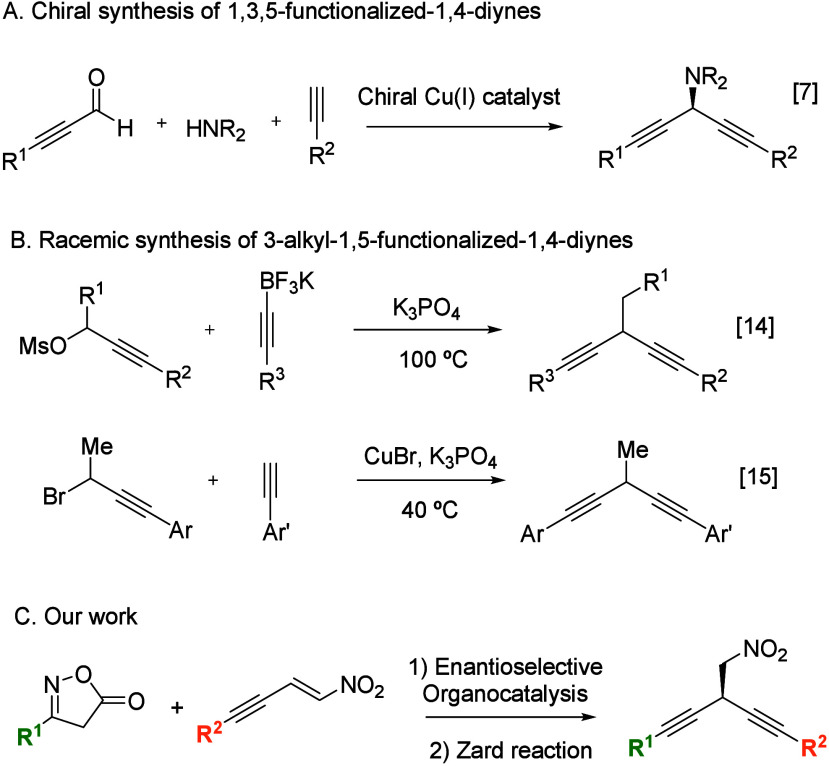 Figure 1
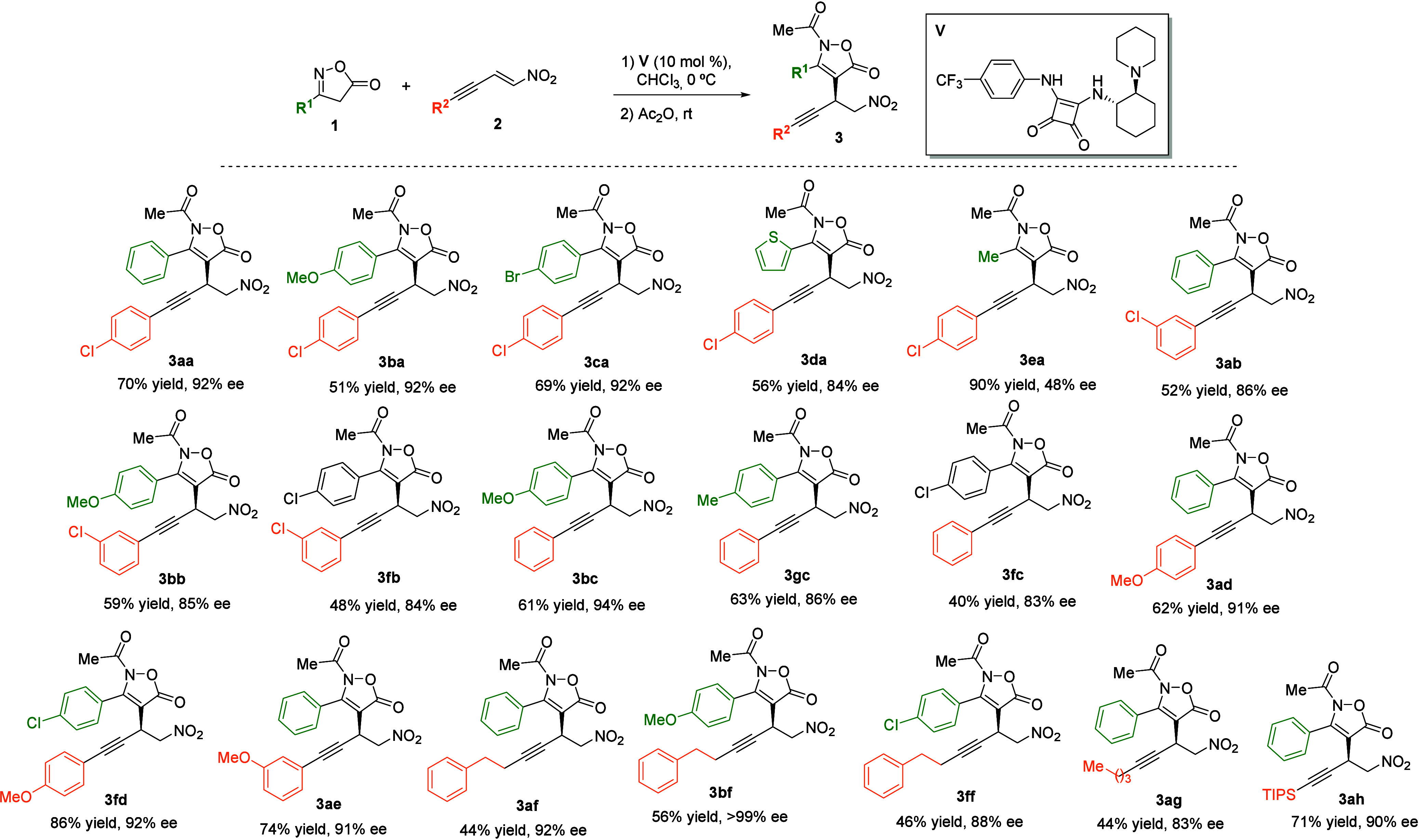 Figure 2
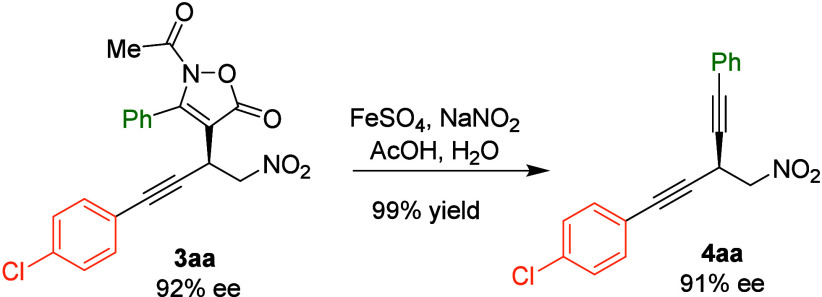 Figure 3
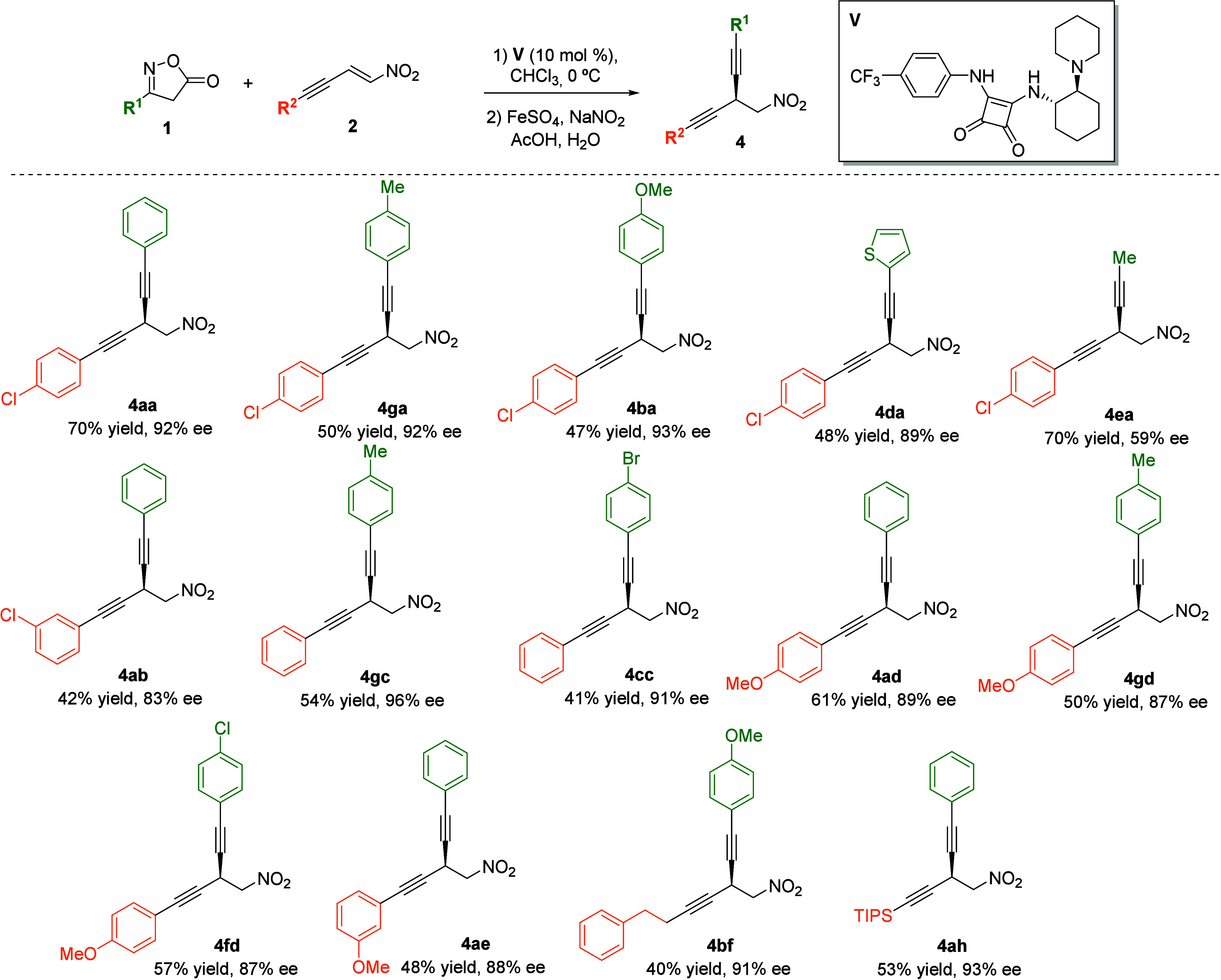 Figure 4
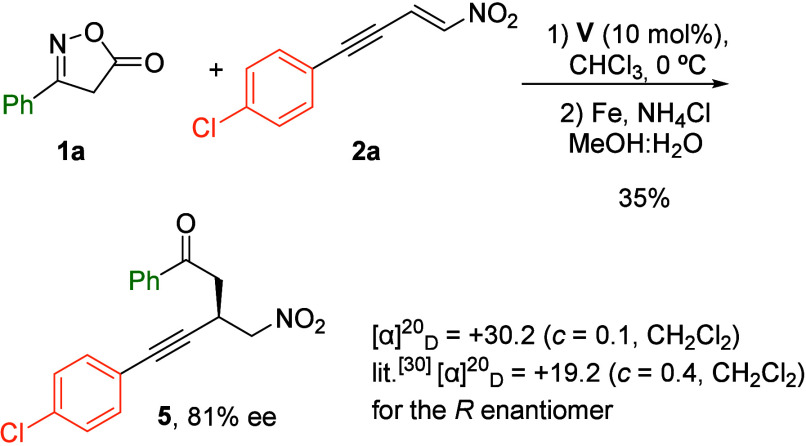 Figure 5
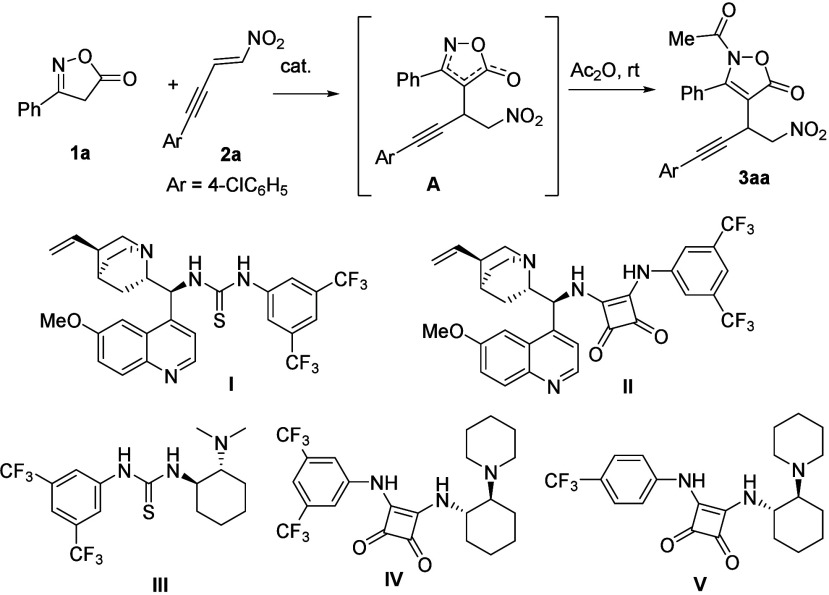 Figure 6
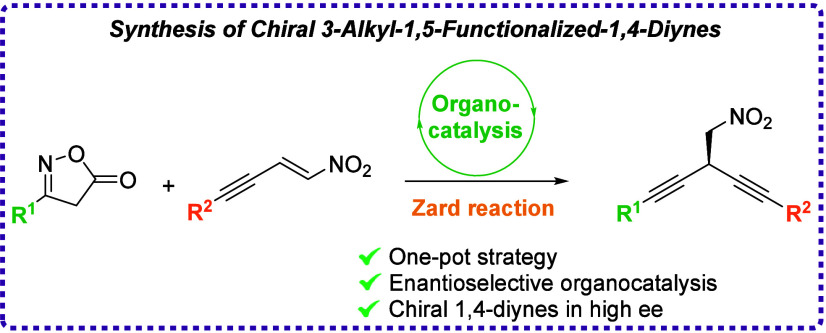 Figure 7
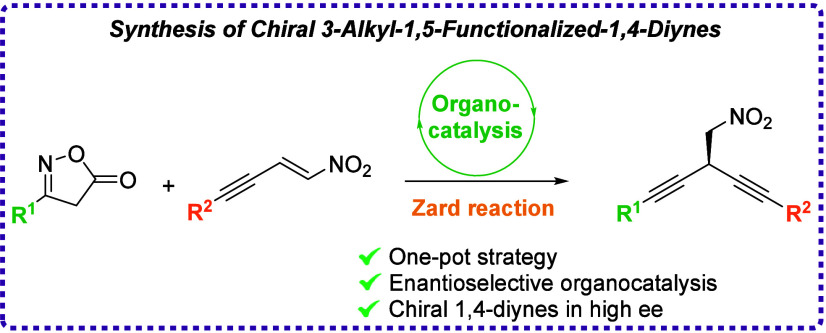 Figure 8
- —Ministerio de Ciencia, Innovaci?n y Universidades10.13039/100014440
- —Ministerio de Ciencia, Innovaci?n y Universidades10.13039/100014440
- —Universitat de Val?ncia10.13039/501100003508
- —European Social Fund Plus10.13039/501100004895
Peer Reviews
No public reviews on file for this paper yet. If you reviewed it on a platform where reviews are public (OpenReview, ICLR, NeurIPS, ICML), you can paste yours below so the community can read it here.
Videos
No videos yet. Explain this paper in a talk, walkthrough, or lecture? Add one.
Taxonomy
TopicsAsymmetric Synthesis and Catalysis · Synthesis of heterocyclic compounds · Coordination Chemistry and Organometallics
Diyne-containing molecules are of great importance as they are widely distributed in natural products, often display significant biological activities, and are important building blocks. ?−? ? ? ? This has inspired extensive research devoted to their synthesis and functionalization. Among the different structural motifs, particular attention has been given to 1,4-diynes (skipped diynes), which show a unique structure involving two alkyne groups linked to a doubly propargylic carbon. With focus on asymmetric strategies, the synthesis of skipped diynes bearing a propargylic stereogenic center remains elusive, probably due to the similar shape of the alkyne substituents and their linear structure, which hampers effective enantiodiscrimination. Consequently, a very reduced number of examples leading to skipped diynes possessing a heteroatom bonded to the stereogenic carbon have been reported so far (SchemeA). ?−? ? ?
In contrast, despite the recognized importance of 3-alkyl-1,5-functionalized 1,4-diynes, ?−? ? their synthesis has been relatively limited compared to their analogues bearing a heteroatom at the C3 position. This is largely due to the intrinsic synthetic challenges they present since the absence of a heteroatom in the diyne core reduces the number of reliable disconnections and available strategies. Nevertheless, in 2020, a synthesis of symmetric 3-alkyl-1,5-functionalized 1,4-diynes was reported via a nickel-catalyzed, chemodivergent 1,1-difunctionalization of unactivated α-olefins using alkynyl electrophiles and B_2_pin_2_.? For unsymmetrical 3-alkyl-1,5-functionalized 1,4-diynes, only two racemic strategies have been reported (SchemeB). In 2022, a valuable approach was disclosed based on the nucleophilic substitution of sp^3^-carbon electrophiles with alkynyltrifluoroborates, which allowed efficient access to a range of unsymmetrical diynes.? More recently, an alternative copper-catalyzed transformation has been developed. Specifically, the CuBr-catalyzed coupling of propargyl bromides with terminal alkynes was demonstrated to deliver a diverse set of 3-methyl-1,5-functionalized 1,4-diynes with good yields and functional group tolerance.? However, the synthesis of chiral 3-alkyl-1,5-functionalized 1,4-diynes remains a major challenge, and no methodology has been reported to date.
Isoxazol-5(4H)-ones are five-membered heterocycles derived from isoxazole, characterized by a carbonyl group at the 5 position. These compounds exist in equilibrium among three tautomeric forms, CH, NH, and OH forms, depending on the nature of substituents, solvent, and other factors.? Their unique reactivity arises from several features: (i) an acidic hydrogen at C4, (ii) a relatively weak N–O bond, (iii) the presence of three nucleophilic sites at N2, C4, and exocyclic oxygen, and (iv) facile release of CO_2_. These properties make isoxazol-5(4H)-ones versatile intermediates in organic synthesis. Notably, they have been employed as nucleophiles in asymmetric organocatalysis ?−? ? and can be transformed into a broad range of functionalized scaffolds. ?−? ? ? Among the diverse transformations, the conversion of isoxazol-5(4H)-one into alkyne represents a particularly interesting reaction, first explored by Zard and his research team in 2002.? This transformation was later successfully carried out by Jurberg, who demonstrated that, following the organocatalyzed conjugate addition of ketones to alkylidene isoxazol-5(4H)-ones, the isoxazole ring could be converted into an alkyne, thereby affording chiral α-propargyl ketones with good yields.?
Herein, we propose the first synthesis of chiral 3-alkyl-1,5-functionalized 1,4-diynes by exploiting the unique reactivity of the isoxazol-5(4H)-one ring (SchemeC). Our strategy focuses on the development of a one-pot methodology involving an enantioselective conjugate addition, followed by a Zard-type reaction, using isoxazol-5(4H)-ones as nucleophiles and nitroenynes as electrophiles. In fact, nitroenyne represents an attractive electrophile due to the simultaneous presence of an alkyne and a nitro group, which enables the synthesis of highly functionalized compounds.? Despite the promising reactivity and high functionalization of these substrates, the enantioselective addition of isoxazol-5(4H)-ones to nitroenynes has not yet been reported. This conjugate addition provides access to a versatile, chiral, and highly functionalized intermediate that can subsequently undergo a Zard reaction to furnish chiral 3-alkyl-1,5-functionalized 1,4-diynes.
To achieve this goal, we initially investigated the organocatalyzed 1,4-addition of isoxazol-5(4H)-one 1a to nitroenyne 2a as the key step toward the formation of desired chiral intermediate A (Table). Initially, quinine-derived squaramide I and thiourea II were evaluated in dichloromethane at room temperature (entries 1 and 2). Interestingly, product formation was observed; however, an additional acetylation step was required to determine the enantioselectivity since the addition product A existed in several tautomeric forms.? Following this protocol, compound 3aa was obtained as a promising result with catalyst II (69% ee, entry 2). Subsequently, squaramide III and thiourea IV, derived from chiral cyclohexanediamine, were also investigated (entries 3 and 4), affording an increase in enantioselectivity up to 88% in the case of IV. Moreover, the use of commercially available catalyst V improved the yield of 3aa while maintaining enantioselectivity, and thus, this catalyst was selected for further optimization (entry 5). Remarkably, lowering the reaction temperature to 0 °C provided 3aa in 63% yield with 92% ee (entry 6). Other chlorinated solvents were then explored (entries 7 and 8), with chloroform affording the product in both a high yield and enantioselectivity (entry 8). In contrast, when a non-chlorinated solvent such as toluene was tested, a significant decrease in enantioselectivity was observed (entry 9). Therefore, the optimal conditions were established as those of entry 8, under which 3aa was obtained in 70% yield with 92% ee. Notably, when the reaction was performed on a 1 mmol scale under these conditions, product 3aa was obtained in over 80% yield with 92% enantiomeric excess, demonstrating the scalability and robustness of the protocol (entry 10).
Next, the scope of this key step was examined to probe the robustness of the reaction (Scheme). Guided by our final objective, this study was carried out by coupling isoxazol-5(4H)-ones 1 with nitroenynes 2 bearing different substituents, thereby enabling access to chiral skipped diynes in the subsequent step. First, several isoxazol-5(4H)-ones 1 were reacted with nitroenyne 2a. Aromatic substituents at the C4 position of 1 were well-tolerated, affording the corresponding products 3aa–3da in good overall yields with excellent enantioselectivities. In addition, an aliphatic substituent was examined, providing compound 3ea, which displayed high reactivity and moderate enantiomeric excess. Subsequently, other nitroenynes 2 were evaluated with different isoxazol-5(4H)-ones 1. meta-Chloro-substituted nitroenyne 2b was first examined, affording products 3ab, 3bb, and 3fb in good yields and high enantioselectivities, regardless of the electronic nature of 3-phenylisoxazol-5(4H)-one derivative 1. In addition, nitroenyne 2c bearing a phenyl substituent delivered the corresponding products 3bc, 3gc, and 3fc with excellent results. Moreover, substituents with different electronic features on the aromatic ring, such as a methoxy group in the para and meta positions, were explored, providing compounds 3ad, 3fd and 3ae in high yields and with enantiomeric excesses above 90%. Aliphatic nitroenynes 2f and 2g were also investigated, affording products 3af, 3bf, 3ff, and 3ag in moderate yields but with high enantioselectivities.? Finally, silyl-substituted nitroenyne 2h furnished the expected product 3ah in 71% yield and 90% ee.
Once we had demonstrated the broad scope of the enantioselective conjugate addition of isoxazolones 1 to enynes 2, we undertook the synthesis of chiral skipped diynes by subjecting compound 3aa to the Zard reaction conditions that involve treatment with FeSO_4_ and NaNO_2_ in aqueous acetic acid (see the Supporting Information). Under these conditions, compound 3aa was converted into diyne 4aa in an almost quantitative yield without erosion in the enantiomeric excess (Scheme). Then, we explored the feasibility of performing the conjugate addition and the Zard reaction in a one-pot fashion avoiding the acylataion step. Thus, after completion of the reaction of isoxazolinone 1a with nitroenyne 2a, chloroform was removed under reduced pressure, and the resulting crude mixture was treated under Zard conditions. In this way, the expected skipped diyne 4aa was obtained in both the yield and enantioselectivity comparable to those of product 4aa prepared via the acetylation approach (70% yield and 91% ee vs 92% ee, respectively). Following this strategy, a series of chiral 3-alkyl-1,5-functionalized 1,4-diynes 4 were prepared (Scheme).
First, various skipped diynes 4 were synthesized by reacting different isoxazol-5(4H)-ones 1 with nitroenyne 2a. Isoxazol-5(4H)-ones bearing either aromatic or heteroaromatic substituents at the C3 position of 1 afforded the desired diynes 4aa, 4ga, 4ba, and 4da in good yields and with excellent enantioselectivities. Notably, 3-methylisoxazol-5(4H)-one (1e), presenting an alkyl group at C3, was tolerated, thereby affording compound 4ea, which incorporates both alkyl- and aryl-substituted alkynes within its structure. Then, we explored different alkynes. m-Chlorophenylnitroenye 2b and isoxazole-5(4H)-one 1a provided the expected diyne 4ab in a moderate yield and with somehow lower enantioselectivity compared to nitroenyne 2a (92% ee vs 83% ee). Nitroenyne 2c, bearing an unsubstituted phenyl ring, reacted with isoxazole-5(4H)-one 1c and 1g to give compounds 4gc and 4cc with consistent 87% ee. Moreover, nitroenynes bearing an electron-releasing methoxy group at either the meta or para position in the phenyl group could also be employed with a range of isoxazol-5(4H)-ones 1, providing the corresponding skipped diynes 4ad, 4gd, 4fd, and 4ae in moderate yields but consistently high enantioselectivities. Finally, nitroenynes bearing aliphatic or silyl substituents (2f and 2h) were likewise well-tolerated under the optimized conditions, affording corresponding products 4bf and 4ah with enantioselectivities above 90%.
To determine the absolute configuration of the obtained compounds, a one-pot sequence was performed with compounds 1a and 2a, consisting of an enantioselective conjugate addition followed by reductive N–O bond cleavage with concomitant decarboxylation of the isoxazol-5(4H)-one ring to give ketone 5 (Scheme).? Ketone 5 obtained in this way showed identical spectroscopic features and optical rotation sign as those reported in the literature for (R)-5.? Accordingly, ketone 5 synthesized by our procedure was assigned to have the R configuration. Accordingly, we assigned the sterochemistry of compounds 3aa and 4aa by chemical correlation with those of (R)-5. The absolute stereochemistry of the remaining compounds 3 and 4 was assigned upon the assumption of a uniform mechanistic pathway involving the approach of isoxazolinone from the Re face of the nitroenyne double bond during the Michael addition step (see the Supporting Information for a stereochemical model). This transformation, together with the other reactions described herein, highlights both the synthetic versatility of the isoxazol-5(4H)-one scaffold and its importance as a key platform for the preparation of valuable building blocks.
In conclusion, we have developed the first synthesis of chiral 3-alkyl-1,5-functionalized 1,4-diynes through a one-pot efficient strategy combining an enantioselective conjugate addition with a subsequent Zard-type reaction. The enantioselective organocatalytic conjugate addition of isoxazol-5(4H)-ones to nitroenynes served as the key step, providing compounds 3 in good yields and with high enantioselectivities. With the advantage of the versatility of the isoxazol-5(4H)-one scaffold, the resulting chiral intermediates underwent a one-pot Zard-type transformation to deliver the desired chiral skipped diynes 4 for the first time, in good overall yields and excellent enantioselectivities.
Supplementary Material
The reference list from the paper itself. Each links out to its DOI / PubMed record.
- 1Nicolaou K. C.Dai W.-M.Chemistry and Biology of the Enediyne Anticancer Antibiotics Angew. Chem., Int. Ed.1991301387141610.1002/anie.199113873 · doi ↗
- 2Christensen L. P.Brandt K.Bioactive polyacetylenes in food plants of the Apiaceae family: occurrence, bioactivity and analysis J. Pharm. Biomed. Anal.20064168369310.1016/j.jpba.2006.01.05716520011 · doi ↗ · pubmed ↗
- 3Hu C.Wang T.Rudolph M.Oeser T.Asiri A. M.Hashmi A. S. K.Gold(I)-Catalyzed Cycloisomerization of 3-Alkoxyl-1,6-diynes: A Facile Access to Bicyclo (2.2.1)hept-5-en-2-ones Angew. Chem., Int. Ed.2020598522852610.1002/anie.201914284 PMC 731814531972059 · doi ↗ · pubmed ↗
- 4Bossuat M.Rullière P.Preuilh N.Peixoto A.Joly E.Gomez J.-G.Bourkhis M.Rodriguez F.Gonçalves F.Fabing I.Gaspard H.Bernardes-Genisson V.Maraval V.Ballereau S.Chauvin R.Britton S.Genisson Y.Phenyl dialkynylcarbinols, a Bioinspired Series of Synthetic Antitumor Acetylenic Lipids J. Med. Chem.202366139181394510.1021/acs.jmedchem.3c 0085937816126 · doi ↗ · pubmed ↗
- 5Wang F.Lin W.Yeh C. H.Lan Y.Zhao Y.Desymmetrization of 1,4-Diynes by Allylic Alcohol-Triggered Redox Enyne Cycloisomerization Angew. Chem., Int. Ed.202564 e 20242115310.1002/anie.20242115339908293 · doi ↗ · pubmed ↗
- 6Listunov D.Fabing I.Saffon-Merceron N.Gaspard H.Volovenko Y.Maraval V.Chauvin R.Génisson Y.Asymmetric Synthesis and Biological Evaluation of Natural or Bioinspired Cytotoxic C 2-Symmetrical Lipids with Two Terminal Chiral Alkynylcarbinol Pharmacophores J. Org. Chem.2015805386539410.1021/acs.joc.5b 0049425961794 · doi ↗ · pubmed ↗
- 7Paioti P. H. S.Abboud K. A.Aponick A.Catalytic Enantioselective Synthesis of Amino Skipped Diynes J. Am. Chem. Soc.20161382150215310.1021/jacs.5b 1338726855017 · doi ↗ · pubmed ↗
- 8Rokade B. V.Guiry P. J.Enantioselective Catalytic Asymmetric A 3 Coupling with Phosphino-Imidazoline Ligands J. Org. Chem.2019845763577210.1021/acs.joc.9b 0072830942080 · doi ↗ · pubmed ↗