Phenolic Profile and Bioactive Prospects of Wild Annona Species From Angola
Josefa Rangel, Ângela Liberal, Tiane C. Finimundy, Tânia S. P. Pires, Pedro Cravo, Maria Conceição Silva, Gustavo Capatti Cassiano, Lillian Barros, Maria M. Romeiras, Ângela Fernandes

TL;DR
This study explores the phenolic compounds and bioactive properties of three wild Annona species from Angola, highlighting their potential for traditional and modern medicine.
Contribution
The study identifies specific phenolic compounds and evaluates the antioxidant, antimalarial, and antimicrobial activities of Angolan Annona species.
Findings
A. muricata had 44 identified phenolic compounds, with leaves showing the highest total phenolic concentration.
A. senegalensis extracts showed the highest antioxidant capacity, while A. muricata was most effective against malaria.
All species displayed antibacterial effects, supporting their traditional medicinal uses.
Abstract
Annona species (Annonaceae family) are valued for their nutritional and medicinal importance, especially in traditional medicine. This study investigated the phenolic profiles of the Angolan Annona muricata, Annona squamosa, and Annona senegalensis leaves, stem barks, and seeds hydroethanolic, infusion, and decoction extracts, also evaluating their antioxidant, antimalarial, and antimicrobial potential. Our results showed a vibrant phenolic profile in all the studied species, with A. muricata standing out with 44 compounds identified, with leaves containing the highest concentration of total phenolic compounds, particularly in A. senegalensis. Procyanidin trimer was the primary compound found in A. muricata leaf and stem bark hydroethanolic extract and infusion preparation, while in A. squamosa, epigallocatechin and catechin prevail. In A. senegalensis, quercetin‐3‐O‐rutinoside was…
Genes, proteins, chemicals, diseases, species, mutations and cell lines named across the full text — each resolved to its canonical identifier and authoritative record.
Click any figure to enlarge with its caption.
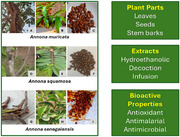 Figure 1
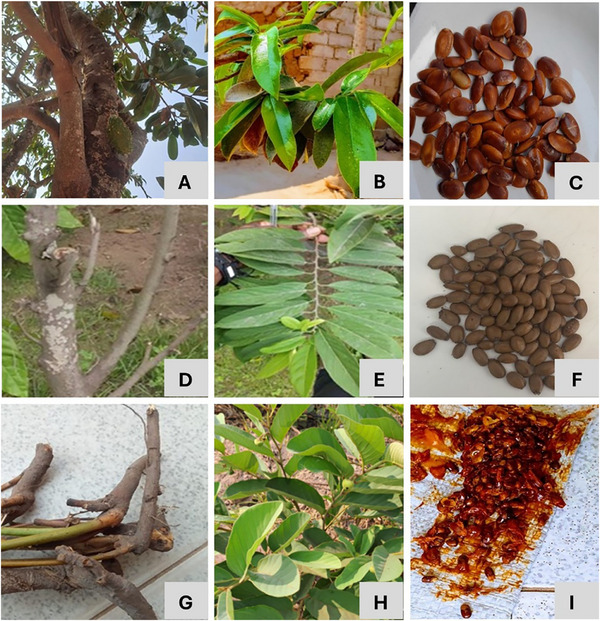 Figure 2
Peer Reviews
No public reviews on file for this paper yet. If you reviewed it on a platform where reviews are public (OpenReview, ICLR, NeurIPS, ICML), you can paste yours below so the community can read it here.
Videos
No videos yet. Explain this paper in a talk, walkthrough, or lecture? Add one.
Taxonomy
TopicsTraditional and Medicinal Uses of Annonaceae · Phytochemicals and Antioxidant Activities · Essential Oils and Antimicrobial Activity