Genome analysis of a cluster EF bacteriophage LordBart isolated from soil in Tennessee
Sergei Markov, Cynthia Fecteau, Torrie Jones, Matthew Lee, Mercedes Thornton

TL;DR
A new soil bacteriophage called LordBart was discovered in Tennessee, with a genome of 56,975 base pairs and unique genetic features.
Contribution
The paper presents the genome analysis of a newly isolated siphovirus bacteriophage, LordBart, grouped in cluster EF.
Findings
LordBart has a genome of 56,975 bp with 86 predicted protein-coding genes.
Eight copies of a conserved 12 bp sequence motif were found upstream of some genes of unknown function.
The phage is classified as a siphovirus and grouped in cluster EF based on gene content similarity.
Abstract
Bacteriophage LordBart was isolated from a soil sample in Clarksville, TN using the bacterium Microbacterium foliorum. The bacteriophage has a 56,975 bp genome with 86 predicted protein-coding genes, of which 32 were assigned predicted functions. LordBart has a siphovirus morphology and is grouped with bacteriophages in cluster EF based on gene content similarity. Its genome includes eight copies of a conserved 12 bp sequence motif located upstream of predicted translational start codons of some genes of unknown functions.
Genes, proteins, chemicals, diseases, species, mutations and cell lines named across the full text — each resolved to its canonical identifier and authoritative record.
Click any figure to enlarge with its caption.
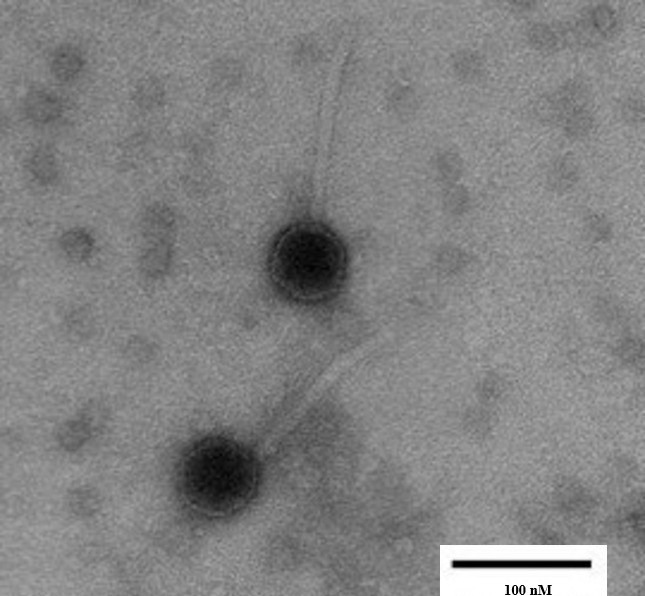 Figure 1
Peer Reviews
No public reviews on file for this paper yet. If you reviewed it on a platform where reviews are public (OpenReview, ICLR, NeurIPS, ICML), you can paste yours below so the community can read it here.
Videos
No videos yet. Explain this paper in a talk, walkthrough, or lecture? Add one.
Taxonomy
TopicsBacteriophages and microbial interactions · Genomics and Phylogenetic Studies · Microbial Community Ecology and Physiology