Engineering Kluyveromyces marxianus for 3-hydroxypropionic acid production at elevated temperature from Jerusalem artichoke tubers and crude glycerol
Jiacheng Li, Zhongmei Hu, Yanjie Li, Hao Zha, Yujie Xie, Mingtao Zhao, Lili Ren, Biao Zhang

TL;DR
Scientists engineered a heat-tolerant yeast to efficiently produce a key chemical for biodegradable plastics from plant material and waste glycerol at high temperatures.
Contribution
The novel contribution is the first thermotolerant yeast-based bioprocess for 3-HP production from non-food feedstocks at elevated temperatures.
Findings
Engineered yeast produced 32.31 g/L of 3-HP at 42°C from Jerusalem artichoke tubers.
3-HP titer reached 33.15 g/L using pure glycerol at 42°C with optimized metabolic pathways.
The process reduced cooling water use by 60% and CO2 emissions by 27.1 tons annually per 1000-ton fermenter.
Abstract
This study engineered the thermotolerant yeast Kluyveromyces marxianus to produce 3-hydroxypropionic acid (3-HP), a key precursor for biodegradable plastics, via the malonyl-CoA pathway using non-food feedstocks. The 3-HP titer was further increased through deleting Adh2A and Ach1, which prevents the synthesis of byproducts ethanol and acetic acid. Using Jerusalem artichoke tuber powder, engineered strain produced 27.32 and 32.31 g/L of 3-HP at 37 °C and 42 °C through fed-batch fermentation. Metabolic reconstruction replaced the native FADH2-dependent glycerol pathway (GUT1/GUT2) with an NADH-generating GDH1/DAK1 pathway, significantly enhancing glycerol utilization and increasing intracellular NADH supply by 62 %. Overexpression of Utr1 can further enhance the NADPH supply. Combined with heterologous expression of a codon-optimized, high-activity malonyl-CoA reductase (MCR) mutant…
Genes, proteins, chemicals, diseases, species, mutations and cell lines named across the full text — each resolved to its canonical identifier and authoritative record.
Click any figure to enlarge with its caption.
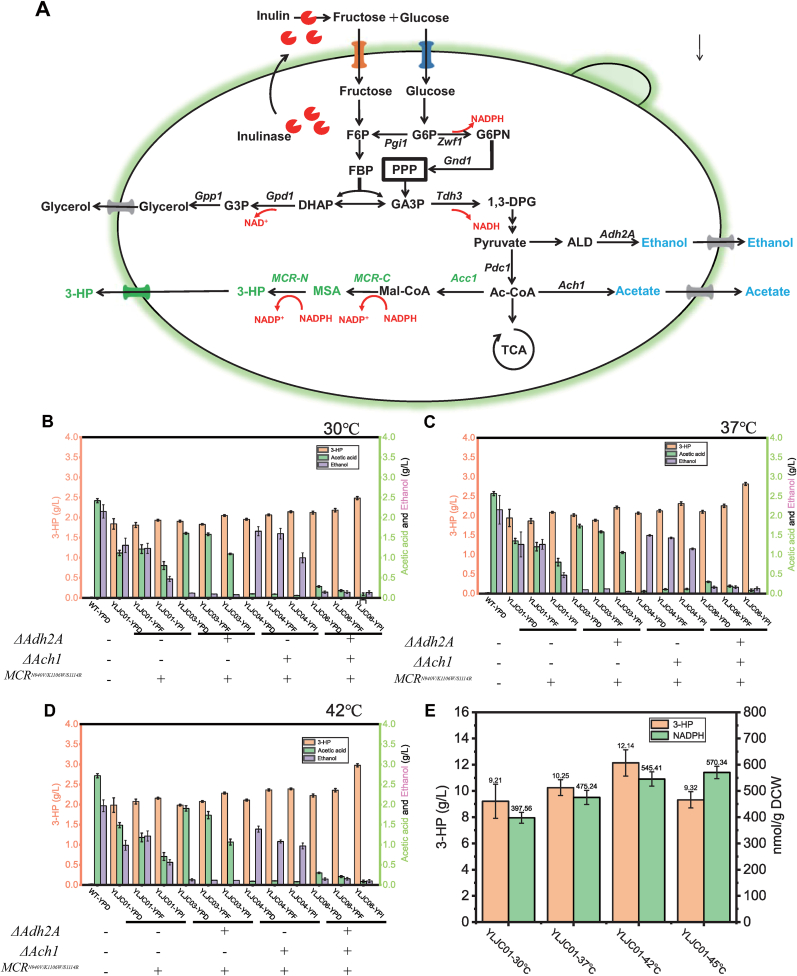 Figure 1
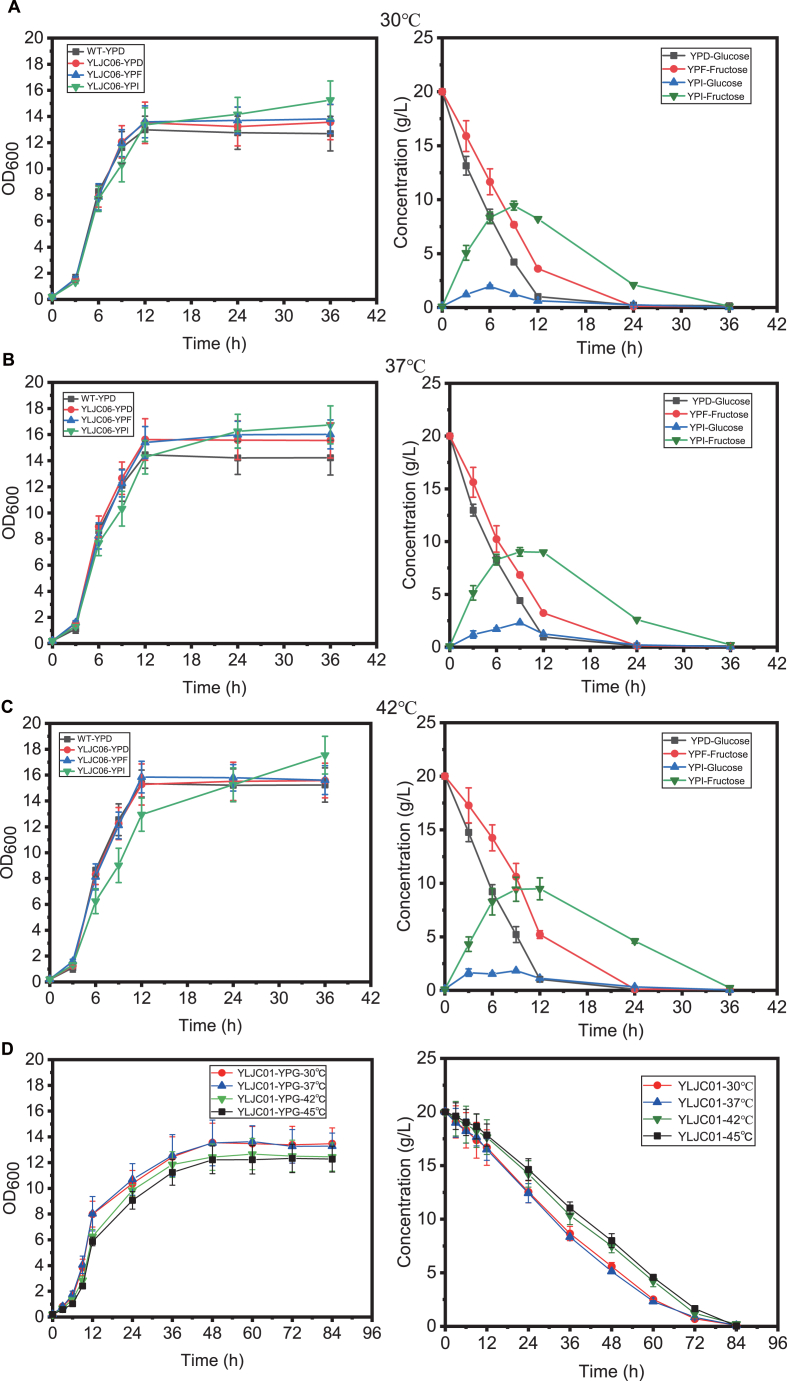 Figure 2
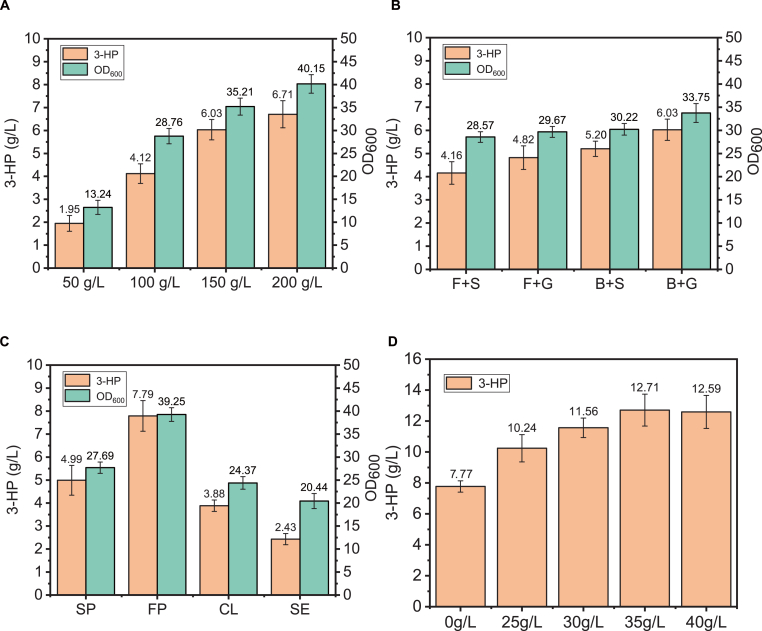 Figure 3
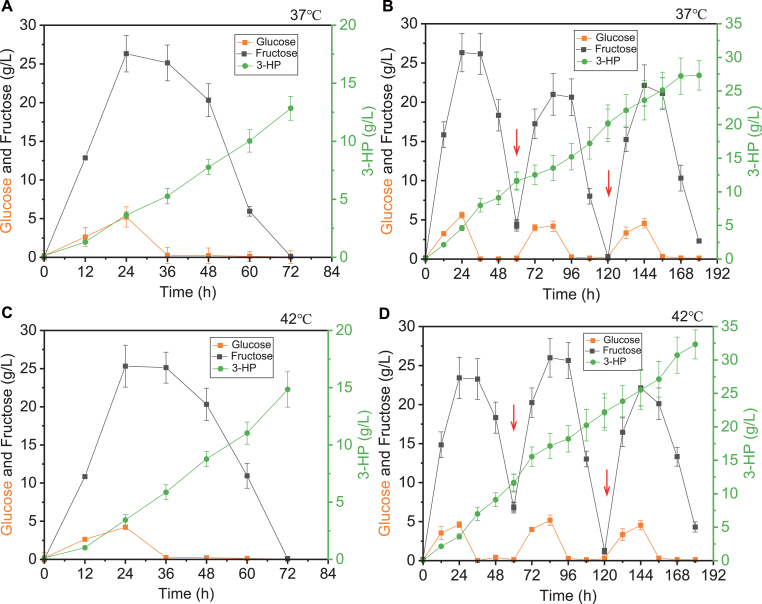 Figure 4
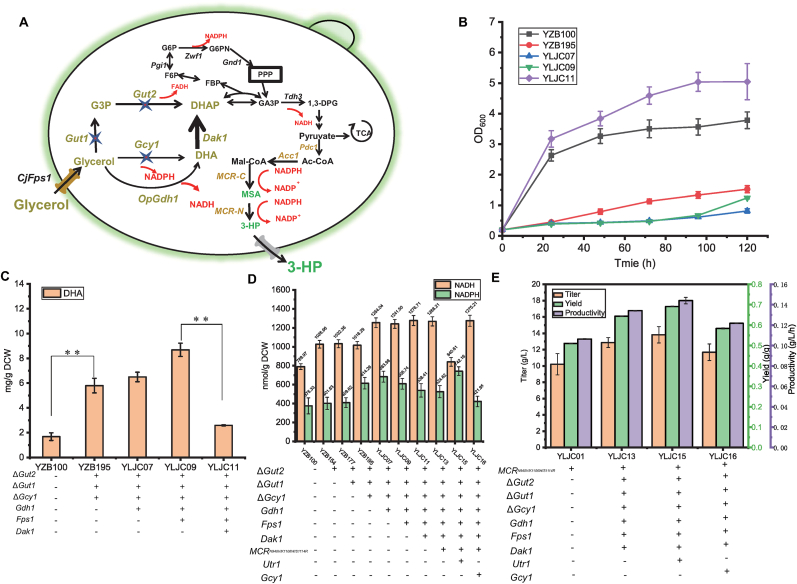 Figure 5
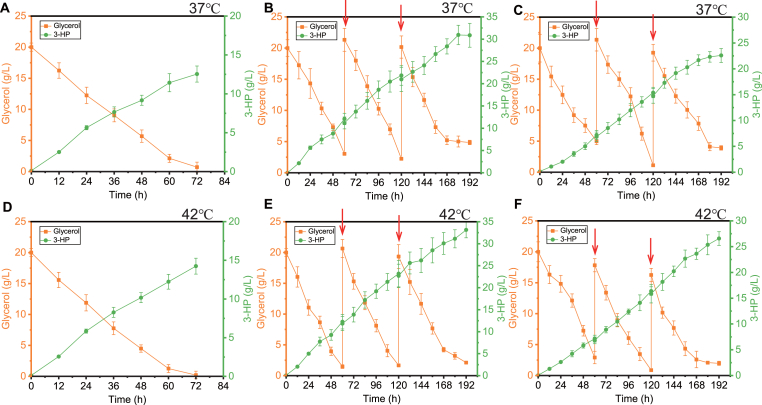 Figure 6
Peer Reviews
No public reviews on file for this paper yet. If you reviewed it on a platform where reviews are public (OpenReview, ICLR, NeurIPS, ICML), you can paste yours below so the community can read it here.
Videos
No videos yet. Explain this paper in a talk, walkthrough, or lecture? Add one.
Taxonomy
TopicsMicrobial Metabolic Engineering and Bioproduction · Enzyme Catalysis and Immobilization · Microbial metabolism and enzyme function