Bayesian Mixed Models Approach to Exploring Resilience: Impact of Stress on Subjective Health and Affects Over Time During the COVID‐19 Pandemic
Markus Schepers, Irene Schmidtmann, Sarah K. Schäfer, Simge Yilmaz, Rieke Baumkötter, Alica Hartmann, Julia Petersen, Nora Hettich‐Damm, Philipp Wild, Daniela Zahn, Daniel Wollschläger

TL;DR
This study uses Bayesian mixed models to explore how stress during the pandemic affects health and emotions over time, finding that social stressors have a stronger negative impact.
Contribution
The paper introduces a Bayesian mixed models approach for analyzing resilience with ordinal health and affect variables in a longitudinal pandemic context.
Findings
Social stressors like loss of social contacts had stronger negative associations with health and emotions than work-related stress.
Subjective health and emotions declined during lockdowns but recovered quickly afterward.
The study emphasizes the importance of social stress in resilience and suggests protective factors like social support for further research.
Abstract
Profound stressors such as the COVID‐19 pandemic have highlighted the importance of understanding resilience mechanisms and approaches for quantifying them in longitudinal studies. We used Bayesian mixed models to analyze resilience dynamics with ordinal dependent variables: subjective physical and mental health, and fear, sadness, and anger. The models included fixed effects for individual stressors and random intercepts for participants, applied to the Gutenberg‐COVID‐19 cohort study. There were 206,912 responses from 7386 participants (mean age 55.09 years, 51.52% women) over one year (Oct 29, 2020 ‐ Oct 25, 2021). Social stressors, such as loss of social contacts, had stronger negative associations with health and negative affects than work‐related stress. Subjective health and emotions declined during lockdowns but quickly recovered afterward. Our longitudinal study design and…
Genes, proteins, chemicals, diseases, species, mutations and cell lines named across the full text — each resolved to its canonical identifier and authoritative record.
Click any figure to enlarge with its caption.
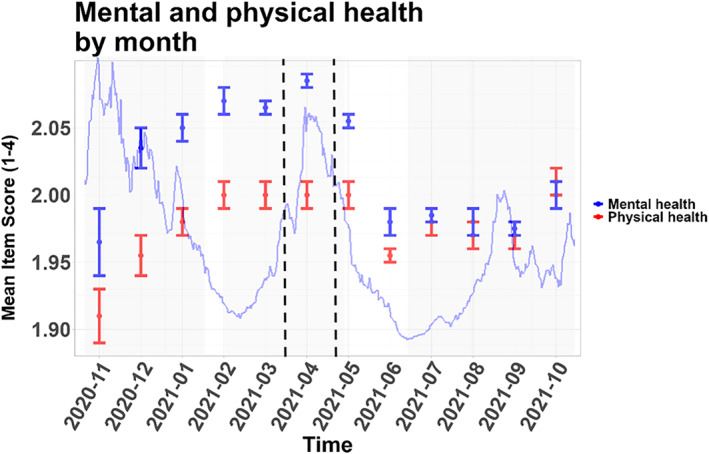 Figure 1
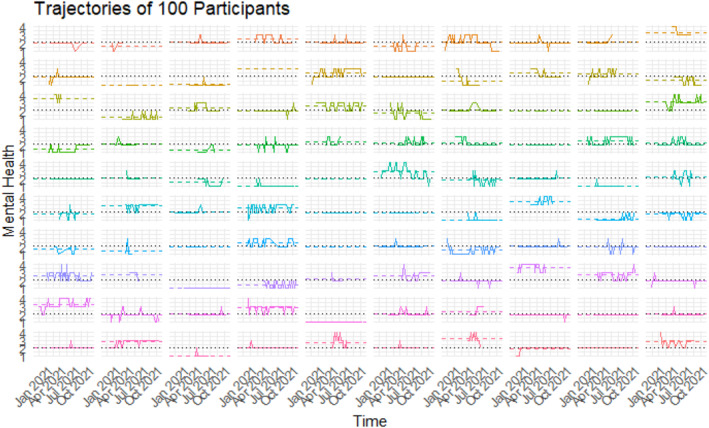 Figure 2
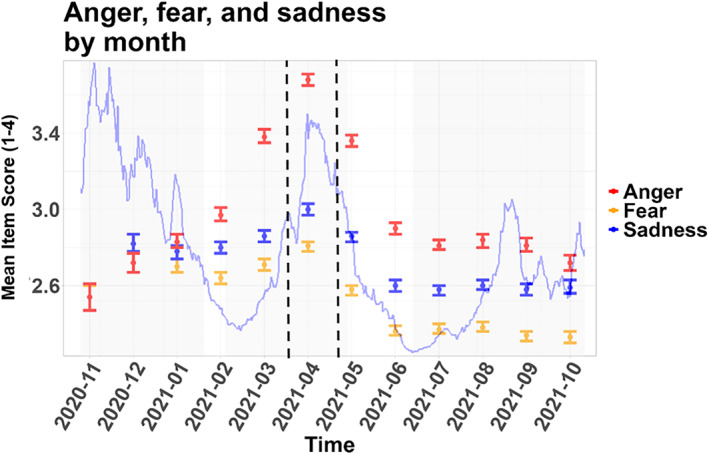 Figure 3
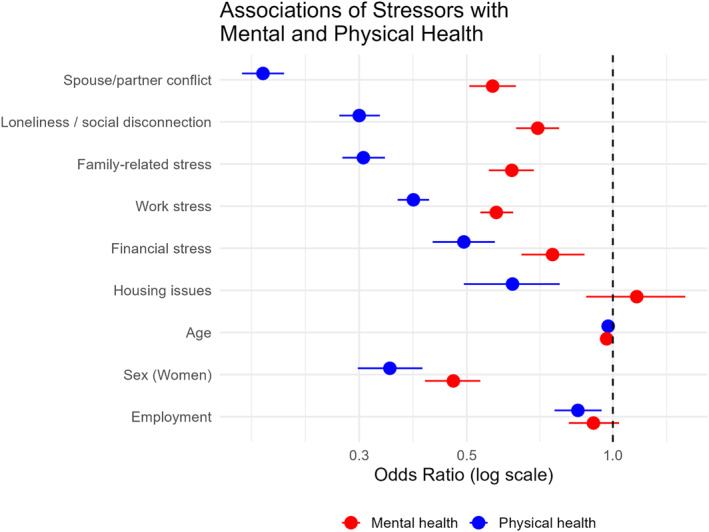 Figure 4
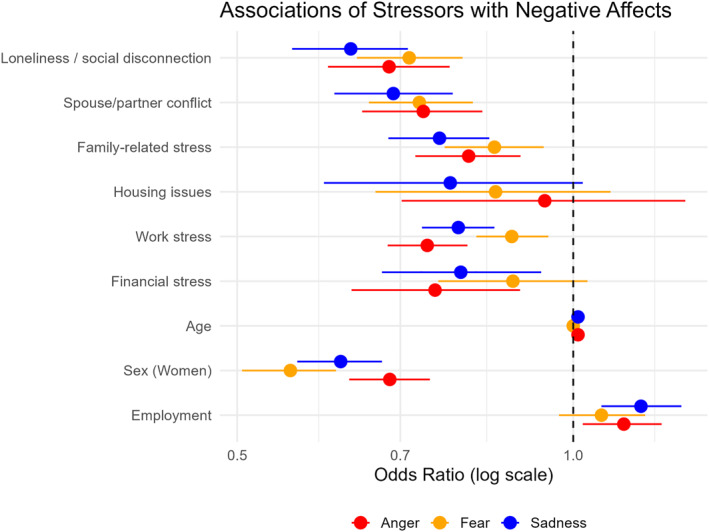 Figure 5
Peer Reviews
No public reviews on file for this paper yet. If you reviewed it on a platform where reviews are public (OpenReview, ICLR, NeurIPS, ICML), you can paste yours below so the community can read it here.
Videos
No videos yet. Explain this paper in a talk, walkthrough, or lecture? Add one.
Taxonomy
TopicsResilience and Mental Health · COVID-19 and Mental Health · Mental Health Research Topics