Reversing Anticoagulants: Influence of Anticoagulation Stewardship and Key Considerations for Optimizing Outcomes
William E. Dager, Megan A. Rech, Brian W. Gilbert

TL;DR
This paper discusses how pharmacist-led anticoagulation stewardship improves outcomes when reversing anticoagulants during urgent bleeding events.
Contribution
It highlights the role of pharmacists in standardizing and optimizing anticoagulant reversal through stewardship activities.
Findings
Pharmacists' stewardship activities positively influence urgent anticoagulation reversal outcomes.
Standardized approaches improve management of life-threatening bleeding events.
Anticoagulation stewardship offers opportunities for better patient care and safety.
Abstract
The reversal of anticoagulants can be a complex process with limited data describing the optimal overall approach beyond a specific reversal agent. Recent advances in anticoagulation stewardship have created opportunities to standardize and optimize the reversal of anticoagulants, especially in urgent life-threatening bleeding events. This article explores how pharmacists provided anticoagulation stewardship activities positively impact outcomes related to urgent anticoagulation reversal.
Genes, proteins, chemicals, diseases, species, mutations and cell lines named across the full text — each resolved to its canonical identifier and authoritative record.
Click any figure to enlarge with its caption.
 Figure 1
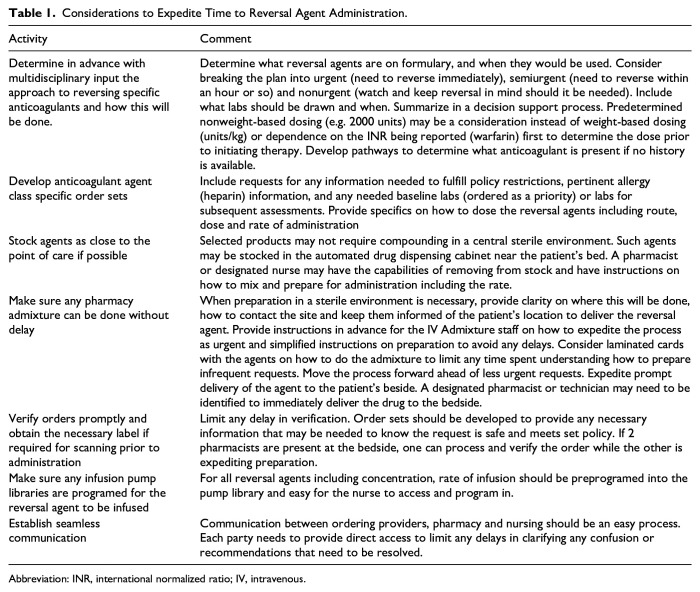 Figure 2
Peer Reviews
No public reviews on file for this paper yet. If you reviewed it on a platform where reviews are public (OpenReview, ICLR, NeurIPS, ICML), you can paste yours below so the community can read it here.
Videos
No videos yet. Explain this paper in a talk, walkthrough, or lecture? Add one.
Taxonomy
TopicsAtrial Fibrillation Management and Outcomes · Venous Thromboembolism Diagnosis and Management · Antiplatelet Therapy and Cardiovascular Diseases