Monitoring Knowledge, Attitudes, and Practices on Restraint Use in Adult and Pediatric Intensive Care Units: The Multicenter Development and Validation of the CON-Ti-IT Questionnaire
Loredana Dittura, Silvana Schreiber, Valentina Guidi, Manuela Giangreco, Giulia Zamagni, Erica Venier, Raffaella Di Meola, Elisabetta Balestreri, Giorgia Toso, Patrizia Sartorato, Luca Bertocchi, Sara Buchini, Raffaella Dobrina

TL;DR
This study created and validated a questionnaire to assess ICU nurses' knowledge, attitudes, and practices regarding the use of restraints in both adult and pediatric settings.
Contribution
The first validated tool for assessing ICU nurses' KAP on restraint use in both adult and pediatric settings, particularly for non-English-speaking contexts.
Findings
The CON-Ti-IT questionnaire has 29 items across three subscales with strong content validity (CVI = 0.96).
The Practices subscale showed good internal consistency (Cronbach’s α = 0.89), while Attitudes and Knowledge had lower consistency.
Exploratory factor analysis confirmed the tool's structural validity and led to the removal of three items.
Abstract
Background/Objectives: The use of physical restraints in adult and pediatric intensive care units (ICUs) is common yet controversial. While restraints are intended to prevent treatment interference or self-harm, they pose significant physical, psychological, and ethical risks. Nurses in intensive care units play a key role in decisions about restraint application, but there is a global lack of validated tools to assess their knowledge, attitudes, and practices, particularly in non-English-speaking contexts. Aim of this study was to develop and validate a questionnaire for assessing knowledge, attitudes, and practices (KAP) of ICU nurses regarding restraint use in adult and pediatric settings. Materials and Methods: A multi-method psychometric validation study was conducted across both adult and pediatric ICU settings at two hospitals in northern Italy. Questionnaire development included…
Genes, proteins, chemicals, diseases, species, mutations and cell lines named across the full text — each resolved to its canonical identifier and authoritative record.
Click any figure to enlarge with its caption.
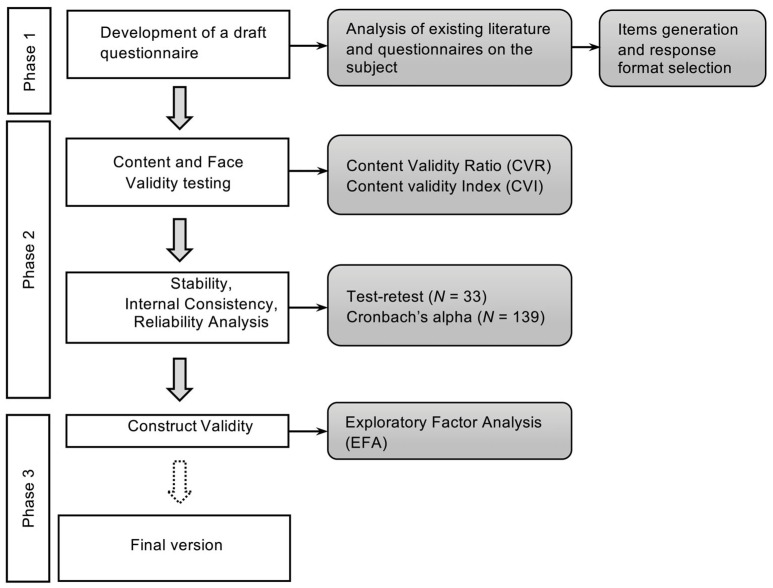 Figure 1
Peer Reviews
No public reviews on file for this paper yet. If you reviewed it on a platform where reviews are public (OpenReview, ICLR, NeurIPS, ICML), you can paste yours below so the community can read it here.
Videos
No videos yet. Explain this paper in a talk, walkthrough, or lecture? Add one.
Taxonomy
TopicsHealthcare Decision-Making and Restraints · Traumatic Brain Injury Research · Workplace Violence and Bullying