Screening Heterofermentative Lactic Acid Bacteria as Silage Inoculants for Osmotolerance
Siriwan D. Martens, Wolfgang Wagner, Mariana Schneider, Klaus Hünting, Susanne Ohl, Christof Löffler

TL;DR
This study explores how to select lactic acid bacteria that can tolerate high dry matter in silage, improving silage stability.
Contribution
A new in vitro method is proposed to assess osmotolerance in heterofermentative lactic acid bacteria for silage inoculants.
Findings
Heterofermentative LAB are less affected by high dry matter and osmolality than homofermentative LAB.
The in vitro test can qualitatively assess osmotolerance but not rank LABhe strains quantitatively.
Abstract
Heterofermentative lactic acid bacteria (LABhe) can help to increase aerobic stability of silages. As high dry matter silages are especially prone to aerobic deterioration, the question was whether an in vitro test could help to select for LABhe with tolerance to these conditions, that is, to high osmolality. A medium proven for homofermentative lactic acid bacteria (LABho) with high sugar concentration was applied in vitro while validating the results in high DM grass silages in situ. The pH was measured at 0, 24, 36 and 48 h or after 5 d as indicator for the bacterial fermentation activity and compared. As a result, LABhe showed to be far less susceptible to high DM and osmolality respectively, compared to LABho. It was concluded that the in vitro test allows for qualitative assessment of the osmotolerance of LABhe, but not for quantitative ranking between LABhe strains.
Genes, proteins, chemicals, diseases, species, mutations and cell lines named across the full text — each resolved to its canonical identifier and authoritative record.
Click any figure to enlarge with its caption.
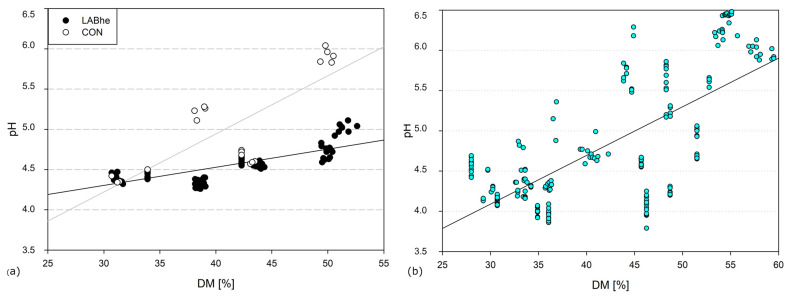 Figure 1
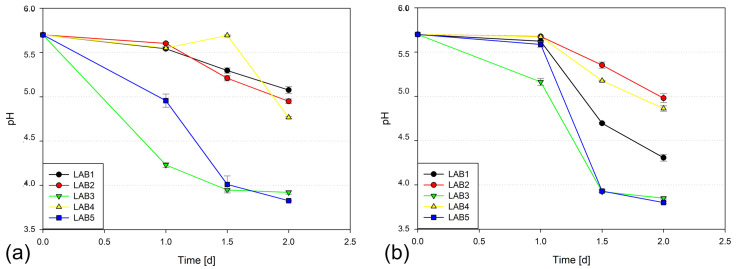 Figure 2
Peer Reviews
No public reviews on file for this paper yet. If you reviewed it on a platform where reviews are public (OpenReview, ICLR, NeurIPS, ICML), you can paste yours below so the community can read it here.
Videos
No videos yet. Explain this paper in a talk, walkthrough, or lecture? Add one.
Taxonomy
TopicsRuminant Nutrition and Digestive Physiology · Soil Carbon and Nitrogen Dynamics · Anaerobic Digestion and Biogas Production