Oxidation of Amorphous Porous VOx at Low Temperatures for the Formation of Thermochromic VO2 Films
Hiedra Acosta-Rivera, Victor Rico, Francisco Javier Ferrer, Teresa Cristina Rojas, Rafael Alvarez, Nicolas Martin, Agustín R. González-Elipe, Alberto Palmero

TL;DR
A low-temperature oxidation process creates thermochromic VO2 films from amorphous VOx, improving transparency and optical modulation.
Contribution
A novel low-temperature oxidation method is introduced to form VO2 domains in amorphous VOx films, enabling thermochromic performance.
Findings
Low-temperature oxidation at 260 °C forms VO2, V3O7, and V2O5 crystalline domains in VOx films.
Optimal thermochromic performance occurs at [O]/[V] = 1.5 and 280 °C, with 50% near-infrared optical modulation.
Oxidation causes volume expansion, reducing pores and enhancing transparency and electrical modulation.
Abstract
Thermochromic VO2 crystalline domains have been formed in amorphous nanocolumnar VOx films by means of a low-temperature oxidation process. The oxidation of an amorphous film with [O]/[V] below 1.9 favors the formation of VO2, V3O7, and V2O5 crystalline domains in the material for temperatures as low as 260 °C, while values above 1.9 lead to the sole formation of the V2O5 phase. It is found that the absorption of oxygen also causes a relevant film volume expansion that makes pores shrink. Under some specific conditions, low-temperature oxidation causes the near disappearance of the amorphous regions, clearly improving the overall transparency and optimizing the optical and electrical modulation capabilities associated with the presence of crystalline VO2 domains. The best thermochromic performance was found when the original stoichiometry was [O]/[V] = 1.5 and the oxidation temperature…
Genes, proteins, chemicals, diseases, species, mutations and cell lines named across the full text — each resolved to its canonical identifier and authoritative record.
Click any figure to enlarge with its caption.
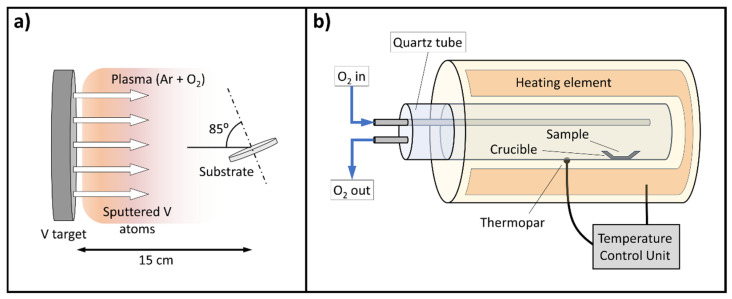 Figure 1
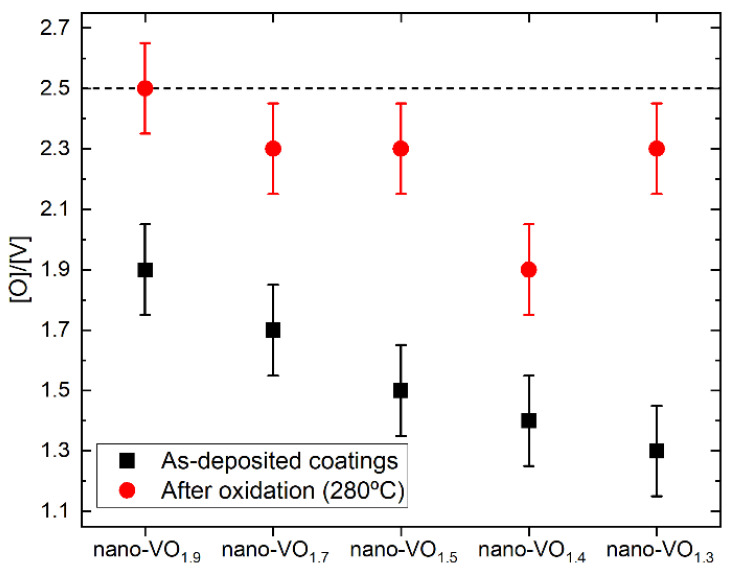 Figure 2
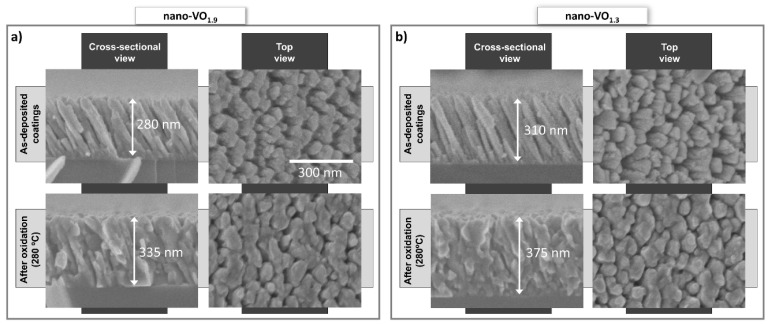 Figure 3
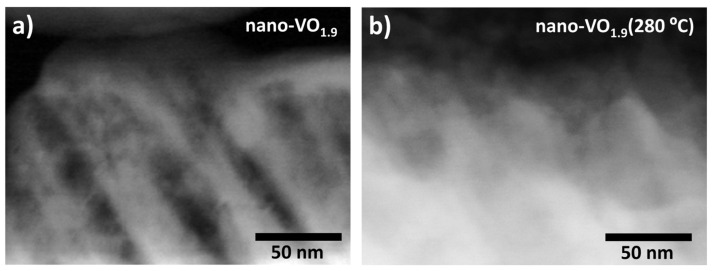 Figure 4
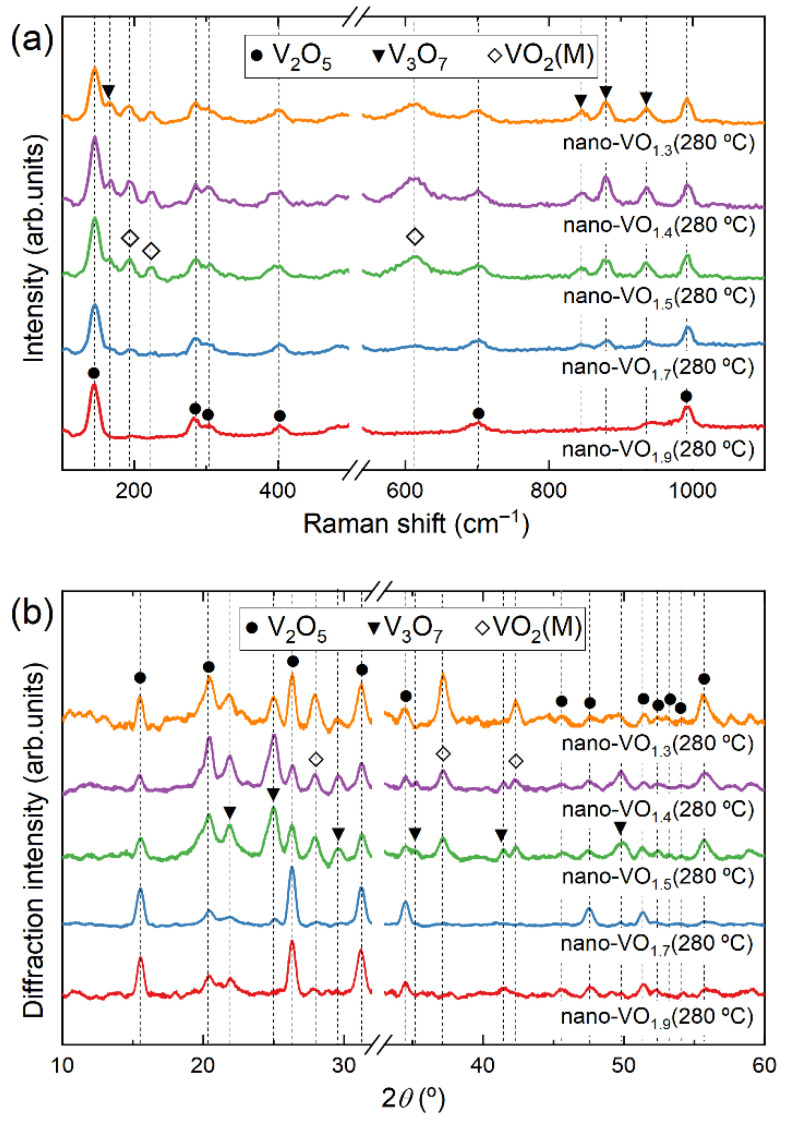 Figure 5
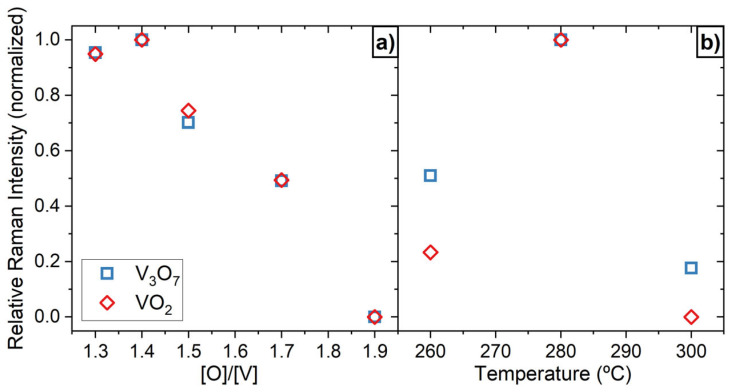 Figure 6
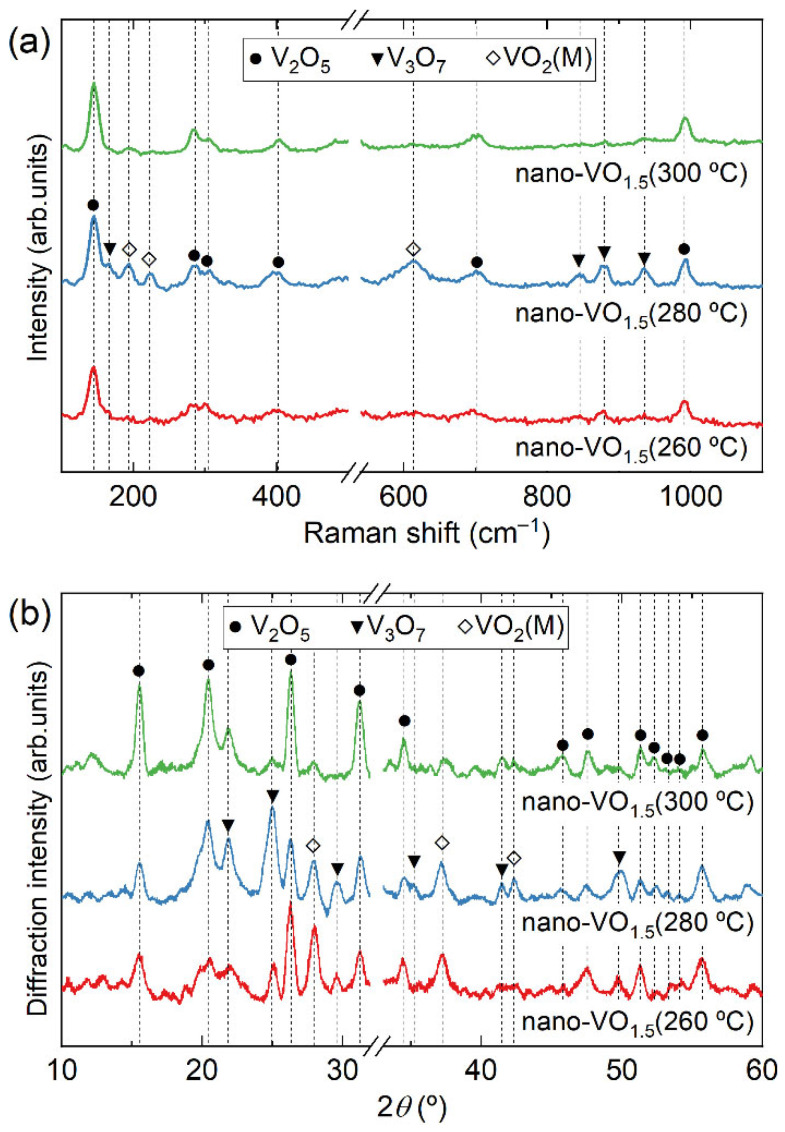 Figure 7
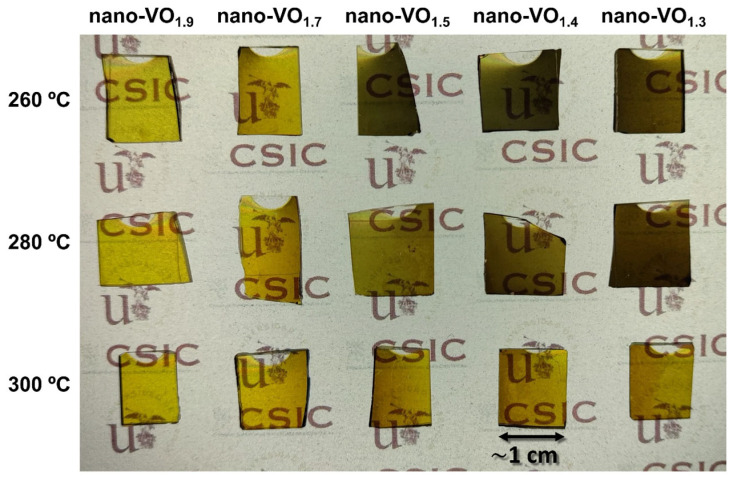 Figure 8
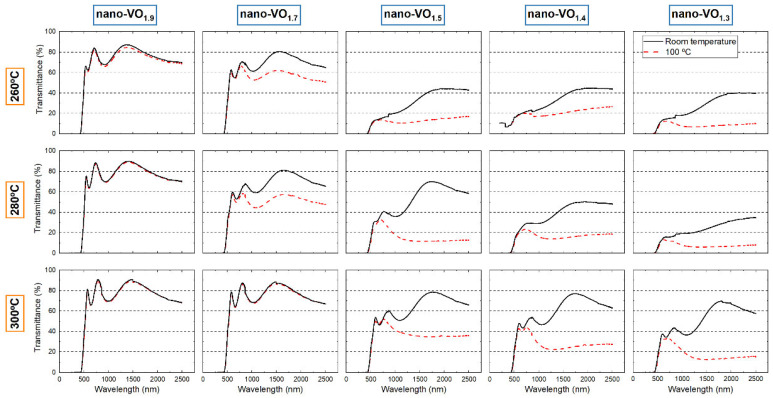 Figure 9
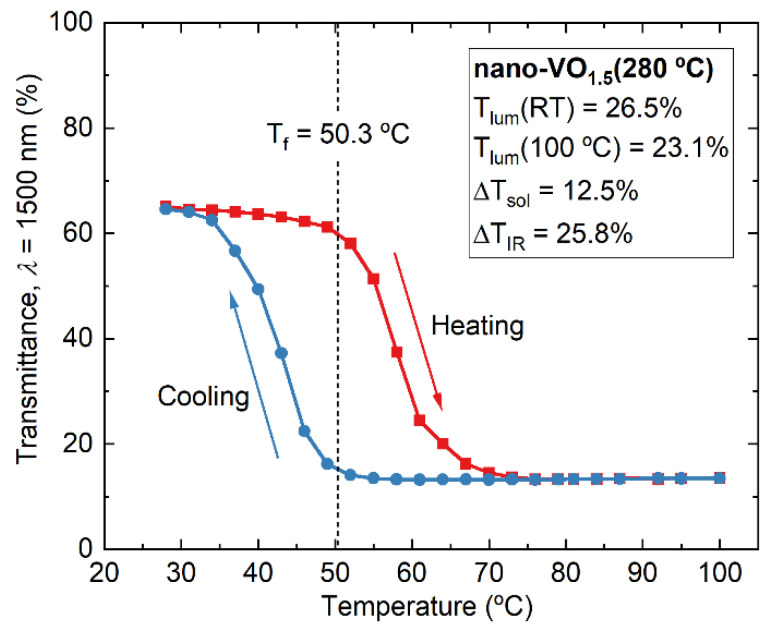 Figure 10
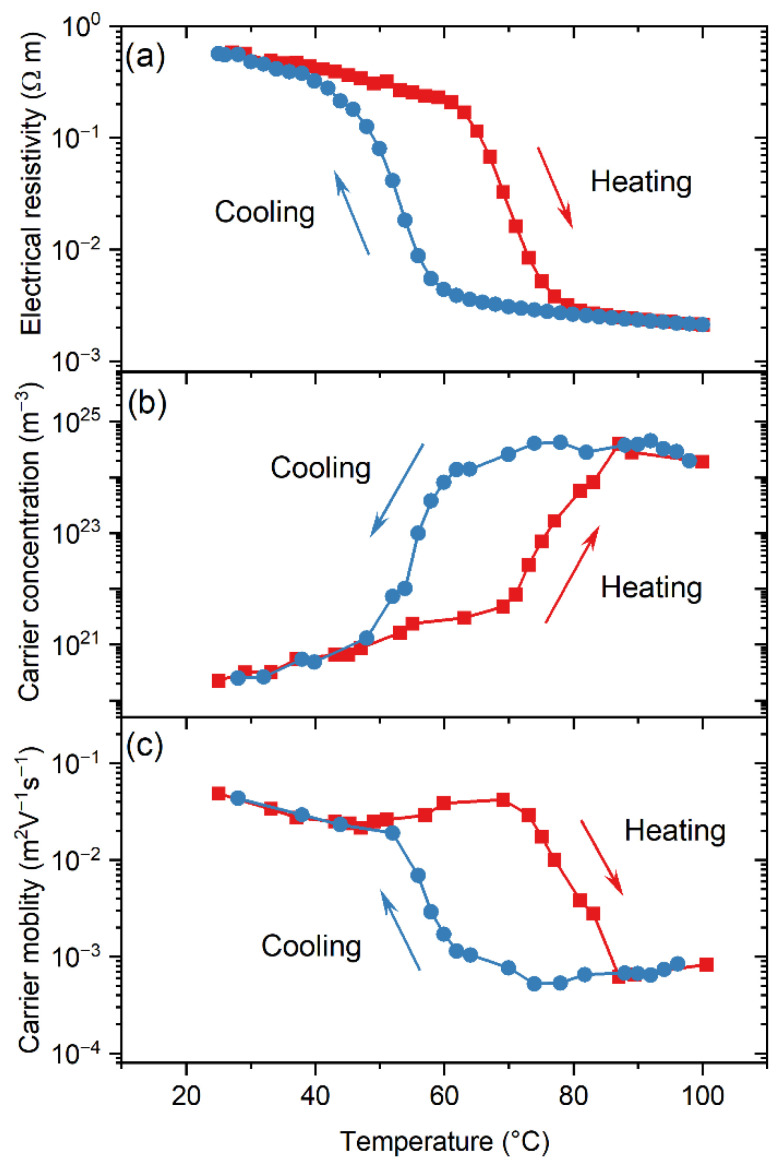 Figure 11
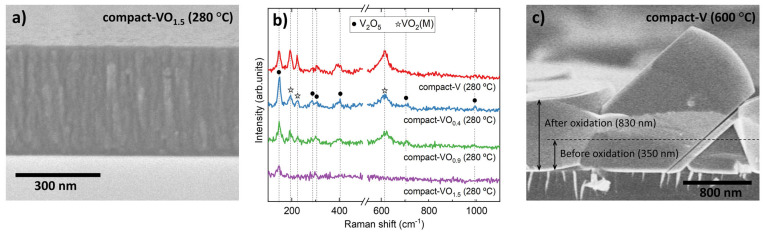 Figure 12
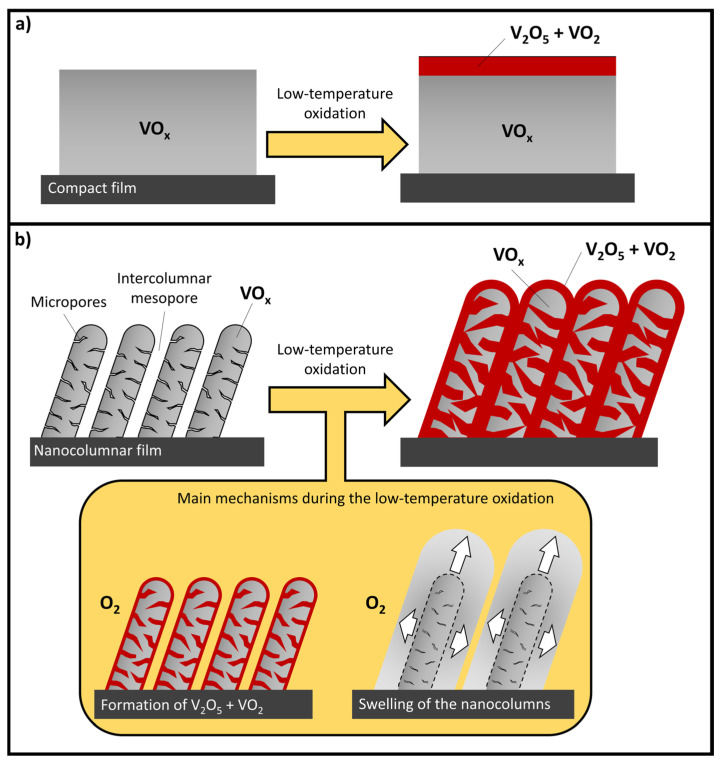 Figure 13
Peer Reviews
No public reviews on file for this paper yet. If you reviewed it on a platform where reviews are public (OpenReview, ICLR, NeurIPS, ICML), you can paste yours below so the community can read it here.
Videos
No videos yet. Explain this paper in a talk, walkthrough, or lecture? Add one.
Taxonomy
TopicsTransition Metal Oxide Nanomaterials · Catalysis and Oxidation Reactions · Copper-based nanomaterials and applications