Energy-Rich Molecules and Group Transfer Potentials in Energetic Coupling Reactions
Lucien Bettendorff, Pierre Wins

TL;DR
The paper explains how certain molecules, like NTPs and thioesters, release energy through weak bonds and how this relates to biochemical energy coupling.
Contribution
The paper clarifies the distinction between energy-rich molecules and group transfer potential, emphasizing their specific biochemical contexts.
Findings
Energy-rich molecules like NTPs and thioesters release energy due to weak bonds being replaced by stronger ones.
The term 'energy-rich' can be misleading and is best replaced by 'high group transfer potential' for certain molecules.
Dioxygen does not fit the high group transfer potential concept, highlighting the need for distinct terminology.
Abstract
The concept of energy-rich molecules is central to metabolic activity and the coupling of catabolic and anabolic processes. Here, we use the term “energy-rich” only in the (bio)chemical sense, i.e., for molecules containing particularly weak bonds that when exchanged for stronger bonds results in a release of energy (generally ≥ 20 kJ mol−1). The typical energy-rich molecules are nucleoside triphosphates (NTPs), thioesters, and dioxygen. It must be emphasized that the number of bonds is conserved in biochemical reactions, so that the difference in free energy between substrates and products only depends on the difference in bond energies. It is evident that using the term “energy-rich” for molecules with weak bonds is subject to misinterpretation. Therefore, some authors suggested to replace this term by molecule of high group transfer potential. This is justified for NTPs and…
Genes, proteins, chemicals, diseases, species, mutations and cell lines named across the full text — each resolved to its canonical identifier and authoritative record.
Click any figure to enlarge with its caption.
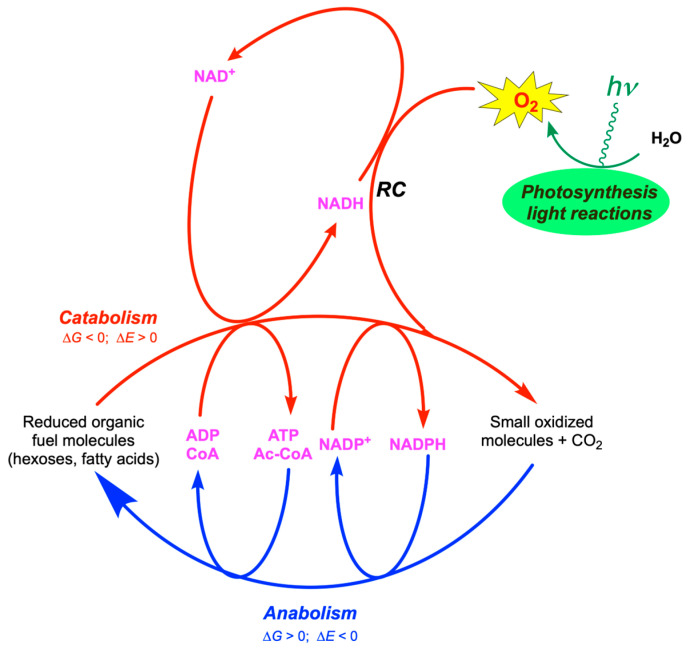 Figure 1
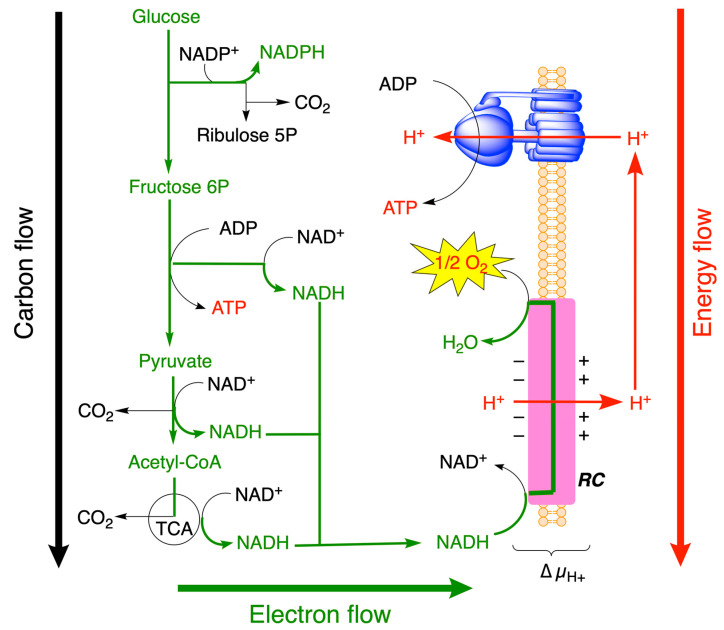 Figure 2
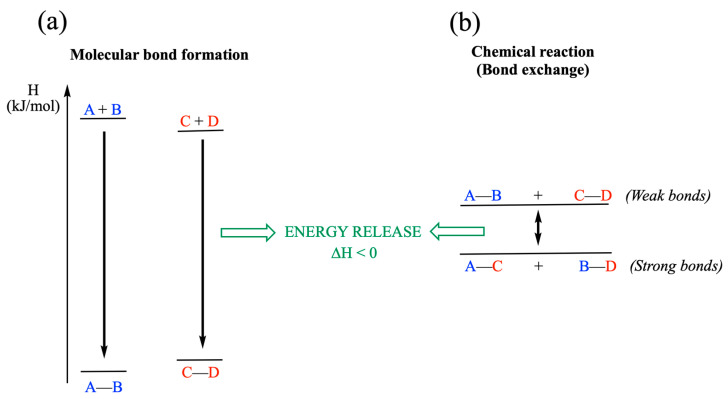 Figure 3
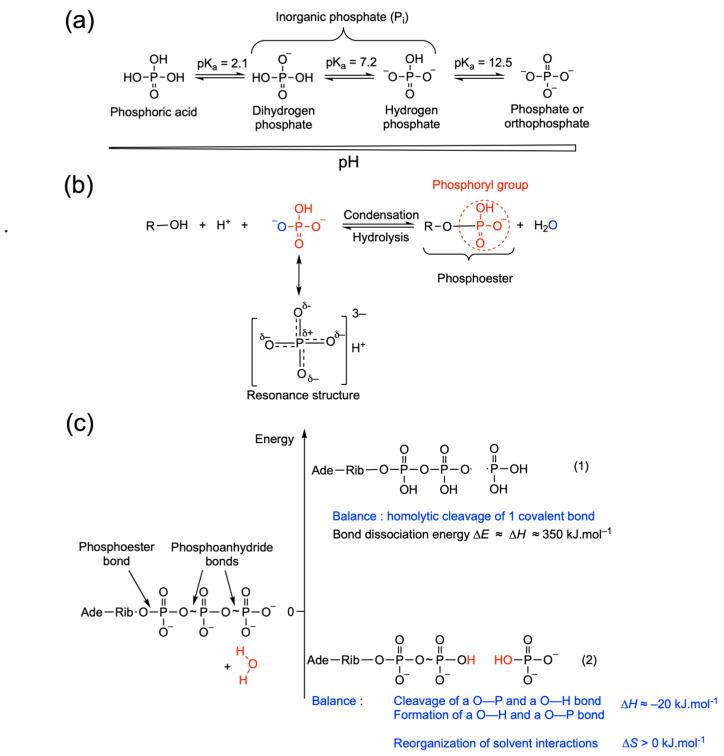 Figure 4
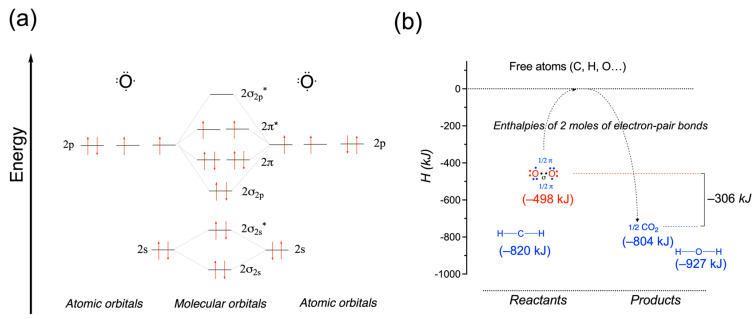 Figure 5
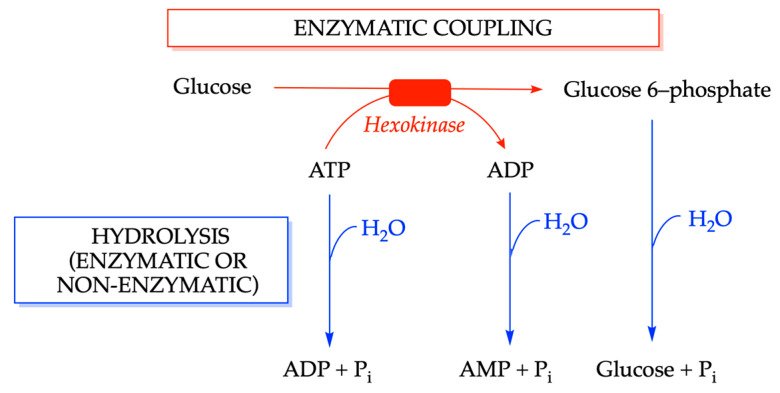 Figure 6
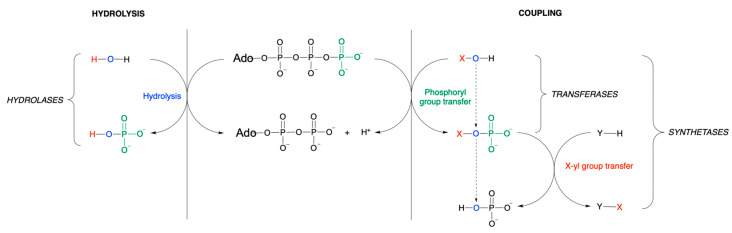 Figure 7
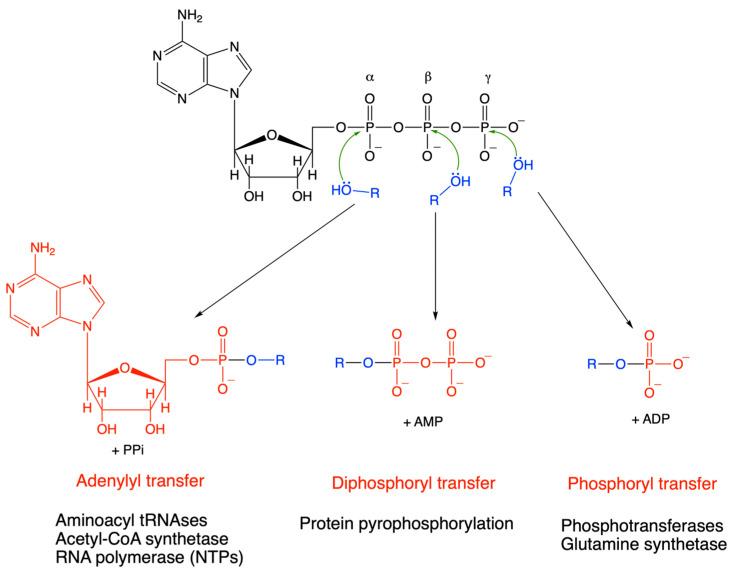 Figure 8
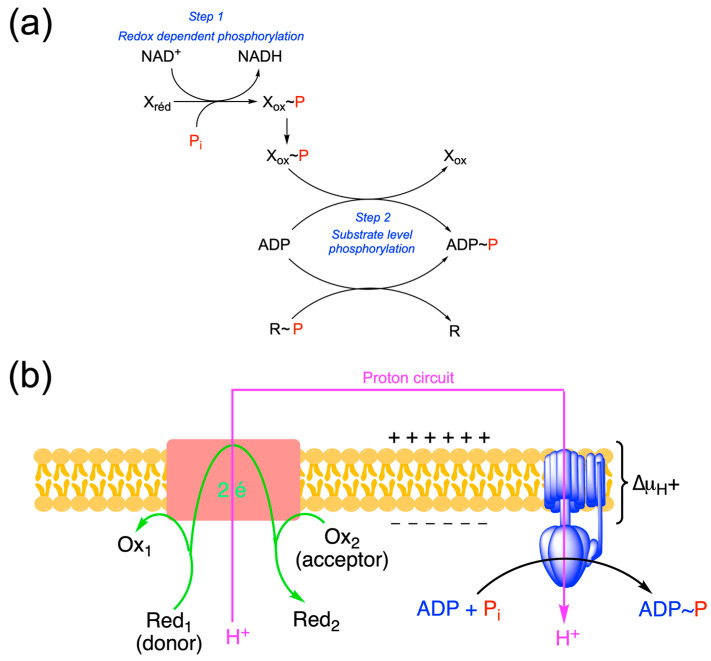 Figure 9
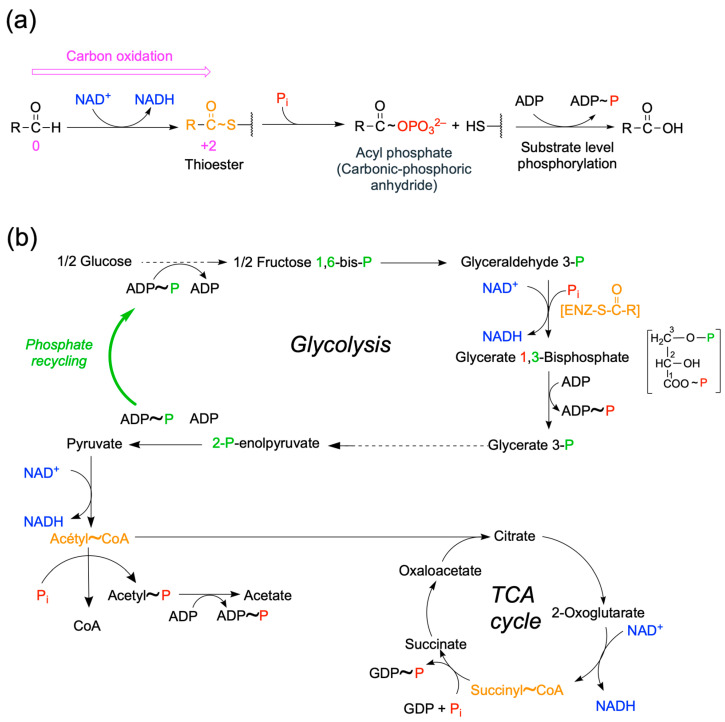 Figure 10
Peer Reviews
No public reviews on file for this paper yet. If you reviewed it on a platform where reviews are public (OpenReview, ICLR, NeurIPS, ICML), you can paste yours below so the community can read it here.
Videos
No videos yet. Explain this paper in a talk, walkthrough, or lecture? Add one.
Taxonomy
TopicsChemical Reaction Mechanisms · ATP Synthase and ATPases Research · Click Chemistry and Applications