Characterization of Large Extracellular Vesicles Released by Apoptotic and Pyroptotic Cells
Delaram Khamari, Nora Fekete, Ririka Tamura, Raeeka Khamari, Agnes Kittel, Bence Nagy, Luigi Menna, Zsuzsanna Darula, Alicia Galinsoga, Eva Hunyadi-Gulyas, Maximilien Bencze, Edit I. Buzas

TL;DR
This study explores large extracellular vesicles released during cell death, revealing distinct protein profiles that could help understand their role in health and disease.
Contribution
The study identifies unique molecular signatures of large EVs released during apoptosis and pyroptosis, offering new insights into their biological roles.
Findings
Apoptotic and pyroptotic cells release large EVs with distinct proteomic profiles.
Pyroptotic EVs contain RNA-binding and chromatin-associated proteins, while apoptotic EVs carry dsDNA and active caspase-3/7.
EVs from dying cells show increased Annexin V binding and decreased CD9 expression.
Abstract
Extracellular vesicles (EVs) are emerging as key factors in maintaining cellular homeostasis, critical mediators of intercellular communication, potential biomarkers, and therapeutic tools. While small EVs have been extensively characterized, the molecular signatures of large EVs (including those generated during regulated cell death pathways) remain poorly defined. Here, we investigated the characteristics of large EVs released during apoptosis and pyroptosis by human monocytic cell lines (THP-1 and U937). Apoptosis was induced by staurosporine and blocked using the pan-caspase inhibitor Q-VD-OPh, whereas pyroptosis was triggered by LPS/nigericin and inhibited with a selective NLRP3 inhibitor. We found that both forms of regulated cell death markedly enhanced the release of large EVs. Both apoptotic and pyroptotic large EVs showed increased Annexin V binding and decreased CD9…
Genes, proteins, chemicals, diseases, species, mutations and cell lines named across the full text — each resolved to its canonical identifier and authoritative record.
Click any figure to enlarge with its caption.
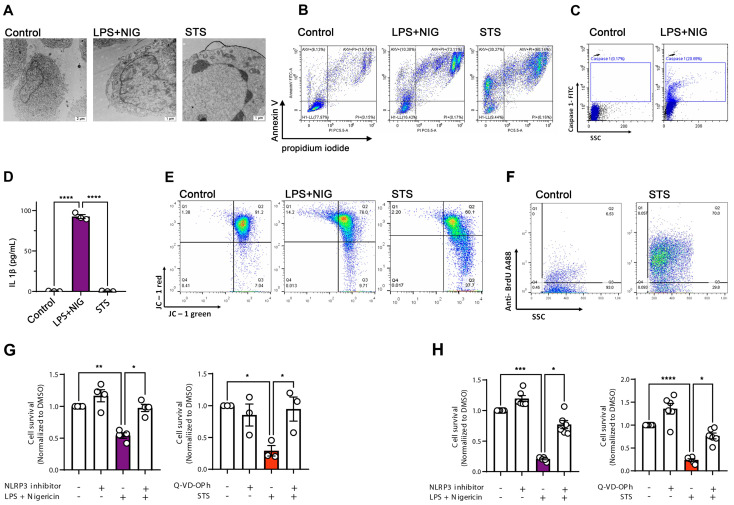 Figure 1
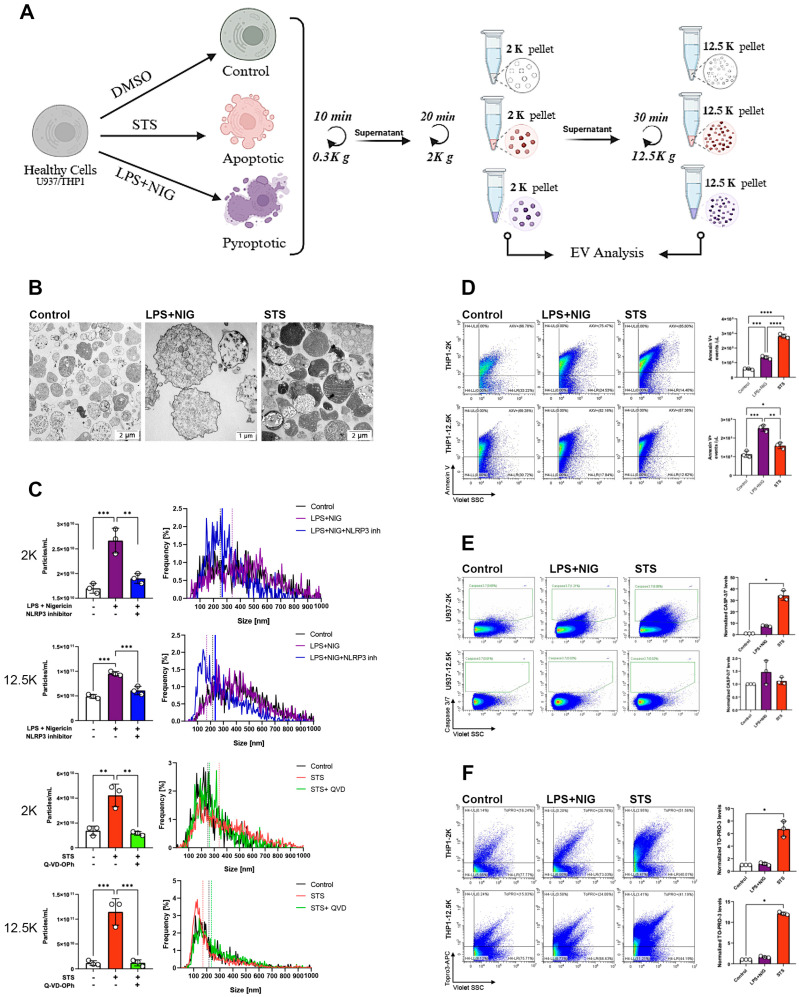 Figure 2
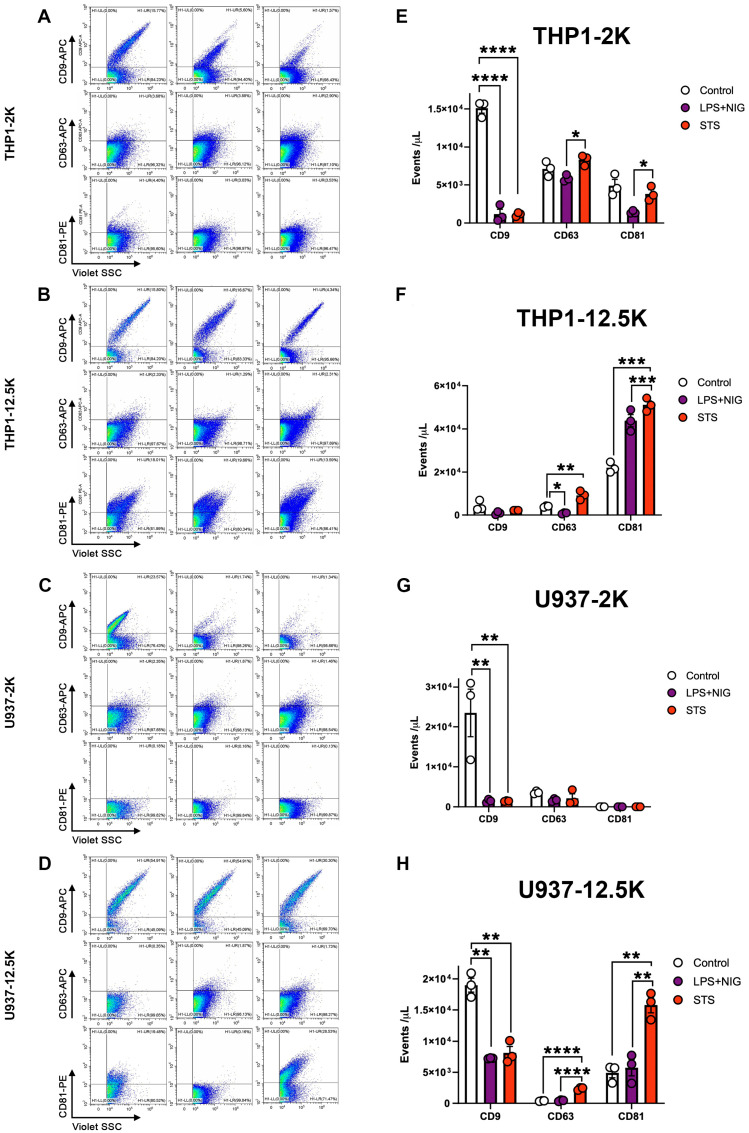 Figure 3
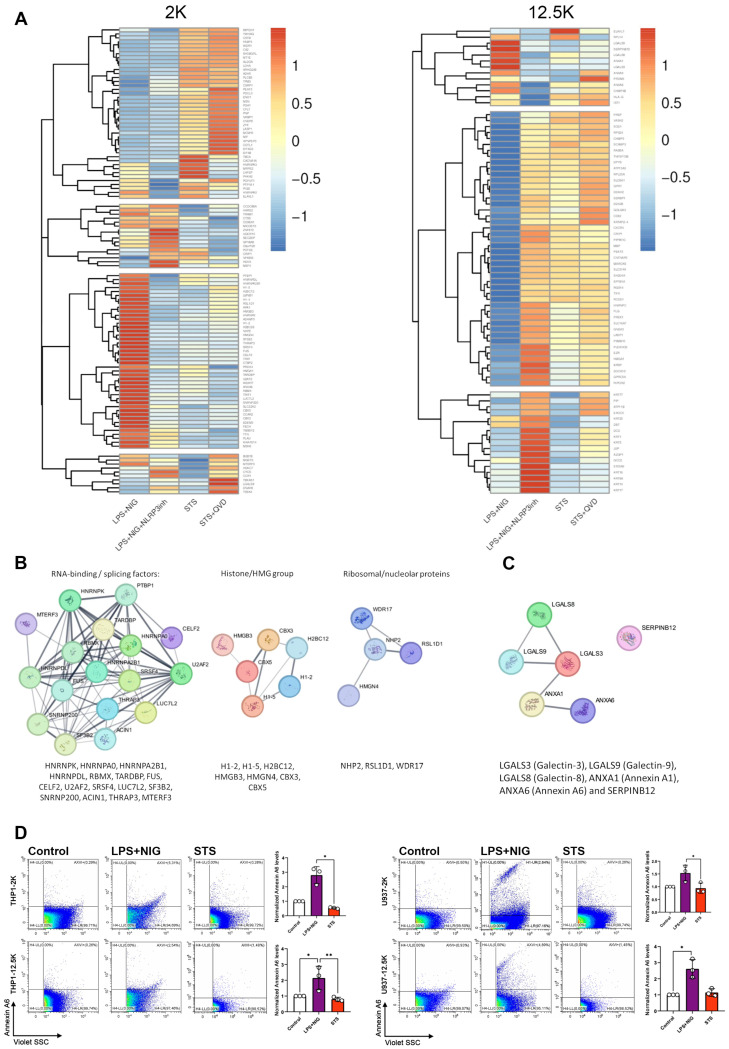 Figure 4
Peer Reviews
No public reviews on file for this paper yet. If you reviewed it on a platform where reviews are public (OpenReview, ICLR, NeurIPS, ICML), you can paste yours below so the community can read it here.
Videos
No videos yet. Explain this paper in a talk, walkthrough, or lecture? Add one.
Taxonomy
TopicsExtracellular vesicles in disease · interferon and immune responses · Inflammasome and immune disorders