Evaluation of the Antimicrobial, Cyto-Genotoxic, and Antigenotoxic Activity of Dipteryx odorata Seed Extracts
Margarita Dormousoglou, Ioannis Galiatsatos, Panagiota Stathopoulou, Regina Fragkouli, Maria Antonopoulou, Damian E. L. Fetzer, Marcos L. Corazza, Vasilios Triantafylidis, George Tsiamis, Dimitris Vlastos, Ioanna Efthimiou

TL;DR
This study evaluates the antimicrobial, cyto-genotoxic, and antigenotoxic effects of Dipteryx odorata seed extracts on human pathogens and lymphocytes.
Contribution
This is the first comprehensive evaluation of the cyto-genotoxic and antigenotoxic profiles of tonka bean extracts.
Findings
TBSE showed significant antimicrobial activity, while TBSH was less effective.
TBSE at 0.2 µL/mL showed genotoxicity, but at low doses exhibited antigenotoxic activity against mitomycin C.
TBSH increased genotoxic potency when combined with mitomycin C.
Abstract
In the present study, Dipteryx odorata seeds (tonka beans) were extracted via the Soxhlet method to acquire ethanolic (TBSE) and hexane (TBSH) extracts. Both extracts were characterized using Gas Chromatography–Mass Spectrometry (GC-MS). The antimicrobial activity was evaluated against two Gram-positive (Bacillus licheniformis, Staphylococcus epidermidis) and two Gram-negative (Escherichia coli, Pseudomonas aeruginosa) human pathogens using the disc diffusion test (DDT), followed by the determination of Minimum Inhibitory Concentrations (MIC). The Cytokinesis-Block Micronucleus (CBMN) assay was applied in human lymphocytes (0.1, 0.2, 0.5 µL/mL), to investigate the cyto-genotoxic activity of both extracts, while their antigenotoxic potential was evaluated against mitomycin C (MMC) (0.5 μg/mL). Coumarin was the major constituent in both extracts. TBSE exhibited remarkable antimicrobial…
Genes, proteins, chemicals, diseases, species, mutations and cell lines named across the full text — each resolved to its canonical identifier and authoritative record.
Click any figure to enlarge with its caption.
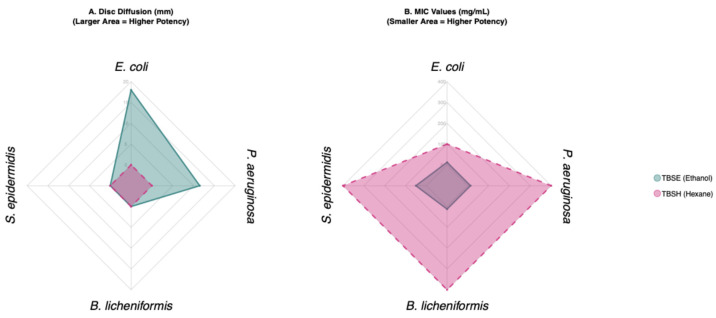 Figure 1
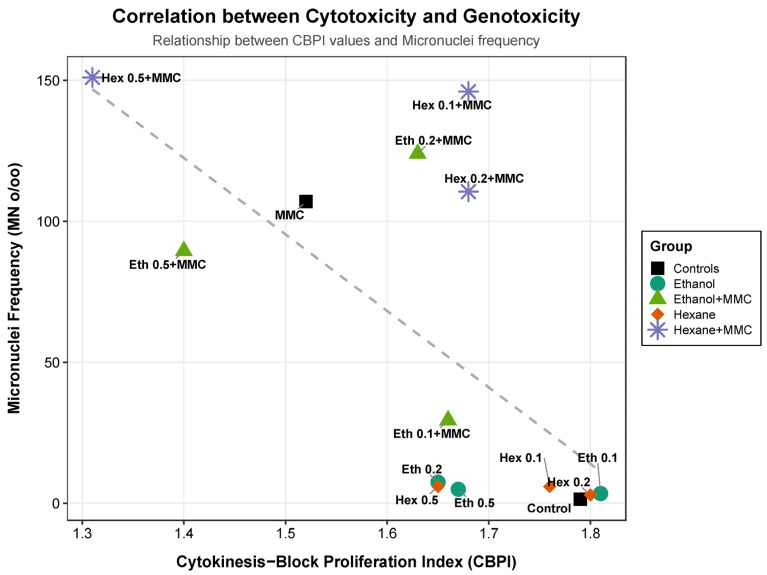 Figure 2
Peer Reviews
No public reviews on file for this paper yet. If you reviewed it on a platform where reviews are public (OpenReview, ICLR, NeurIPS, ICML), you can paste yours below so the community can read it here.
Videos
No videos yet. Explain this paper in a talk, walkthrough, or lecture? Add one.
Taxonomy
TopicsTraditional and Medicinal Uses of Annonaceae · Botanical Research and Chemistry · Insect Pest Control Strategies