Effect of a grace period on false alarm rates of smartwatch-based out-of-hospital cardiac arrest detection systems: a pilot study
Roelof G. Hup, Chaimae Bouchnaf, Myrthe A. Plaisier, Fatuma M.A. Omar, Tobias A. Machiavello, Sophie L.M. van Spreuwel, Hanno L. Tan, Xi Long, Rik Vullings

TL;DR
This study explores how a grace period in smartwatches can reduce false alarms for detecting out-of-hospital cardiac arrests, potentially improving emergency response systems.
Contribution
The study introduces and evaluates the concept of a grace period to reduce false alarms in smartwatch-based cardiac arrest detection systems.
Findings
(Audio)tactile alarms significantly reduced response times compared to auditory-only alarms.
Grace periods of 10 and 20 seconds would cancel 98.3% and 99.6% of (audio)tactile alarms, respectively.
Time of day, age, and sex had no significant effect on alarm response times.
Abstract
Out-of-hospital cardiac arrest (OHCA) is a leading cause of mortality, and rapid treatment is life-saving. Early detection is crucial to promptly start the chain of survival, leading to increasing interest in smartwatch-based OHCA detection. Introducing a grace period, during which the wearer can cancel a false alarm before emergency medical services (EMS) are notified, may improve system reliability. This study evaluates how this grace period affects false alarm rates. In this study, 26 participants wore smartwatches that produced auditory, tactile or audiotactile alarms at random times during daytime, while instructed to cancel these alarms as quickly as possible. Response times were registered by the smartwatch, alongside demographic and time-of-day data. Bayesian time-to-event analysis assessed the effects of alarm type, time of day, and demographic variables. (Audio)tactile…
Genes, proteins, chemicals, diseases, species, mutations and cell lines named across the full text — each resolved to its canonical identifier and authoritative record.
Click any figure to enlarge with its caption.
 Figure 1
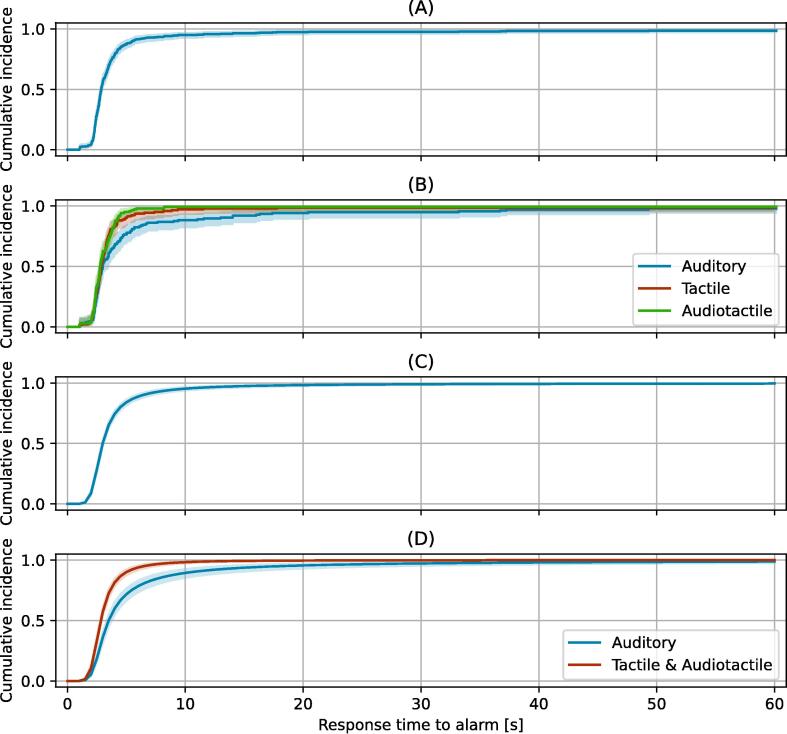 Figure 2
Peer Reviews
No public reviews on file for this paper yet. If you reviewed it on a platform where reviews are public (OpenReview, ICLR, NeurIPS, ICML), you can paste yours below so the community can read it here.
Videos
No videos yet. Explain this paper in a talk, walkthrough, or lecture? Add one.
Taxonomy
TopicsHealthcare Technology and Patient Monitoring · Non-Invasive Vital Sign Monitoring · ECG Monitoring and Analysis