Effect of screw thread type on implant-related complications following femoral neck fracture fixation in non-geriatric adults: a multicenter, retrospective cohort study
Yuquan Bian, Kai Yang, Sen Lin, Shizan He, Dajun Jiang, Weitao Jia

TL;DR
This study compares the use of partially and fully threaded screws in treating femoral neck fractures in non-geriatric adults, finding that screw type affects complication rates depending on fracture severity.
Contribution
The study provides evidence-based guidance on screw thread type selection for femoral neck fracture fixation based on fracture comminution status.
Findings
Partially threaded screws are associated with lower implant cut-out rates in non-comminuted fractures.
Fully threaded screws reduce femoral neck shortening and avascular necrosis in comminuted fractures.
Fracture comminution significantly increases the risk of femoral neck shortening and avascular necrosis.
Abstract
This study compared implant-related complications after femoral neck fracture fixation using partially vs. fully threaded cannulated screws in non-geriatric patients. This retrospective cohort study included 1,035 patients with femoral neck fractures aged 18–60 years treated with cannulated screws from 2012 to 2022. Patients were followed until clinical failure—defined as the occurrence of any of the following: implant cut-out, femoral neck shortening, nonunion, or avascular necrosis—or for a minimum of 2 years. Patients were categorized into two groups according to thread type and balanced using propensity score matching. The primary outcome was the clinical failure rate. Subgroup analyses were performed for comminuted vs. non-comminuted fractures. The overall clinical failure rate was 35.4%, including implant cut-out (1.9%), femoral neck shortening (15.0%), nonunion (9.3%) and…
Genes, proteins, chemicals, diseases, species, mutations and cell lines named across the full text — each resolved to its canonical identifier and authoritative record.
Click any figure to enlarge with its caption.
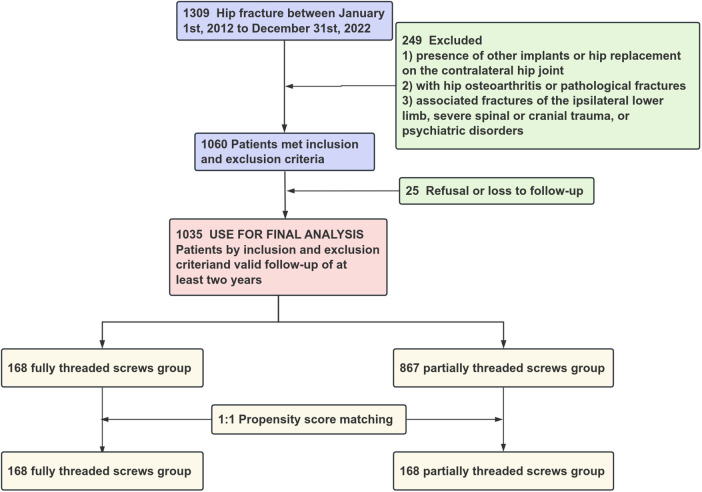 Figure 1
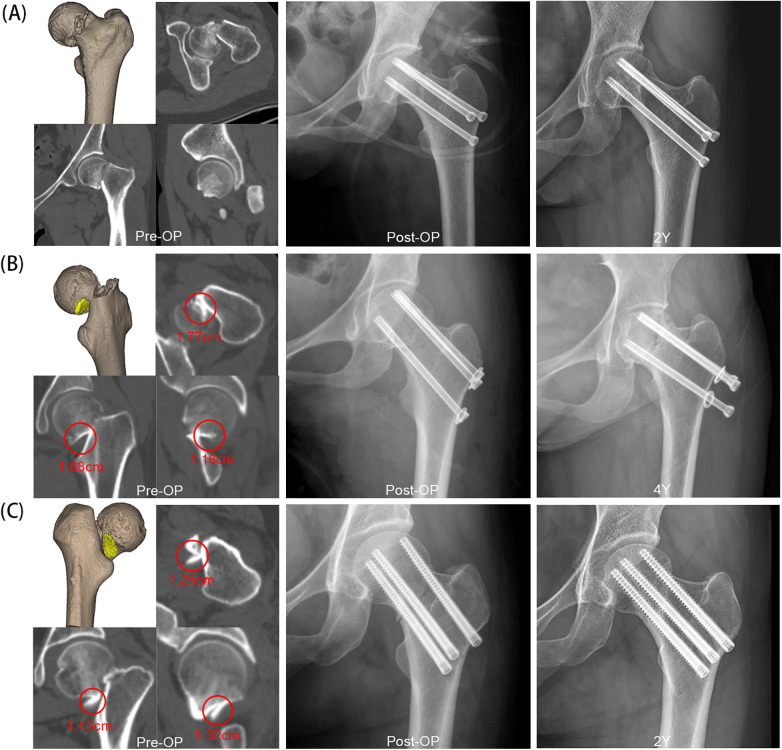 Figure 2
Peer Reviews
No public reviews on file for this paper yet. If you reviewed it on a platform where reviews are public (OpenReview, ICLR, NeurIPS, ICML), you can paste yours below so the community can read it here.
Videos
No videos yet. Explain this paper in a talk, walkthrough, or lecture? Add one.
Taxonomy
TopicsHip and Femur Fractures · Bone fractures and treatments · Orthopaedic implants and arthroplasty