Figure–ground relationship of voices in musical structure modulates reciprocal frontotemporal connectivity
Chan Hee Kim, Jeong-Eun Seo, Jaeho Seol, Chun Kee Chung

TL;DR
This study explores how the brain's connectivity changes when perceiving a melody as either the main focus or background in music.
Contribution
The study reveals how repeated exposure to music can shift brain connectivity related to melody perception.
Findings
Frontotemporal connectivity patterns changed in repeated musical phrases across two variations.
The TTLS melody became less prominent while lower voices became more prominent after repeated exposure.
Frontotemporal and temporofrontal connectivity showed opposite correlations during figure–ground shifts.
Abstract
When listening to polyphonic music, we often perceive a melody as the figure against the ground of accompanying sounds. However, with repeated exposure, this figure–ground relationship may naturally shift, allowing the melody to recede into the ground. In a previous study, we found the consistent pattern of frontotemporal connectivity for the “Twinkle, Twinkle, Little Star” (TTLS) melody in the headings of two Variations (II and IV) in Mozart's 12 Variations, K. 265, indicating that the TTLS melody, but not the different lower voices, was the figure. However, the frontotemporal connectivity pattern may change in the same phrases repeating in the two variations. In the current study, we examined how frontotemporal connectivity changes in the repeated phrases. In the results, the frontotemporal connectivity pattern between the two variations changed in the final phrase after repeated…
Click any figure to enlarge with its caption.
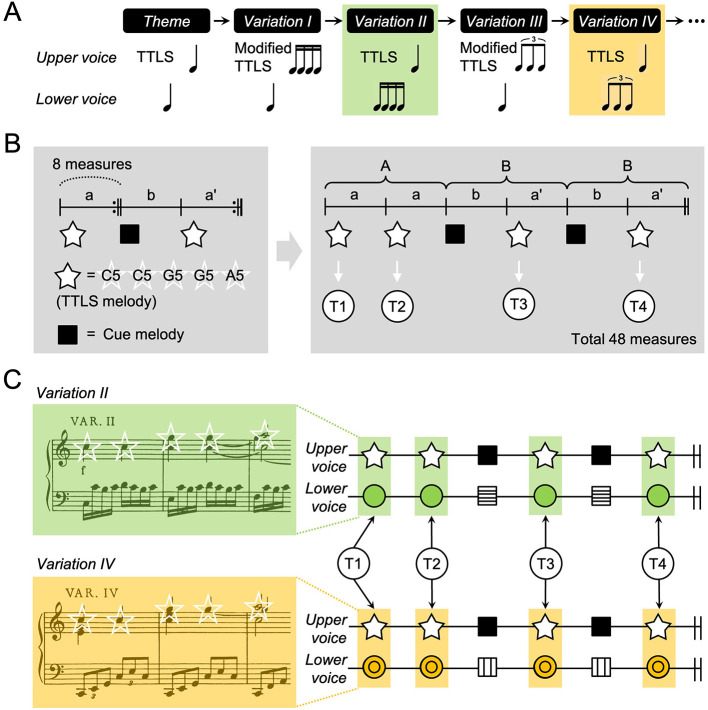 Figure 1
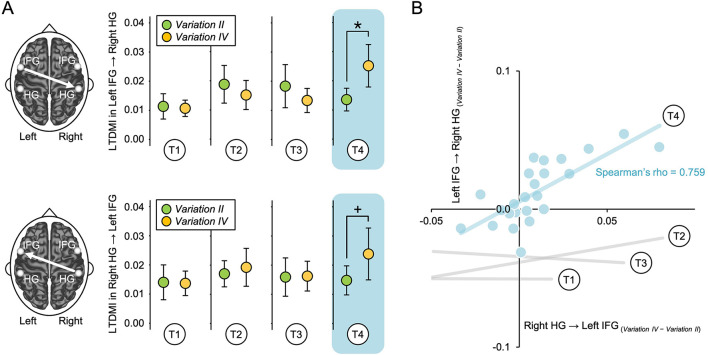 Figure 2
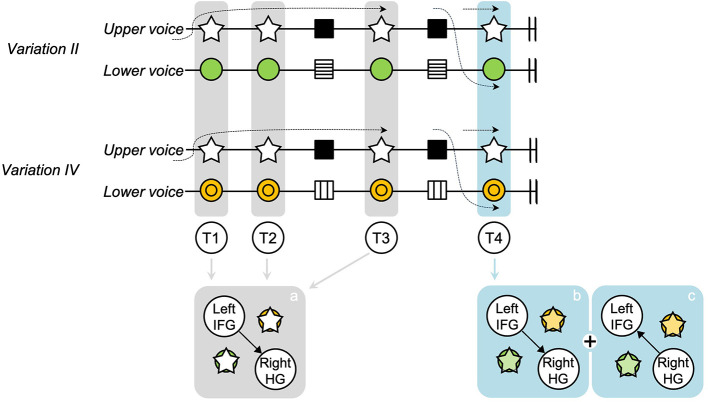 Figure 3
Peer Reviews
No public reviews on file for this paper yet. If you reviewed it on a platform where reviews are public (OpenReview, ICLR, NeurIPS, ICML), you can paste yours below so the community can read it here.
Videos
No videos yet. Explain this paper in a talk, walkthrough, or lecture? Add one.
Taxonomy
TopicsNeuroscience and Music Perception · Multisensory perception and integration · Phonetics and Phonology Research