Brain capillary endothelial-like cells show altered barrier functionality and reduced transport of amyloid β in late-onset Alzheimer disease
Carla Hartmann, Undine Haferkamp, Antje Appelt-Menzel, Janica Barenberg, Andreas Brachner, Toni Ehrhard, Julia Feldhaus, Anna Gerhartl, Thomas Hollemann, Linda Anna Michelle Kulka, Selin Leckzik, Jennifer Leu, Marcel Seungsu Woo, Manuel Alexander Friese

TL;DR
This study shows that brain capillary cells in late-onset Alzheimer's disease have altered barrier function and reduced transport of harmful amyloid beta oligomers.
Contribution
A novel in vitro model using patient-derived stem cells reveals LOAD-specific changes in blood-brain barrier function and amyloid transport.
Findings
LOAD BCECs show subtle changes in barrier integrity markers like mucins and aquaporins.
LOAD BCECs exhibit reduced levels of cadherin 5 and altered transport of Aβ oligomers.
Findings were validated in cerebrospinal fluid proteomes of LOAD patients.
Abstract
With the progression of late-onset Alzheimer disease (LOAD), there is a dysregulation and then a breakdown of the blood-brain barrier (BBB). An important pathological feature in the brains of patients is the accumulation of amyloid beta (Aβ) peptides. Their aggregation leads to the formation of particularly harmful Aβ oligomers (Aβ-O). Unfortunately, our understanding of changes in the blood-brain barrier, particularly with regard to the effects of Aβ-O, is still very limited. This study investigated a LOAD-specific and induced pluripotent stem cell (hiPSC)-based in vitro model of the BBB for disease mechanisms and validated the findings in two independent laboratories. This study also investigated Aβ transport across the BBB. Furthermore, obtained in vitro findings were confirmed in the cerebrospinal fluid proteome of a LOAD patient cohort. Control and LOAD hiPSCs exhibited…
Genes, proteins, chemicals, diseases, species, mutations and cell lines named across the full text — each resolved to its canonical identifier and authoritative record.
Click any figure to enlarge with its caption.
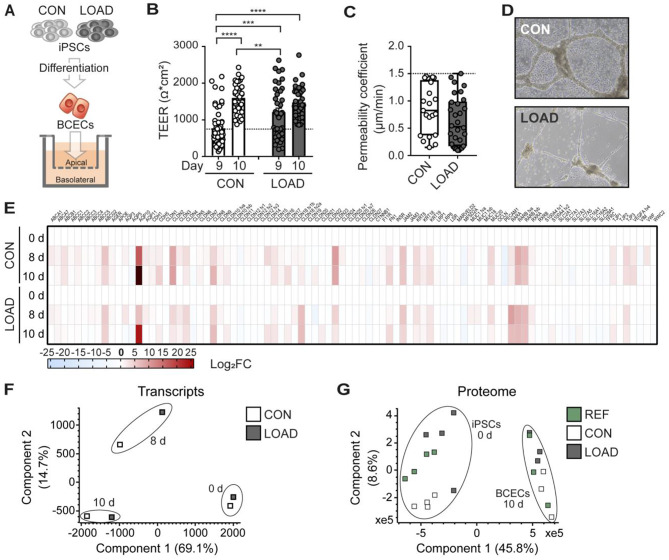 Figure 1
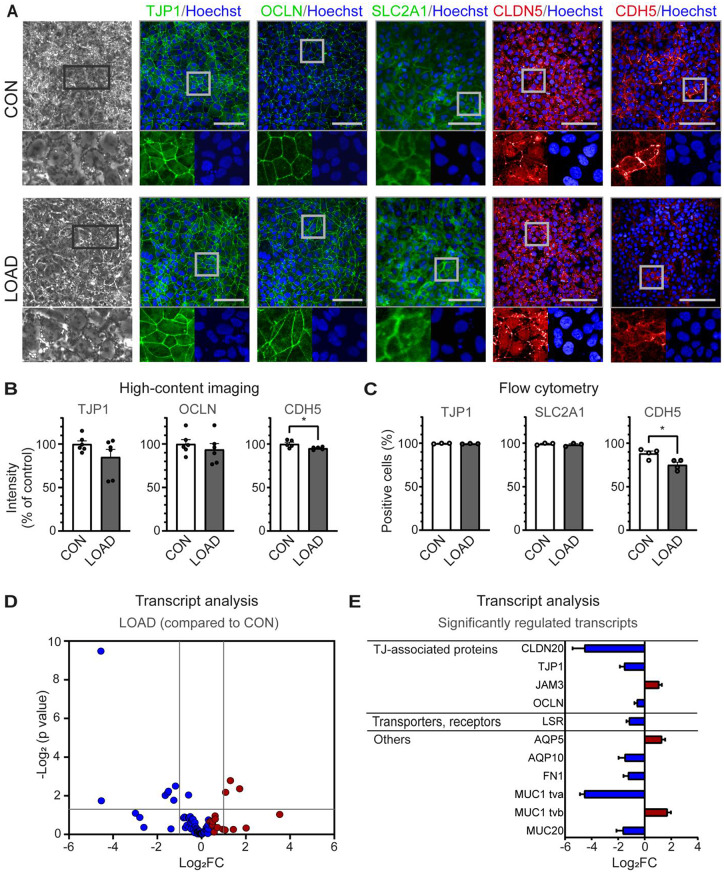 Figure 2
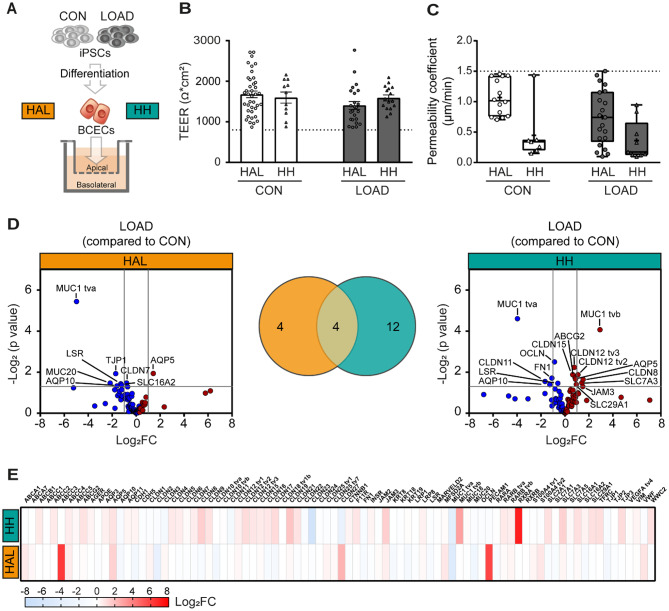 Figure 3
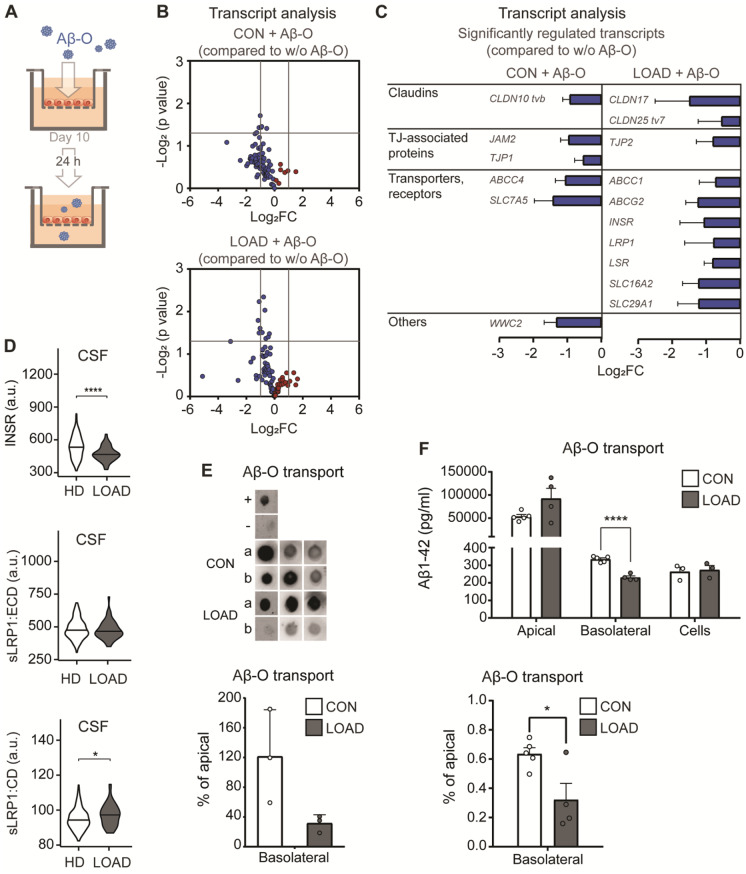 Figure 4
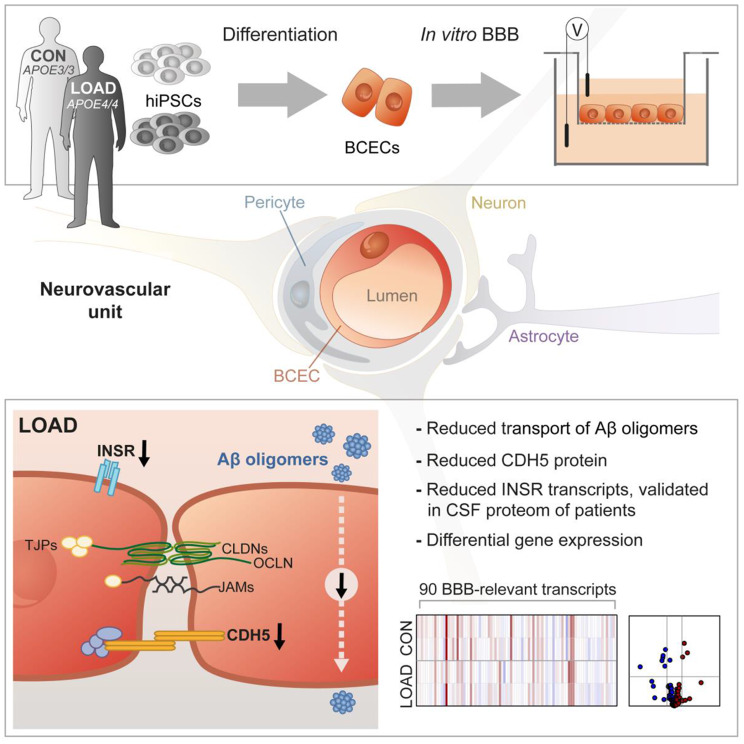 Figure 5
Peer Reviews
No public reviews on file for this paper yet. If you reviewed it on a platform where reviews are public (OpenReview, ICLR, NeurIPS, ICML), you can paste yours below so the community can read it here.
Videos
No videos yet. Explain this paper in a talk, walkthrough, or lecture? Add one.
Taxonomy
TopicsBarrier Structure and Function Studies · Alzheimer's disease research and treatments · Cerebrospinal fluid and hydrocephalus