A novel dual histone mark reader ZCWPW2 regulates meiotic recombination through lactylation and transcriptional regulation in humans and mice
Tiechao Ruan, Jun Ma, Gan Shen, Xiang Wang, Yihong Yang, Liangchai Zhuo, Chuan Jiang, Guicheng Zhao, Yunchuan Tian, Shikun Zhao, Ruixi Zhou, Mohan Liu, Xinyao Tang, Yingteng Zhang, Chanjuan Zhao, Jincheng Zhang, Dingming Li, Xiaohui Jiang, Dezhi Mu, Lingbo Wang, Ying Shen

TL;DR
This study identifies ZCWPW2 as a key regulator of meiotic recombination in humans and mice, showing it works with ZCWPW1 and PRDM9 to control recombination through lactylation and transcription.
Contribution
ZCWPW2 is newly identified as a dual histone mark reader essential for meiotic recombination through lactylation and transcriptional regulation.
Findings
ZCWPW2 deficiency causes recombination defects, including impaired chromosome synapsis and DNA repair.
ZCWPW2 interacts with ZCWPW1 and recombination proteins to promote lactylation of key recombination factors.
ZCWPW2 regulates meiotic transcription independently of PRDM9 at promoter regions.
Abstract
Meiotic recombination ensures accurate chromosome segregation and genetic diversity during gametogenesis, and its disruption leads to infertility. The dual histone methylation writer–reader system, in which PRDM9 deposits H3K4me3 and H3K36me3 marks at nucleosomes to define recombination hotspots and ZCWPW1 acts as a reader recognizing these marks, is essential for meiotic recombination. However, the regulatory mechanisms of this system remain unclear. Here, we showed that deficiency of ZCWPW2 causes recombination defects in humans and mice, including impaired homologous chromosome synapsis and defective DNA double-strand break repair. CUT&Tag analysis revealed that ZCWPW2 exhibits increased enrichment at dual H3K4me3 and H3K36me3 sites in the presence of PRDM9, while binding to promoter regions independently of PRDM9 to regulate meiotic transcription. Mass spectrometry further showed…
Genes, proteins, chemicals, diseases, species, mutations and cell lines named across the full text — each resolved to its canonical identifier and authoritative record.
Click any figure to enlarge with its caption.
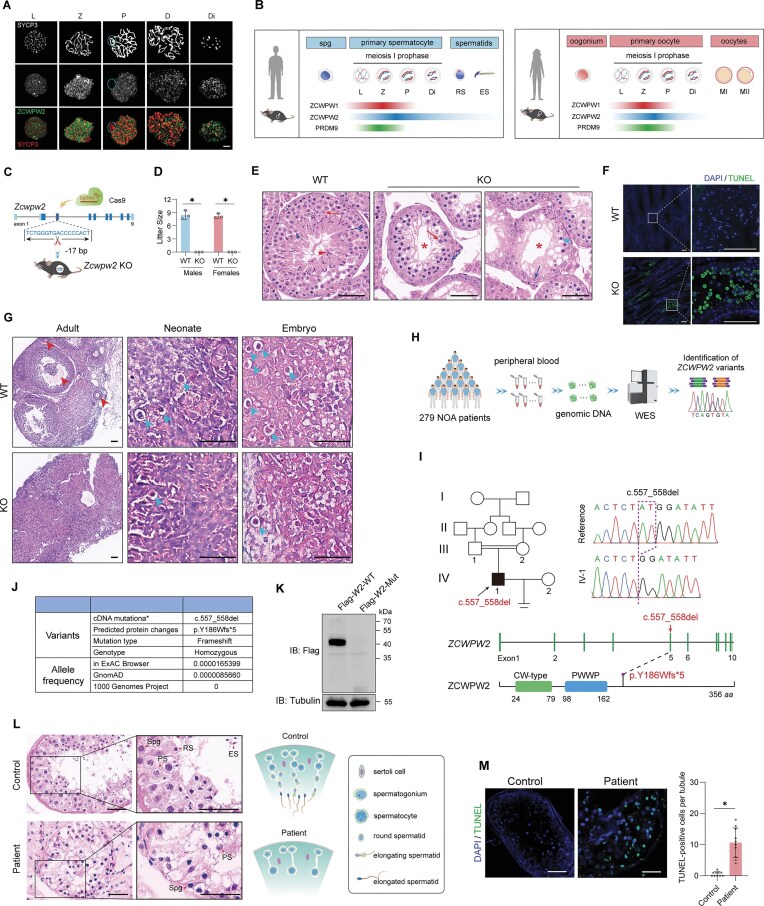 Figure 1
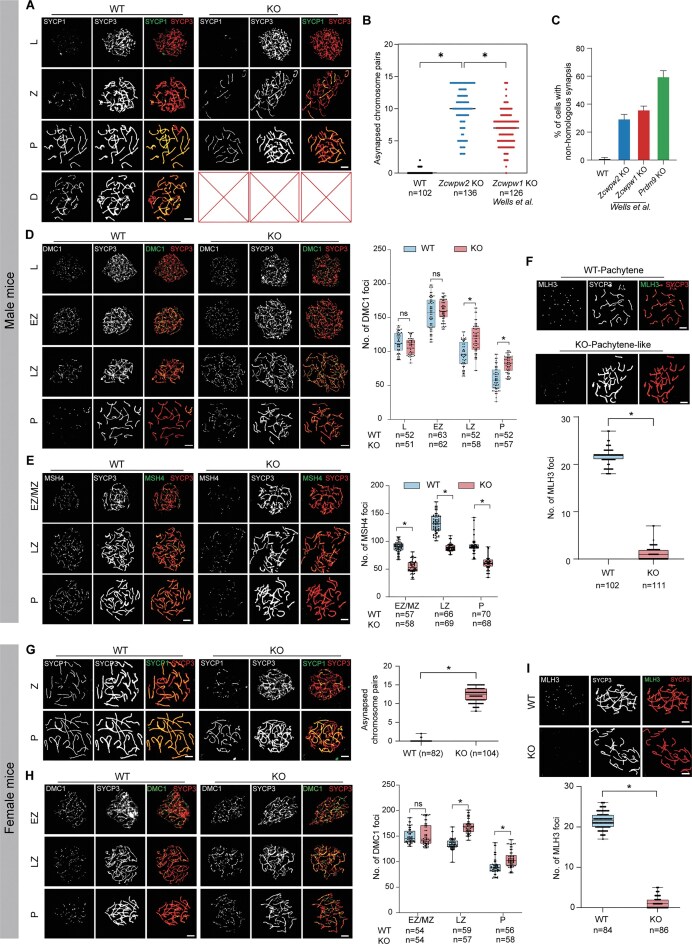 Figure 2
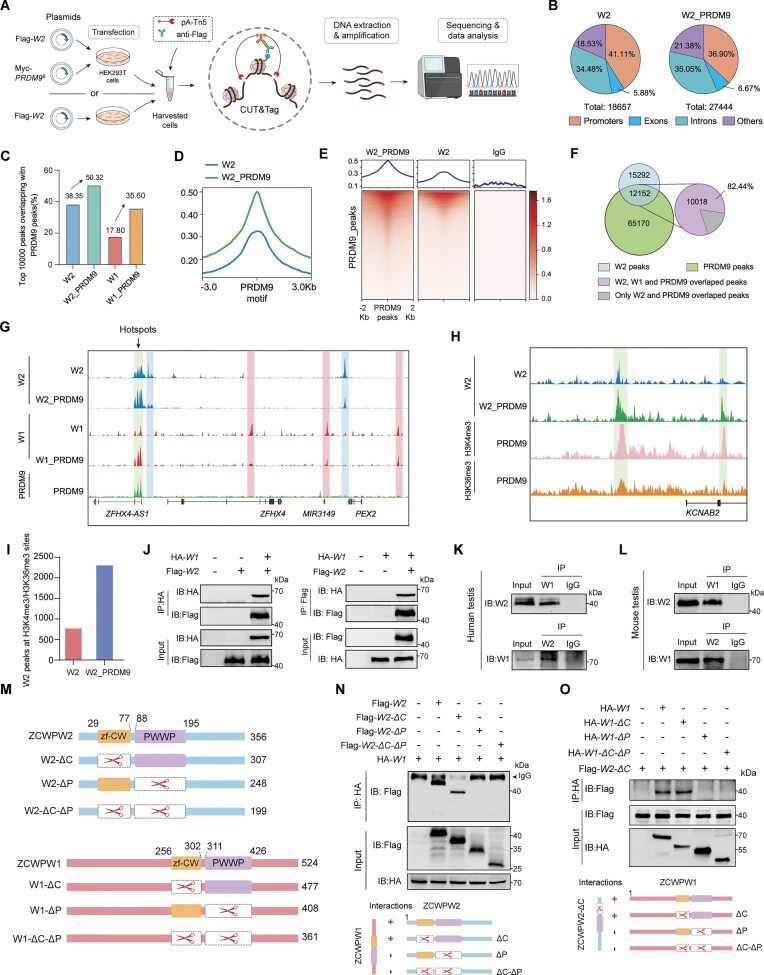 Figure 3
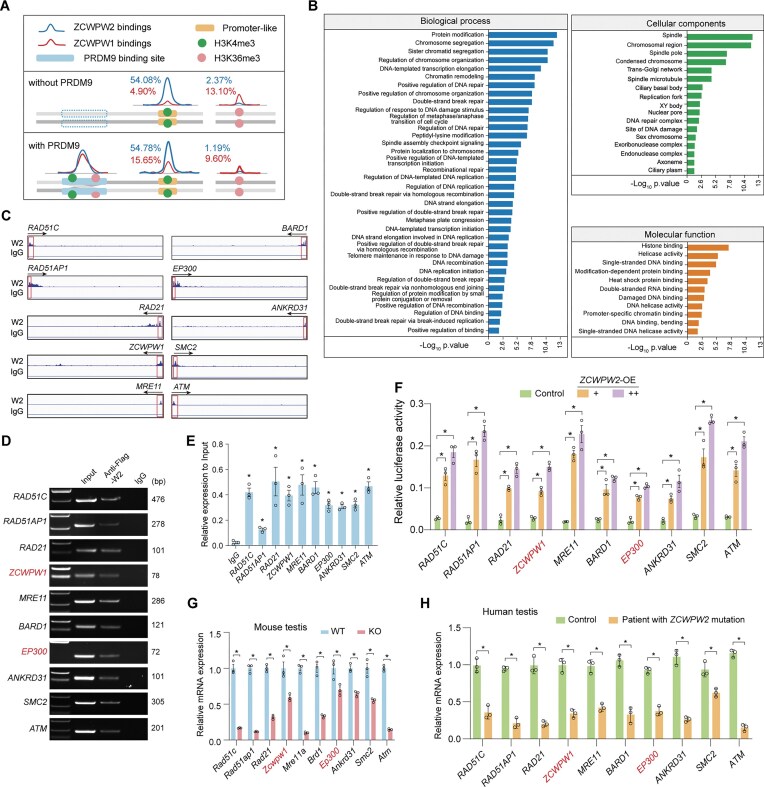 Figure 4
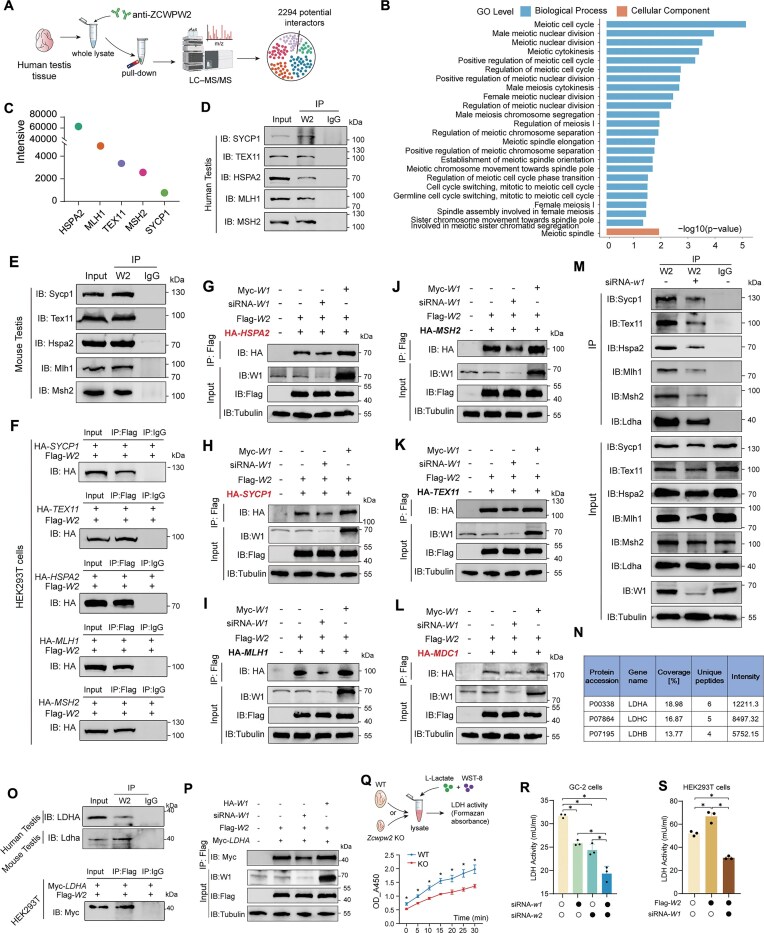 Figure 5
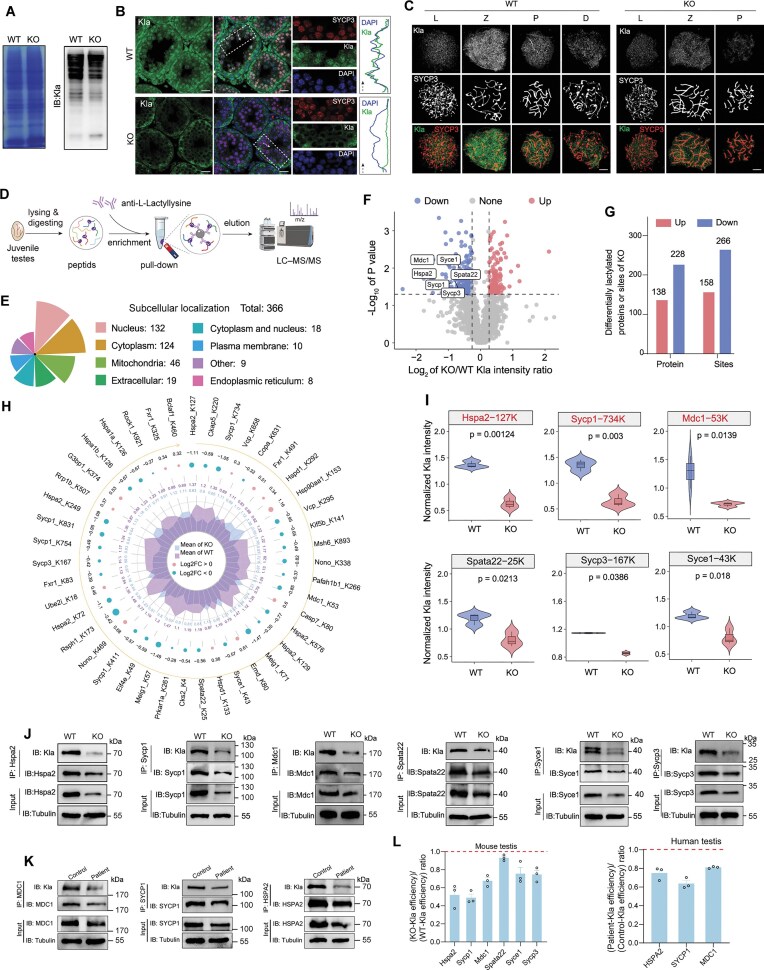 Figure 6
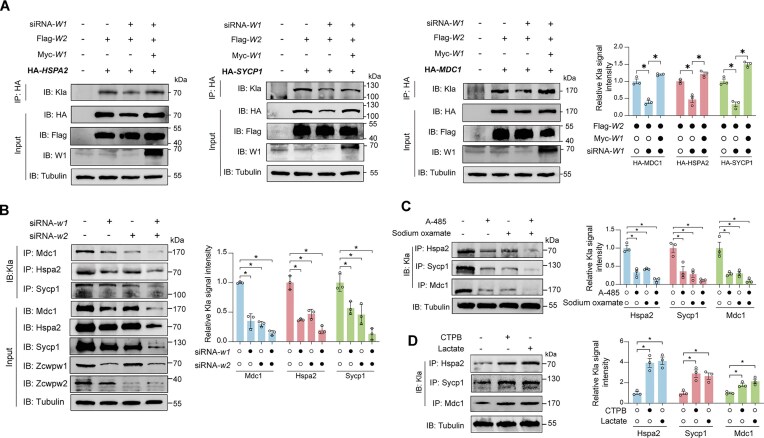 Figure 7
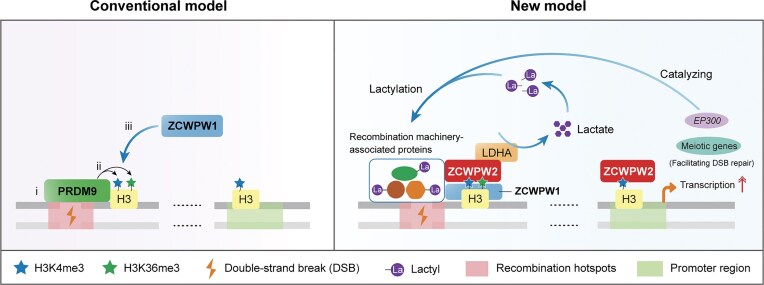 Figure 8
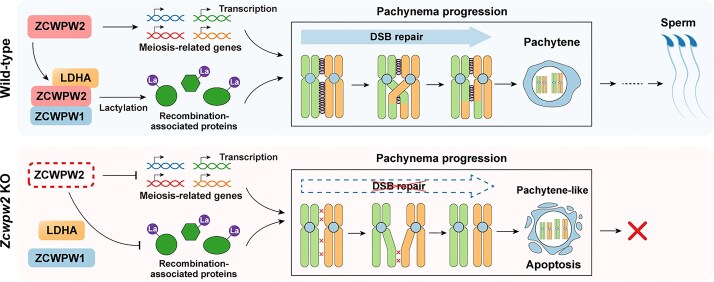 Figure 9
Peer Reviews
No public reviews on file for this paper yet. If you reviewed it on a platform where reviews are public (OpenReview, ICLR, NeurIPS, ICML), you can paste yours below so the community can read it here.
Videos
No videos yet. Explain this paper in a talk, walkthrough, or lecture? Add one.
Taxonomy
TopicsDNA Repair Mechanisms · Epigenetics and DNA Methylation · Microtubule and mitosis dynamics