Prostaglandin E2 (PGE2) in tissue regeneration: Its role and therapeutic strategies
Wenlong Wang, Kai Pan, Jun Yang, Zongjin Li

TL;DR
This paper reviews how PGE2 promotes tissue regeneration and discusses strategies to improve its therapeutic use while reducing risks.
Contribution
The paper provides an updated overview of PGE2's regenerative roles and innovative therapeutic strategies to enhance its efficacy.
Findings
PGE₂ promotes tissue regeneration through multiple mechanisms including stem cell proliferation and ECM remodeling.
Clinical use of PGE₂ is limited by its short half-life and potential oncogenic risks.
Strategies to improve PGE₂ therapy include targeting specific EP receptors and overcoming degradation by 15-PGDH.
Abstract
Prostaglandin E₂ (PGE₂), which is traditionally recognized as a pro-inflammatory mediator target, is now recognized for its role in tissue regeneration. PGE₂ drives stem cell proliferation, M2 macrophage polarization, angiogenesis, and extracellular matrix (ECM) remodeling via E-type prostanoid (EP) receptor signaling, promoting repair in the skin, muscle, bone, heart, liver, kidney, and intestine. Despite these promising effects, the clinical translation of PGE₂ has been hindered by challenges such as a short half-life due to rapid degradation by 15-hydroxyprostaglandin dehydrogenase (15-PGDH), limited EP receptor subtype specificity, or oncogenic risks in certain contexts. This review explores the regenerative mechanisms of PGE₂, its tissue-specific roles, and innovative strategies to optimize therapeutic efficacy while minimizing adverse effects in regenerative medicine. See also…
Genes, proteins, chemicals, diseases, species, mutations and cell lines named across the full text — each resolved to its canonical identifier and authoritative record.
Click any figure to enlarge with its caption.
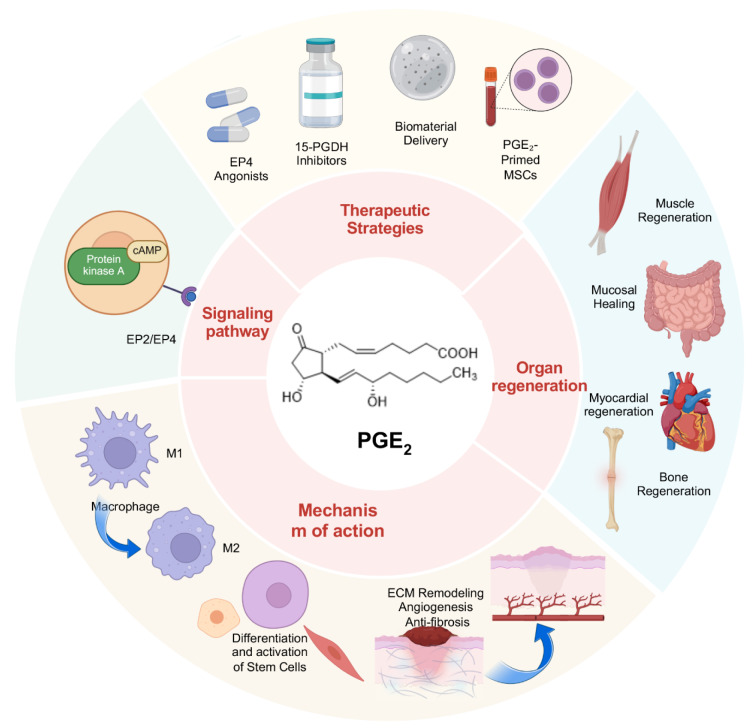 Figure 1
 Figure 2
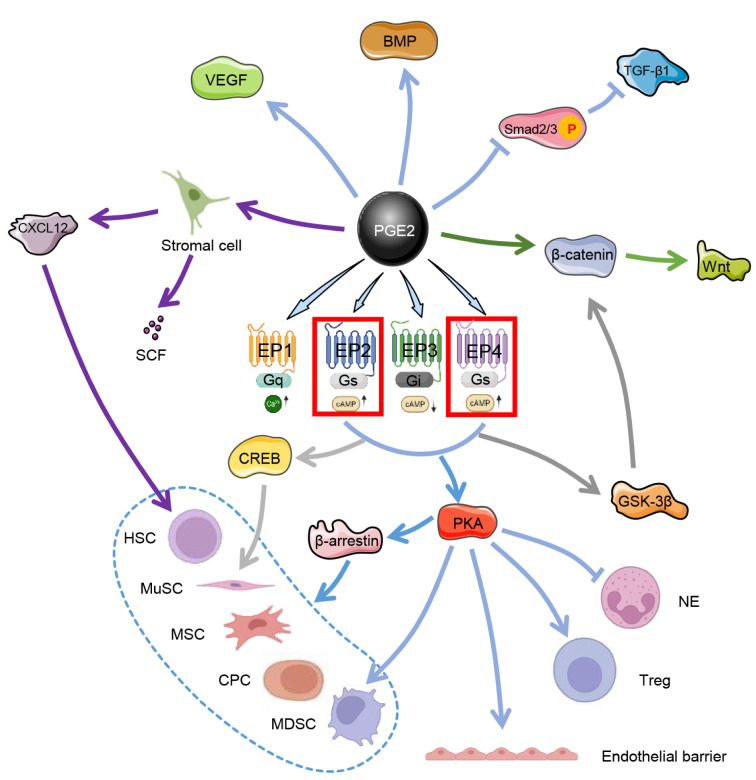 Figure 3
 Figure 4
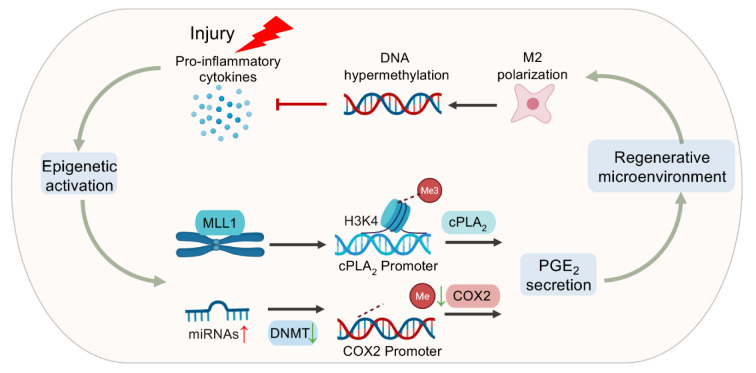 Figure 5
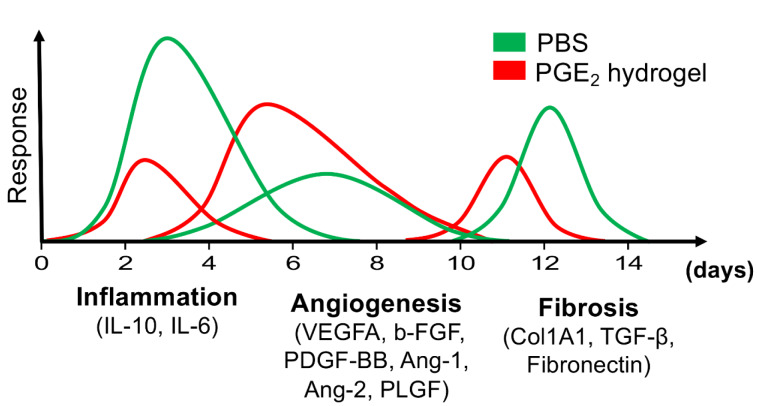 Figure 6
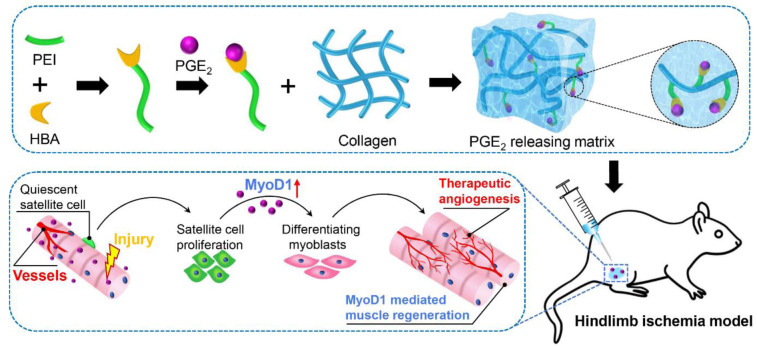 Figure 7
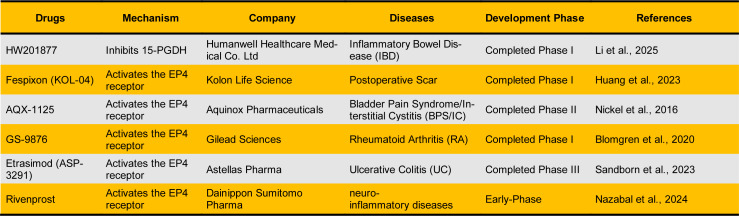 Figure 8
Peer Reviews
No public reviews on file for this paper yet. If you reviewed it on a platform where reviews are public (OpenReview, ICLR, NeurIPS, ICML), you can paste yours below so the community can read it here.
Videos
No videos yet. Explain this paper in a talk, walkthrough, or lecture? Add one.
Taxonomy
TopicsInflammatory mediators and NSAID effects · Osteoarthritis Treatment and Mechanisms · Mesenchymal stem cell research