Using a self-modulated treadmill as a novel approach to study cognitive-motor and biomechanical outcomes during dual-task walking in individuals with and without lower limb loss
Emma P. Shaw, Sarah R. Bass, Jonathan R. Gladish, Kyle Pietro, Alexandra A. Shaver, Christopher Gaskins, Steven Kahl, Christopher L. Dearth, Matthew W. Miller, Alison Pruziner, Bradley D. Hatfield, Brad D. Hendershot, Rodolphe J. Gentili

TL;DR
This study uses a self-modulated treadmill to compare cognitive and biomechanical responses during dual-task walking in people with and without lower limb loss.
Contribution
The novel use of a self-modulated treadmill allows for a more realistic assessment of cognitive-motor interactions during walking.
Findings
Both groups maintained walking mechanics during dual-task walking but showed increased neurocognitive engagement.
Individuals with lower-limb loss showed reduced cognitive task performance despite similar cortical activity.
Uninjured individuals robustly engaged neurocognitive processes during dual-task walking, unlike those with limb loss.
Abstract
Combined examination of mental workload and biomechanics during dual-task walking in individuals with lower-limb loss is limited to fixed, but not self-modulated walking pace, for which the latter enables dynamic cognitive-motor behavior as typically engaged during community ambulation. By assessing electroencephalography (EEG) (theta, low/high-alpha power) and biomechanics (gait speed, double limb support, stride width), the cerebral cortical activity underlying mental workload and walking mechanics were examined when individuals with and without lower-limb loss executed a cognitive task (assessed via response time and accuracy) under variable demand (seated and walking). Both populations maintained walking mechanics (unchanged gait speed, double limb support, stride width) during dual-task walking across demand and exhibited similarly elevated neurocognitive engagement (e.g.,…
Genes, proteins, chemicals, diseases, species, mutations and cell lines named across the full text — each resolved to its canonical identifier and authoritative record.
Click any figure to enlarge with its caption.
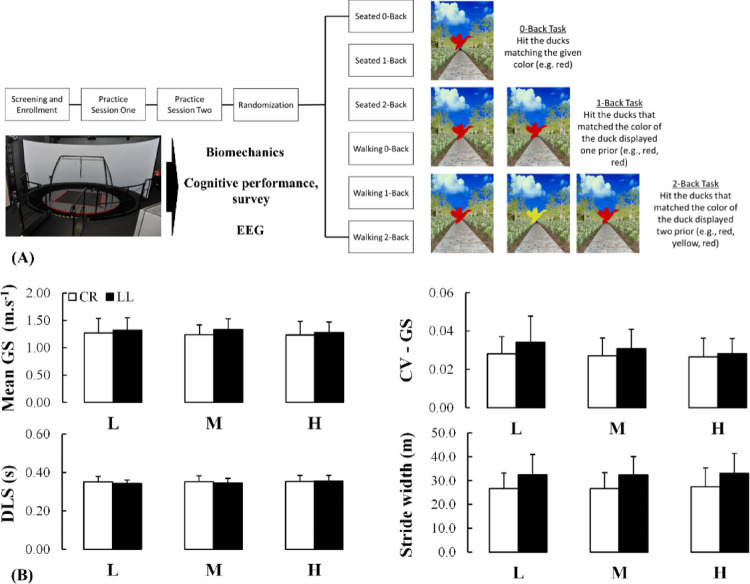 Figure 1
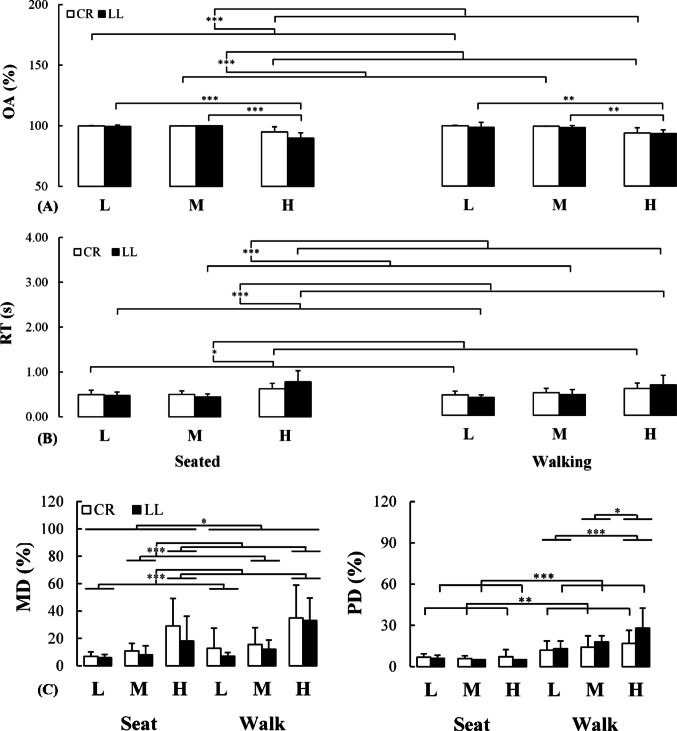 Figure 2
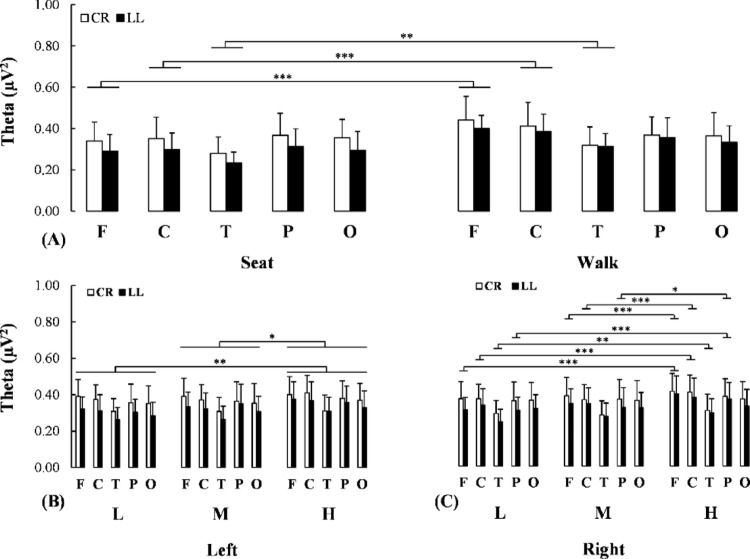 Figure 3
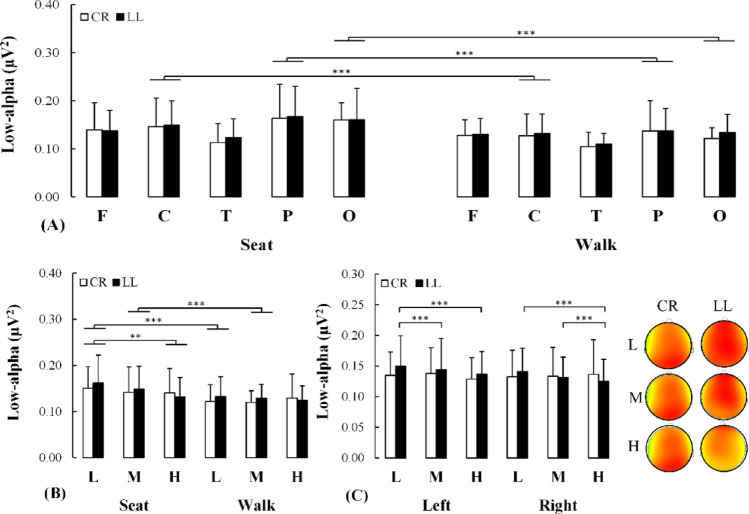 Figure 4
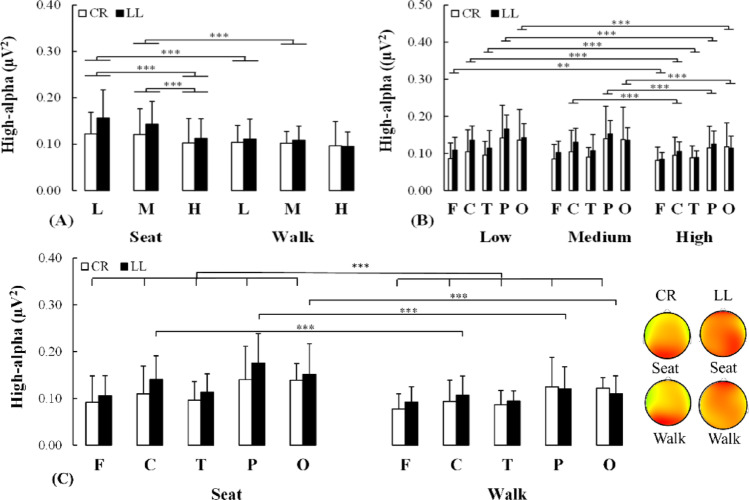 Figure 5
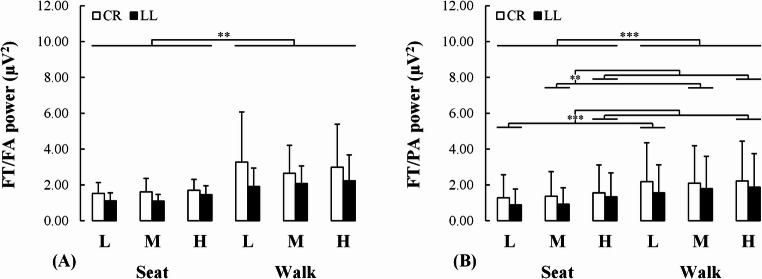 Figure 6
Peer Reviews
No public reviews on file for this paper yet. If you reviewed it on a platform where reviews are public (OpenReview, ICLR, NeurIPS, ICML), you can paste yours below so the community can read it here.
Videos
No videos yet. Explain this paper in a talk, walkthrough, or lecture? Add one.
Taxonomy
TopicsBalance, Gait, and Falls Prevention · Stroke Rehabilitation and Recovery · Motor Control and Adaptation