Leisure time patterns of children with and without disabilities: a cross-sectional latent class analysis
Christian Møller-Skau, Catherine A. N. Lorentzen, Shahram Moradi, Lars Bauger

TL;DR
Children with disabilities tend to spend more leisure time on screens and social activities, and less on organized physical activities compared to children without disabilities.
Contribution
The study identifies distinct leisure-time profiles and their association with disability status using latent class analysis.
Findings
Five leisure-time profiles were identified, including Home-oriented, Social-oriented, Aesthetic-oriented, Physically-oriented, and Screen-oriented.
Children with disabilities were more likely to belong to Screen-oriented and Social-oriented profiles compared to children without disabilities.
CWD were less likely to engage in organized and physically demanding leisure activities.
Abstract
Leisure participation supports children's health, social inclusion, and well-being, yet children with disabilities (CWD) often face barriers to participate in organised and physically demanding activities. This study examined differences in leisure-time patterns between children with and without disabilities. Cross-sectional data from 6,049 Norwegian children aged 10–13 years were analysed. Leisure time was assessed across six domains using twenty-two indicators. Latent Class Analysis identified leisure-time profiles, and multinomial logistic regression examined associations between disability status and profile membership, adjusting for sociodemographic factors. Five leisure profiles emerged: Home-oriented (21%), Social-oriented (14%), Aesthetic-oriented (20%), Physically-oriented (31%), and Screen-oriented (14%). In the adjusted model, and when comparing to children without…
Genes, proteins, chemicals, diseases, species, mutations and cell lines named across the full text — each resolved to its canonical identifier and authoritative record.
Click any figure to enlarge with its caption.
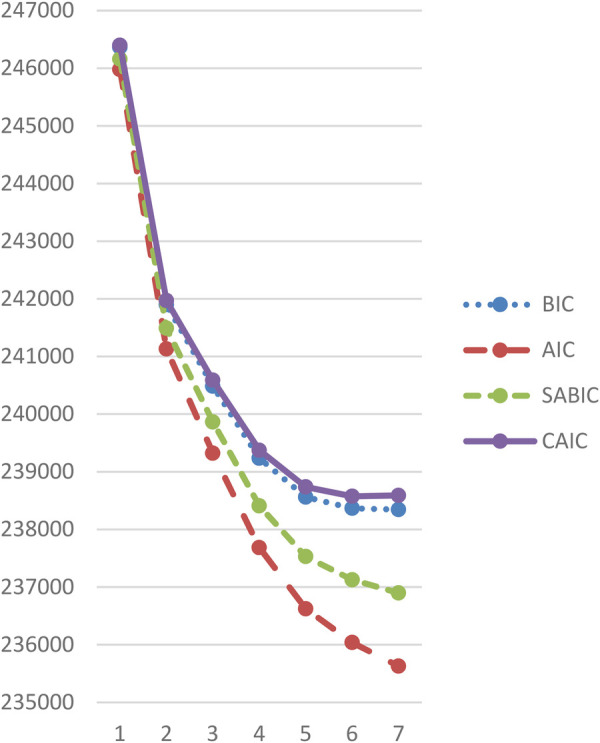 Figure 1
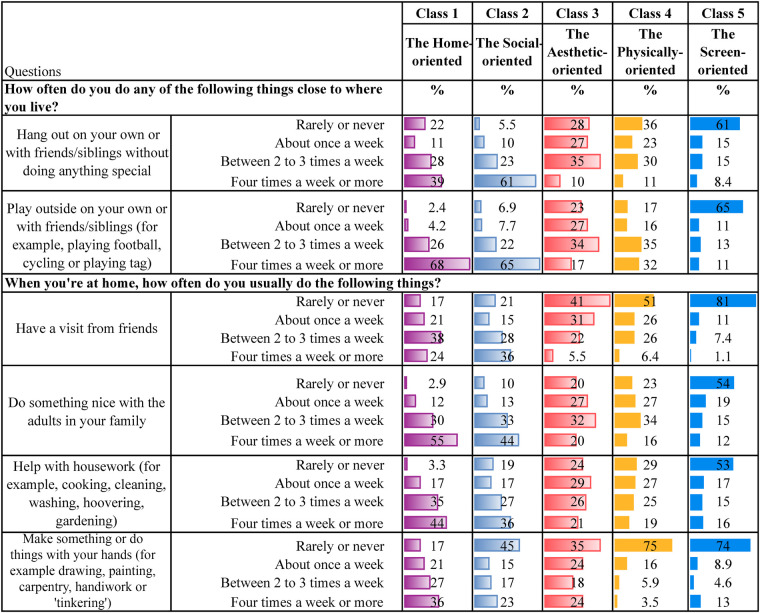 Figure 2
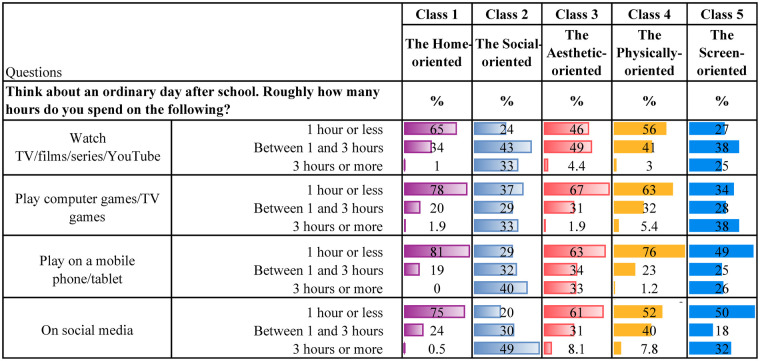 Figure 3
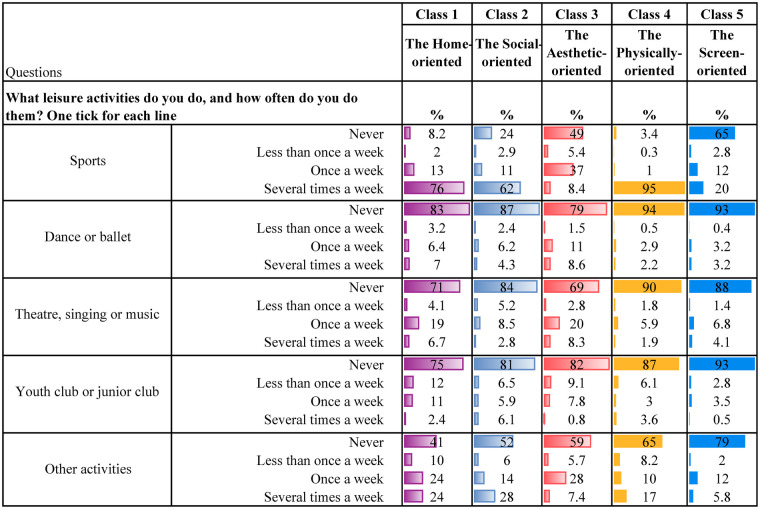 Figure 4
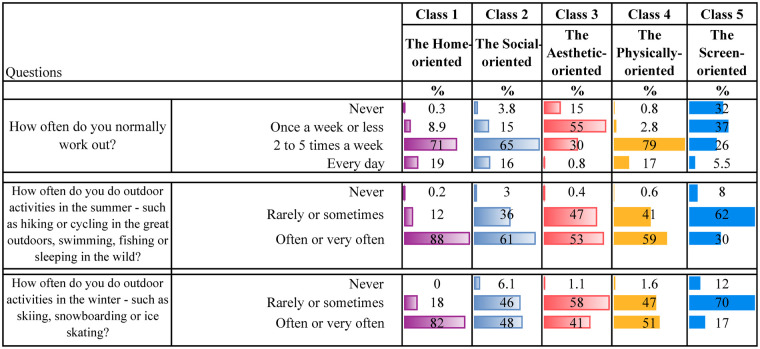 Figure 5
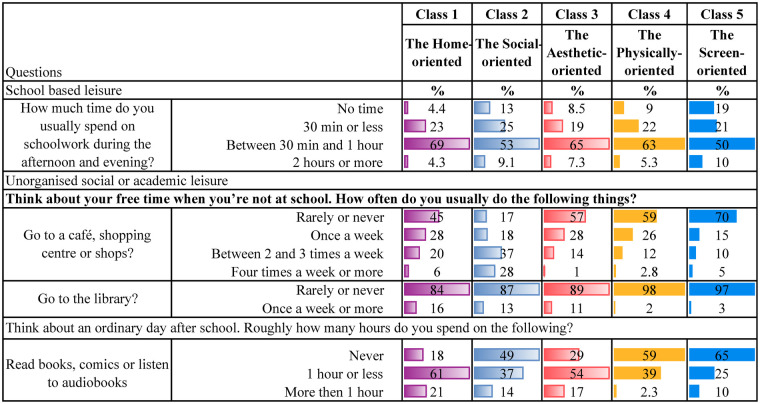 Figure 6
Peer Reviews
No public reviews on file for this paper yet. If you reviewed it on a platform where reviews are public (OpenReview, ICLR, NeurIPS, ICML), you can paste yours below so the community can read it here.
Videos
No videos yet. Explain this paper in a talk, walkthrough, or lecture? Add one.
Taxonomy
TopicsCerebral Palsy and Movement Disorders · Inclusion and Disability in Education and Sport · Recreation, Leisure, Wilderness Management