Identification of transdiagnostic phenomena among patients, the general population, relatives, and mental health professionals using topic modeling techniques
Alexis Vancappel, Hugo Kazzi, Hayfa Zgaya-Biau, Rodolphe Saur, Eva Fourel, Robert Courtois, Géraldine Tapia, Thierry Kosinski, Arnaud Carré, Catherine Bortolon, Fanny Marteau-Chasserieau, Lucia Romo, Celine Baeyens, Yannick Morvan, Chrystel Besche-Richard, Wissam El-Hage

TL;DR
This study uses topic modeling to identify common psychological themes across patients, the general population, relatives, and mental health professionals, supporting a transdiagnostic approach to mental disorders.
Contribution
The study introduces topic modeling as a novel method to uncover transdiagnostic phenomena in mental health narratives.
Findings
258 topics were identified and grouped into 12 overarching themes, including emotional difficulties, family relationships, and therapeutic processes.
Themes showed similar prevalence across different diagnostic groups, supporting their transdiagnostic nature.
Topic modeling proved effective in extracting psychological patterns from diverse narratives.
Abstract
Recent research has highlighted the limitations of the categorical approach to mental disorders and has increasingly supported the development of a transdiagnostic perspective. This emerging approach focuses on common distal factors (circumstantial, biological, and social) and psychological processes that contribute to psychological suffering across a range of disorders, as well as on the resulting psychological symptoms. The present study aims to identify transdiagnostic distal factors, psychological processes, and symptoms by analyzing narratives through topic modeling—an unsupervised machine learning technique, specifically within Natural Language Processing (NLP). Topic modeling enables the automatic extraction of latent themes from unstructured text, making it possible to identify psychological patterns grounded in patients’ lived experiences. We recruited four groups of…
Genes, proteins, chemicals, diseases, species, mutations and cell lines named across the full text — each resolved to its canonical identifier and authoritative record.
Click any figure to enlarge with its caption.
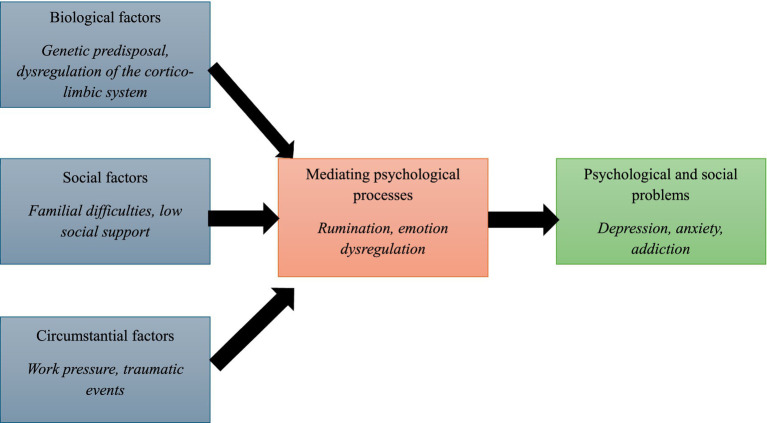 Figure 1
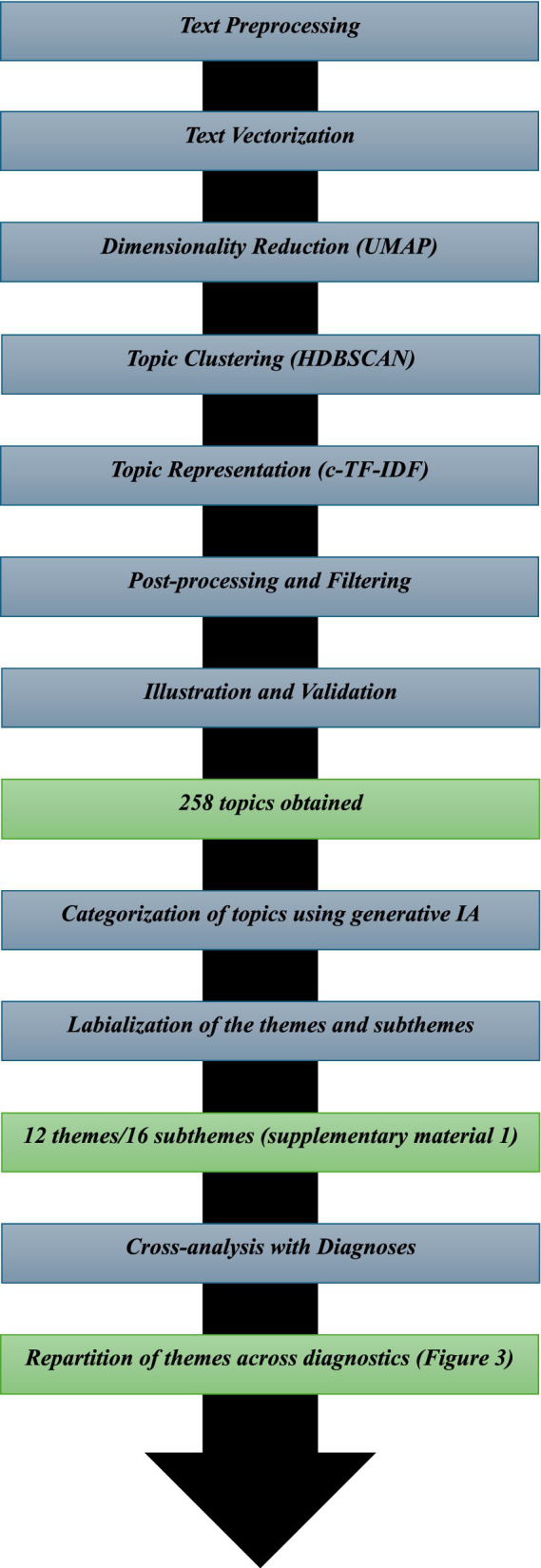 Figure 2
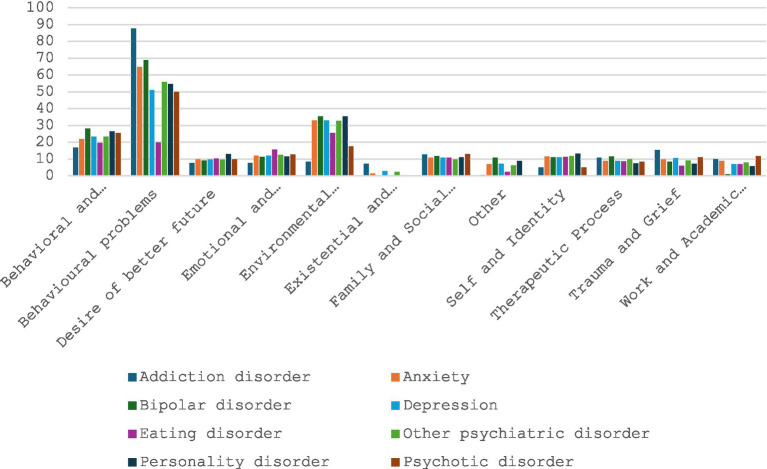 Figure 3
Peer Reviews
No public reviews on file for this paper yet. If you reviewed it on a platform where reviews are public (OpenReview, ICLR, NeurIPS, ICML), you can paste yours below so the community can read it here.
Videos
No videos yet. Explain this paper in a talk, walkthrough, or lecture? Add one.
Taxonomy
TopicsMental Health via Writing · Mental Health Research Topics · Digital Mental Health Interventions