Phosphorus limitation heightens vulnerability of Crocosphaera watsonii to ocean warming compared with iron limitation
Amjad A. Mansour, Laura M. Gholmieh, Ellya C. Gholmieh, Ran Duan, Xiaopeng Bian, Yutong Chen, Seth G. John, David A. Hutchins, Fei-Xue Fu

TL;DR
Ocean warming affects the nitrogen-fixing phytoplankton Crocosphaera watsonii more under phosphorus limitation than iron limitation, potentially impacting marine ecosystems.
Contribution
The study reveals how phosphorus limitation increases the vulnerability of C. watsonii to ocean warming compared to iron limitation.
Findings
Phosphorus-limited C. watsonii performs better at lower temperatures and has a narrower optimal range than iron-limited cultures.
Extreme temperatures override nutrient limitation effects, with no significant differences in growth or fixation rates at 20 °C and 34 °C.
P-limited C. watsonii may migrate to cooler regions under warming, leaving lower-latitude ecosystems more nitrogen-limited.
Abstract
Phytoplankton rely on diazotrophs like the globally important Crocosphaera watsonii to provide bioavailable nitrogen through nitrogen fixation. Given predicted global warming and oligotrophic scenarios, we investigated how nutrient limitation modulates C. watsonii’s response to ocean warming, to better understand future marine ecosystem health. We performed complete temperature curves (20–34 °C) under three nutrient conditions [iron (Fe)-limited, phosphorus (P)-limited, and Fe/P-replete] to compare physiological responses and test previously hypothesized temperature-nutrient interactions. Across the viable temperature range, replete culture growth and fixation rates showed narrower, unimodal-like curves, contrasting the greater plateauing witnessed in nutrient-limited thermal curves. Under both limitations, nitrogen fixation was more impacted than carbon fixation. Fe-limited cultures…
Genes, proteins, chemicals, diseases, species, mutations and cell lines named across the full text — each resolved to its canonical identifier and authoritative record.
Click any figure to enlarge with its caption.
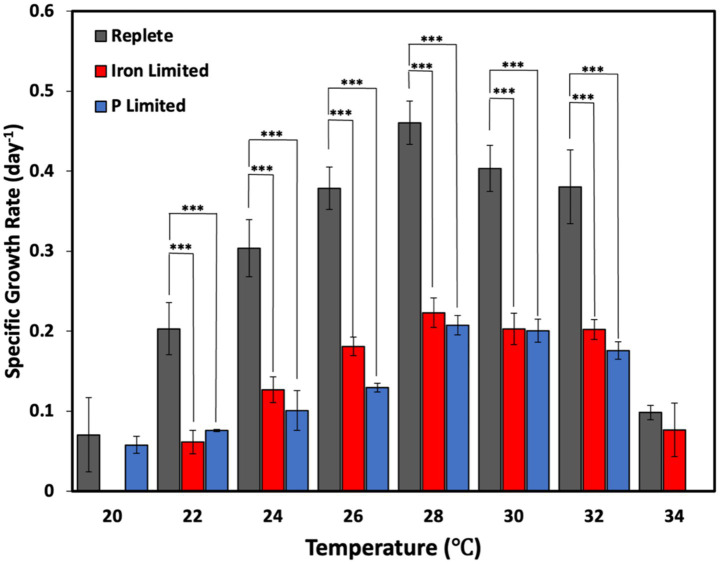 Figure 1
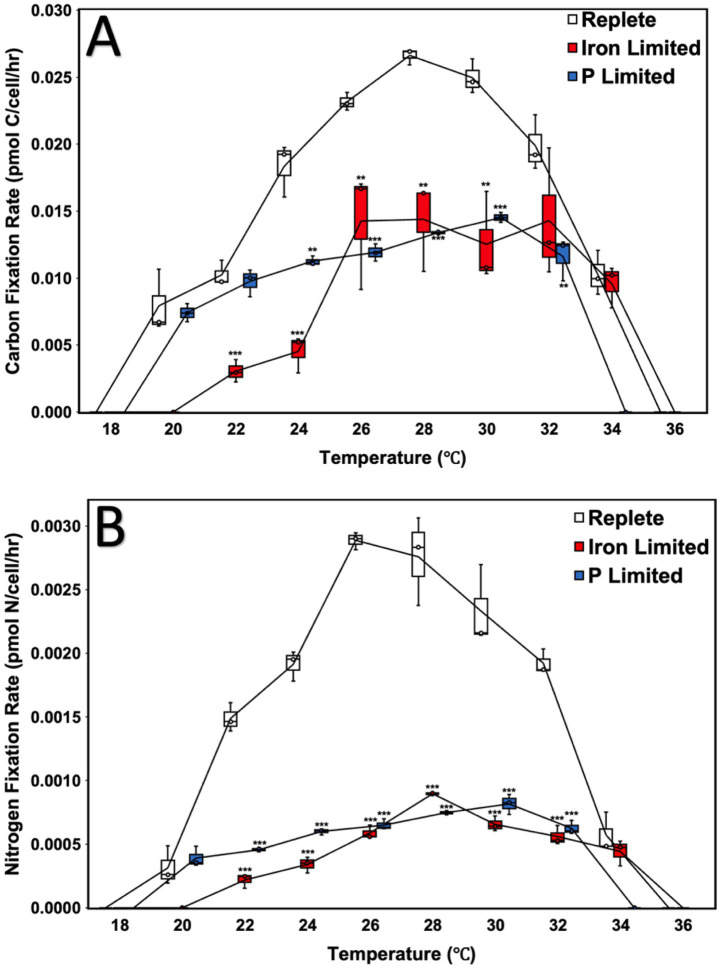 Figure 2
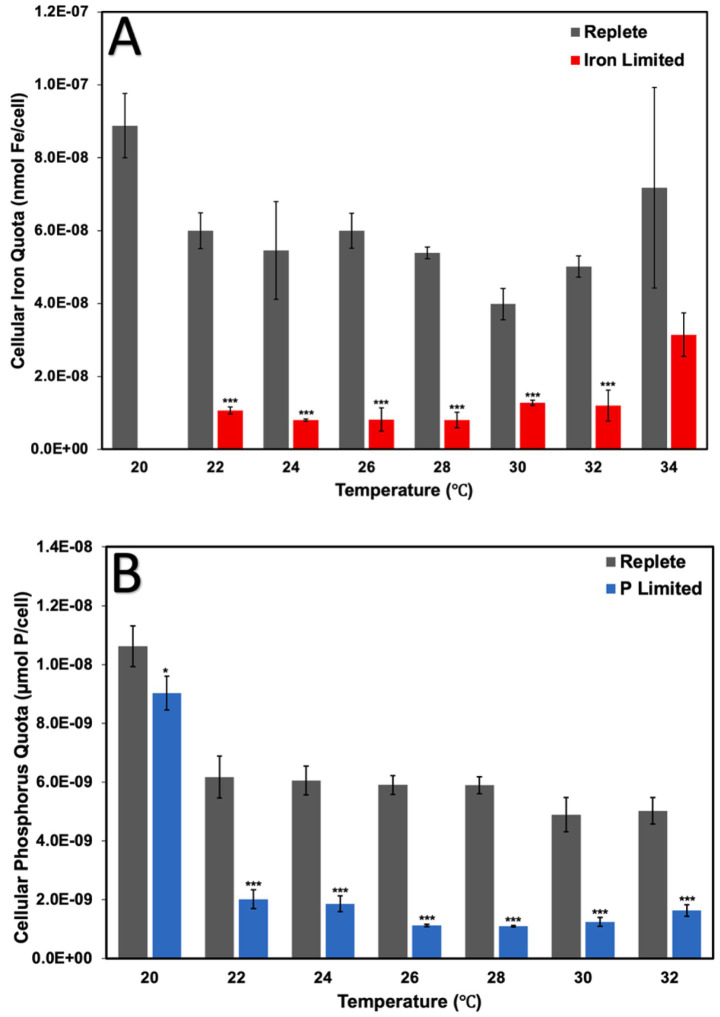 Figure 3
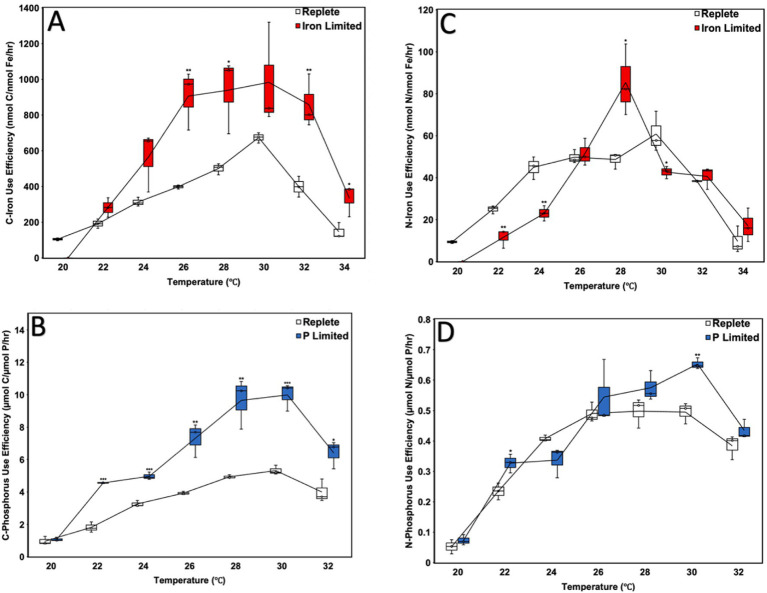 Figure 4
Peer Reviews
No public reviews on file for this paper yet. If you reviewed it on a platform where reviews are public (OpenReview, ICLR, NeurIPS, ICML), you can paste yours below so the community can read it here.
Videos
No videos yet. Explain this paper in a talk, walkthrough, or lecture? Add one.
Taxonomy
TopicsMarine and coastal ecosystems · Aquatic Ecosystems and Phytoplankton Dynamics · Algal biology and biofuel production