Chemoselective Synthesis of δ‑Amino Alcohols from Chiral 1,4-Diols Catalyzed by an NHC–Ir(III) Complex
Emanuele Silvi, Aitor Bermejo-López, Sarko Jabbari, Mariell Pettersson, Magnus J. Johansson, Belén Martín-Matute

TL;DR
A new method uses a catalyst to make δ-amino alcohols from chiral 1,4-diols under mild conditions, avoiding unwanted side reactions.
Contribution
A selective, base-free amination method for synthesizing chiral δ-amino alcohols from 1,4-diols using an NHC–Ir(III) catalyst.
Findings
Amination occurs selectively on the primary alcohol without racemization.
Mild conditions prevent formation of pyrrolidines and allow late-stage functionalization of drugs like Lenalidomide.
Abstract
The synthesis of δ-amino alcohols from 1,4-diols via the hydrogen borrowing strategy by an NHC–Ir(III) catalyst is described. The amination occurs on the primary alcohol selectively. The mild, base-free conditions effectively suppress the common second intramolecular amination to pyrrolidines. sec-Alcohols, even benzylic ones, remain inert toward amination and even without racemization, enabling the synthesis of chiral δ-amino alcohols from readily available chiral 1,4-diols. Late-stage functionalization (LSF) of Lenalidomide and other complex drugs is demonstrated.
Genes, proteins, chemicals, diseases, species, mutations and cell lines named across the full text — each resolved to its canonical identifier and authoritative record.
Click any figure to enlarge with its caption.
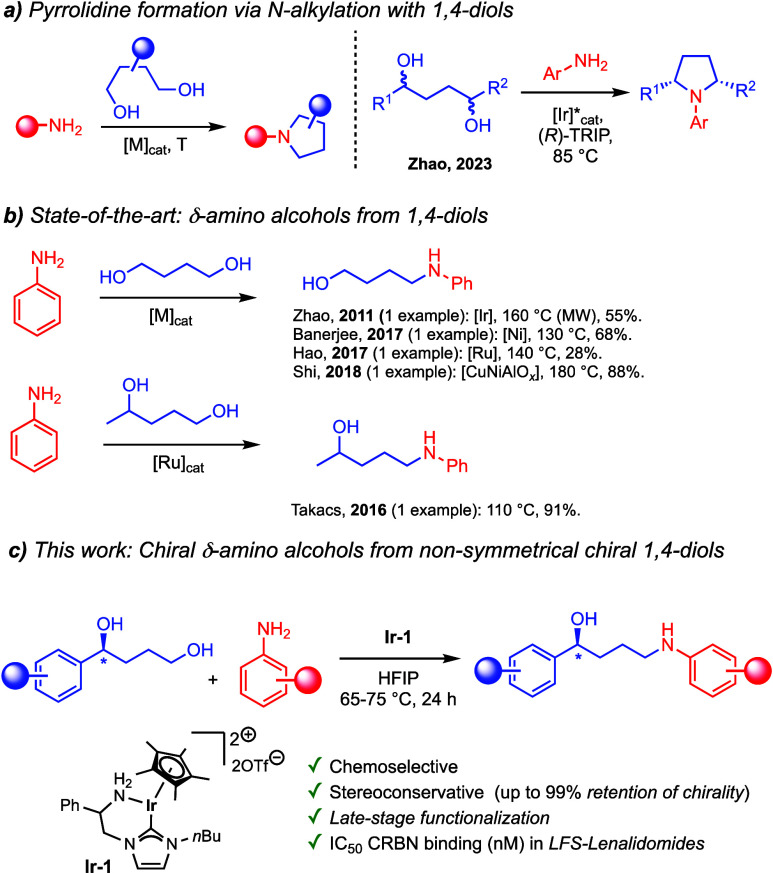 Figure 1
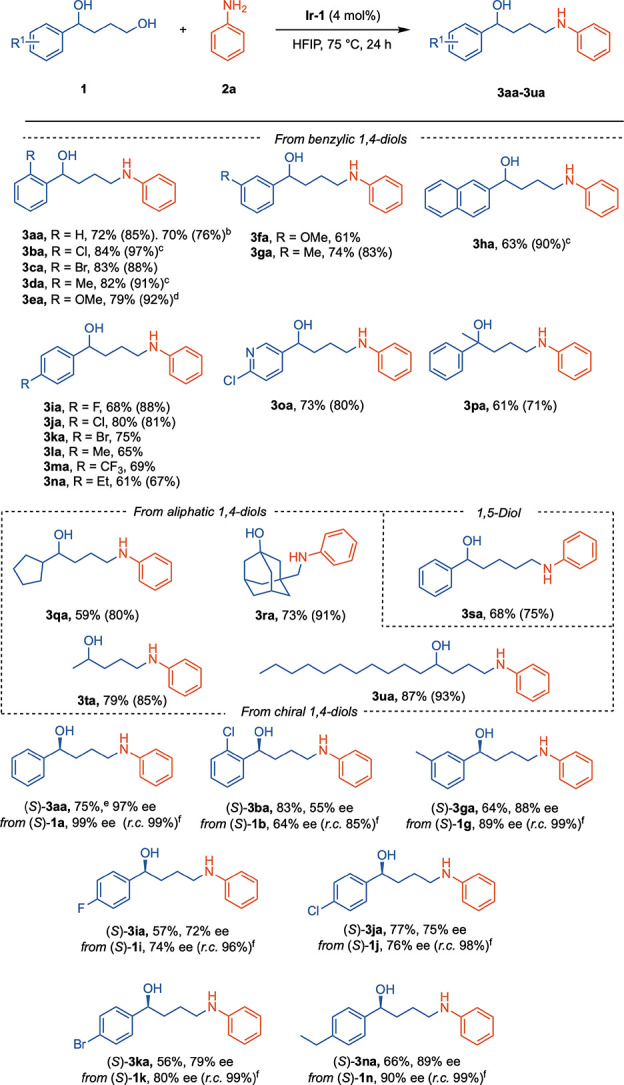 Figure 2
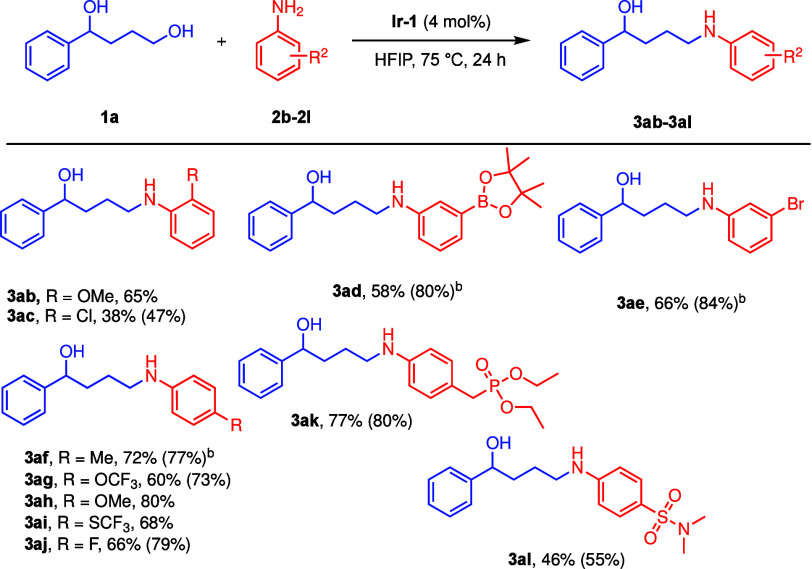 Figure 3
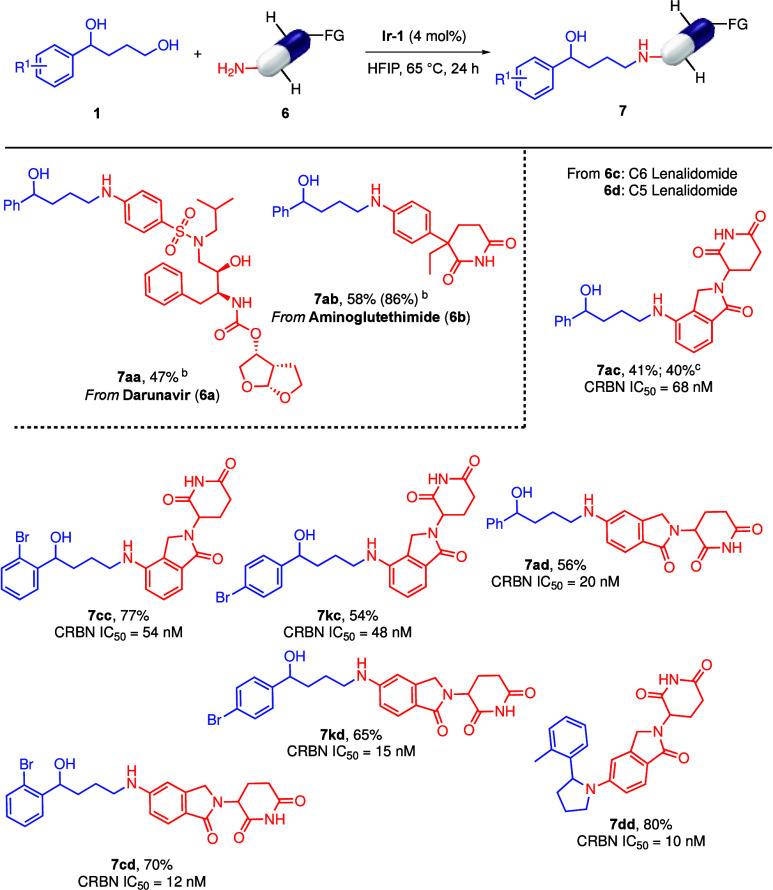 Figure 4
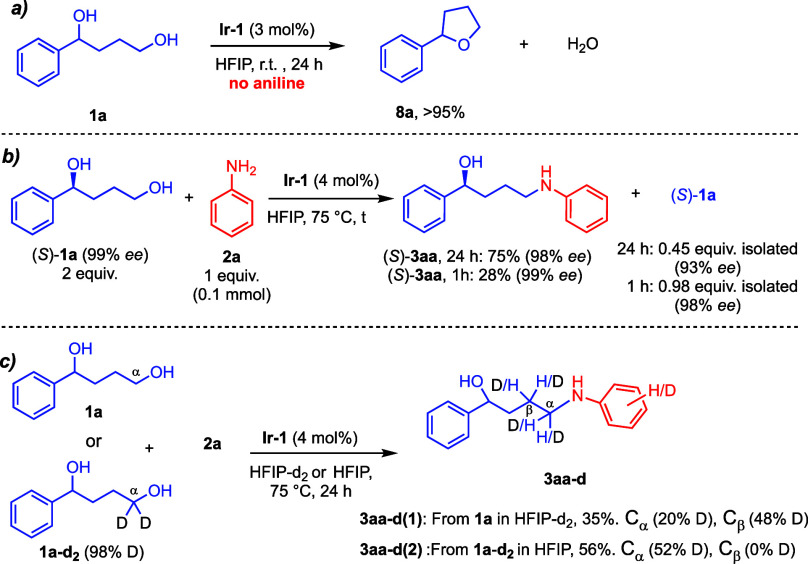 Figure 5
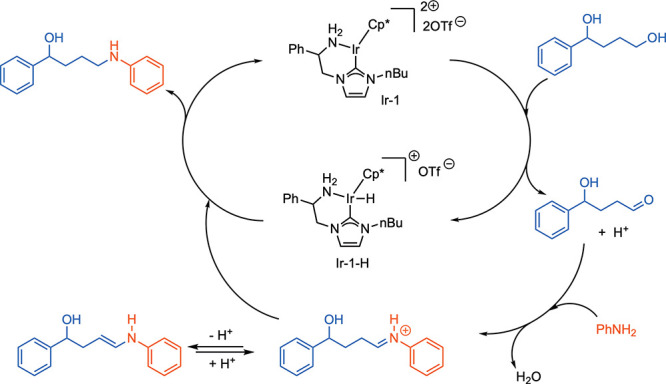 Figure 6
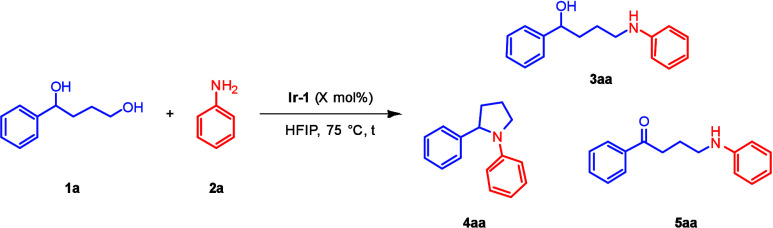 Figure 7
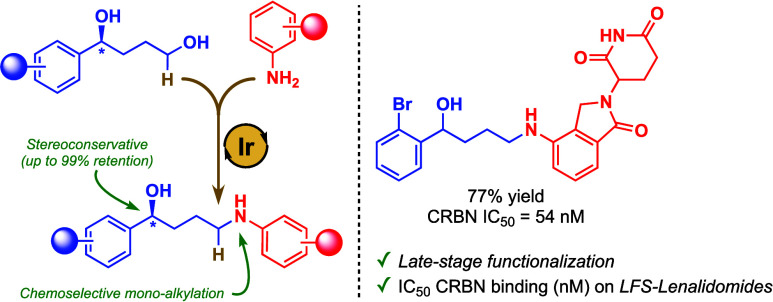 Figure 8
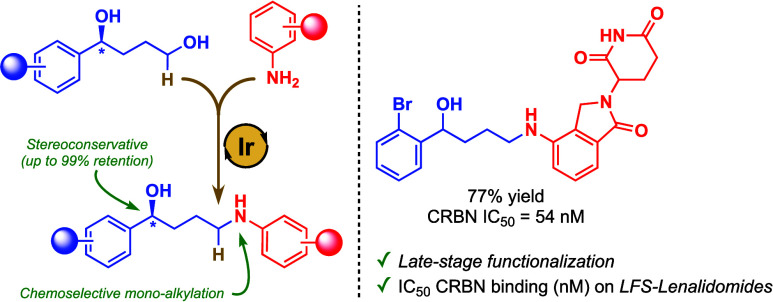 Figure 9
Peer Reviews
No public reviews on file for this paper yet. If you reviewed it on a platform where reviews are public (OpenReview, ICLR, NeurIPS, ICML), you can paste yours below so the community can read it here.
Videos
No videos yet. Explain this paper in a talk, walkthrough, or lecture? Add one.
Taxonomy
TopicsAsymmetric Hydrogenation and Catalysis · N-Heterocyclic Carbenes in Organic and Inorganic Chemistry · Organoboron and organosilicon chemistry