Introduction of methicillin-resistant Staphylococcus aureus (MRSA) nasal polymerase chain reaction testing combined with pharmacist ordering and intervention reduces anti-MRSA antibiotic use in a multi-hospital system
Curtis D. Collins, Chiraag Gupta, Jennifer Chou, James Shen, Holly Murphy

TL;DR
A new approach using MRSA nasal testing and pharmacist oversight reduced MRSA antibiotic use across multiple hospitals.
Contribution
Combining MRSA nasal PCR testing with pharmacist intervention significantly reduced anti-MRSA antibiotic use in a multi-hospital system.
Findings
Implementation led to a 20.2% reduction in anti-MRSA antibiotic use.
17 of 23 patient care units saw significant reductions.
The approach is effective for antimicrobial stewardship in multi-center settings.
Abstract
Methicillin-resistant Staphylococcus aureus (MRSA) nasal polymerase chain reaction implementation combined with pharmacist oversight across four hospitals resulted in a 20.2% reduction in anti-MRSA agent standardized antimicrobial administration ratios with significant reductions across 17 of 23 patient care units, further supporting this approach as an effective, multi-center, antimicrobial stewardship strategy.
Genes, proteins, chemicals, diseases, species, mutations and cell lines named across the full text — each resolved to its canonical identifier and authoritative record.
Click any figure to enlarge with its caption.
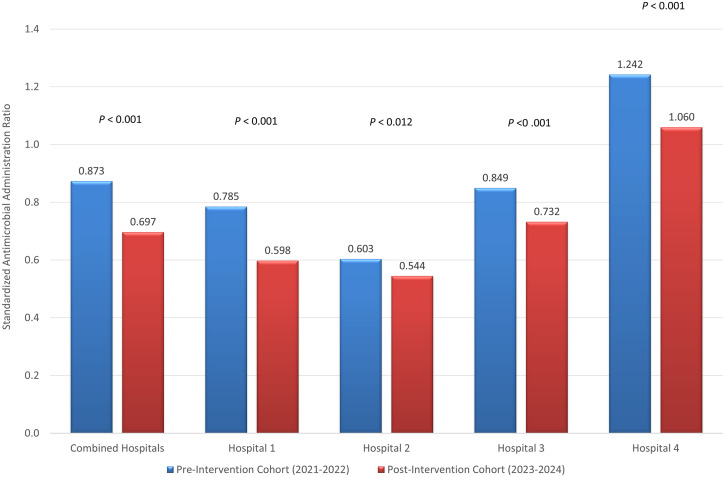 Figure 1
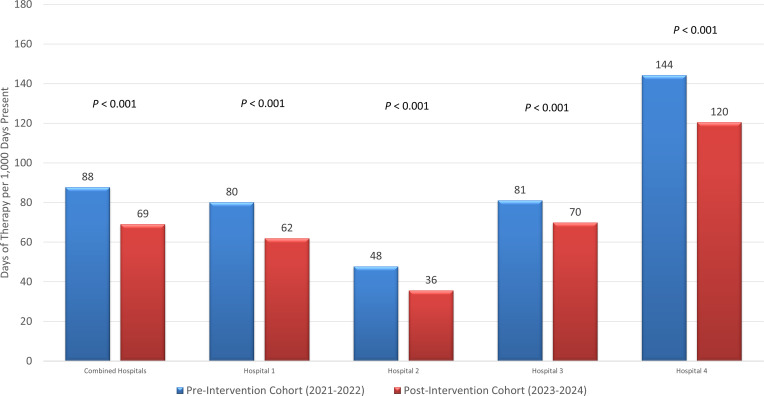 Figure 2
Peer Reviews
No public reviews on file for this paper yet. If you reviewed it on a platform where reviews are public (OpenReview, ICLR, NeurIPS, ICML), you can paste yours below so the community can read it here.
Videos
No videos yet. Explain this paper in a talk, walkthrough, or lecture? Add one.
Taxonomy
TopicsAntimicrobial Resistance in Staphylococcus · Antibiotic Use and Resistance · Nosocomial Infections in ICU