Low-Field Optical Polarization in Type-II Quantum Dots via Nuclear-Driven Dark State Mixing
Gabriel M. Jacobsen, Vinicius A. de Oliveira, Baolai Liang, Morgan E. Ware, Gregory J. Salamo, Gilmar E. Marques, Yuriy I. Mazur, Victor Lopez-Richard, Marcio D. Teodoro

TL;DR
This paper explores how weak magnetic fields can control light polarization in type-II quantum dots, offering a new approach for creating compact sources of circularly polarized light.
Contribution
The study introduces low-field optical polarization in type-II quantum dots via nuclear-driven dark state mixing.
Findings
Low magnetic fields as low as 0.17 T enable optical polarization in type-II In(Ga)As/GaAsSb QDs.
Nuclear spin interactions mediate in-plane electron spin precession, confirmed by polarization recovery measurements.
A theoretical model accurately reproduces the observed mirror-symmetric luminescence helicity.
Abstract
Semiconductor quantum dots (QDs) offer a rich landscape for spin control and quantum light emission. While most studies have focused on type-I band alignment, the potential of type-II systems remains underexplored. Here, we report low-field optical polarization in type-II In(Ga)As/GaAsSb QDs, enabled by hyperfine-induced mixing between bright and dark excitons via level anticrossing under magnetic fields as low as 0.17 T. The weak-field regime arises from the suppressed wave function overlap, yielding a reduced electron–hole exchange interaction. A theoretical model based on the spin Hamiltonian and the spin-split state populations accurately captures the observed mirror-symmetric luminescence helicity, reproducing the experimental polarization response. Additionally, polarization recovery measurements confirm the role of nuclear spin interactions in mediating the in-plane electron…
Genes, proteins, chemicals, diseases, species, mutations and cell lines named across the full text — each resolved to its canonical identifier and authoritative record.
Click any figure to enlarge with its caption.
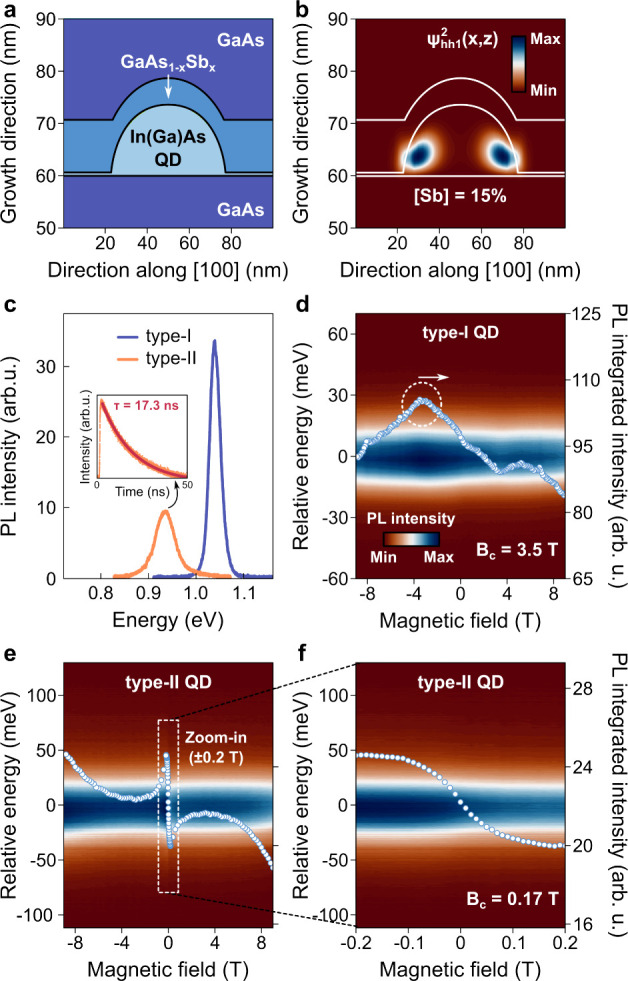 Figure 1
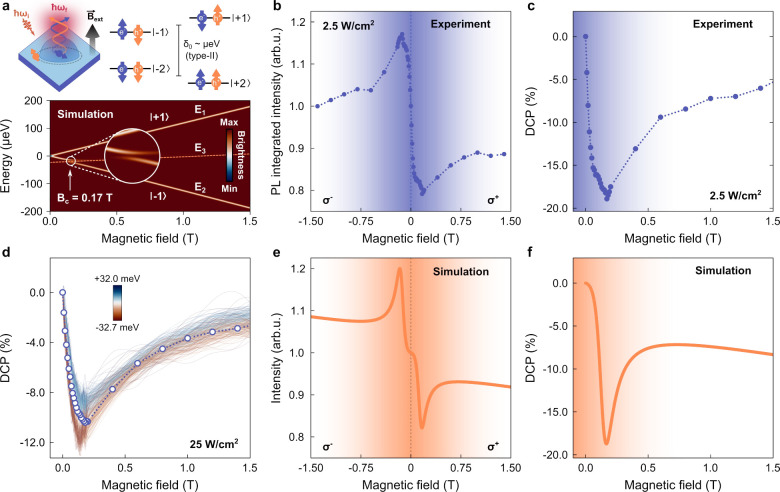 Figure 2
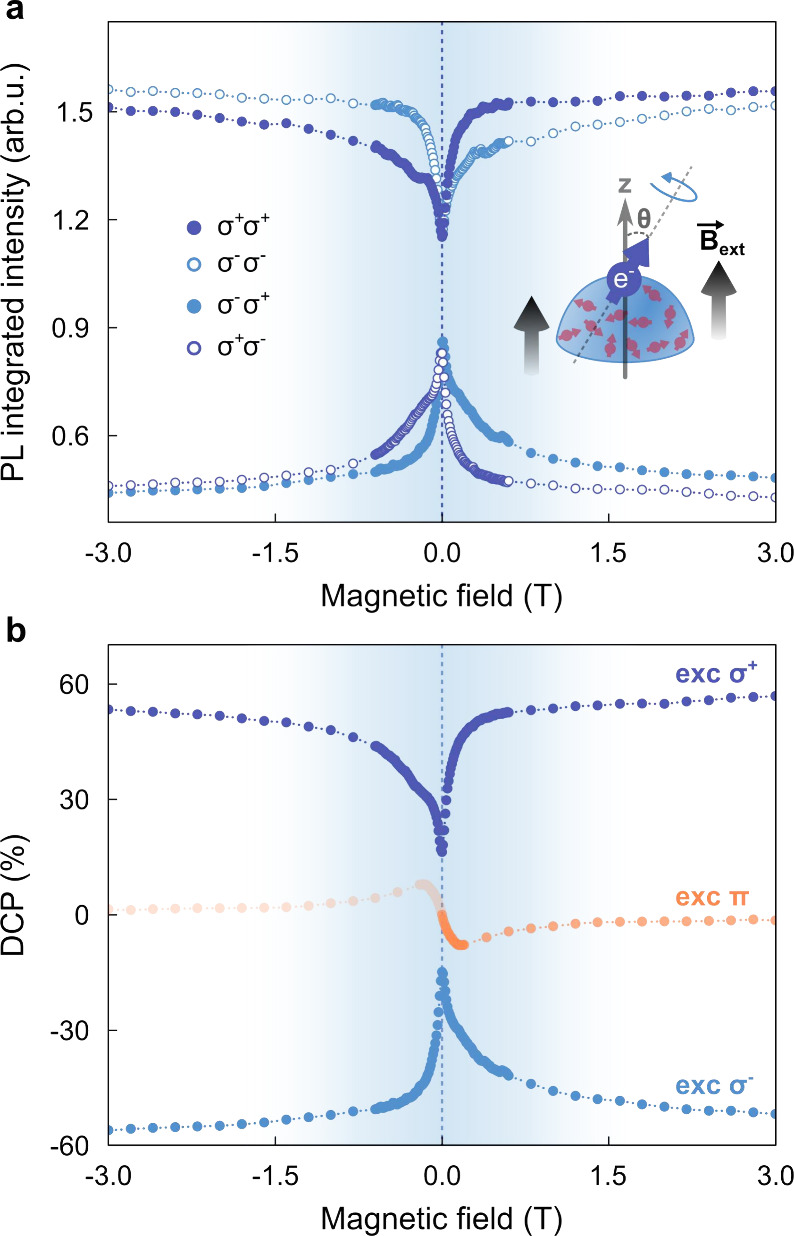 Figure 3
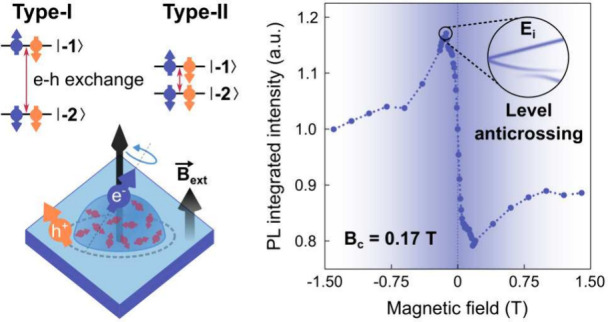 Figure 4
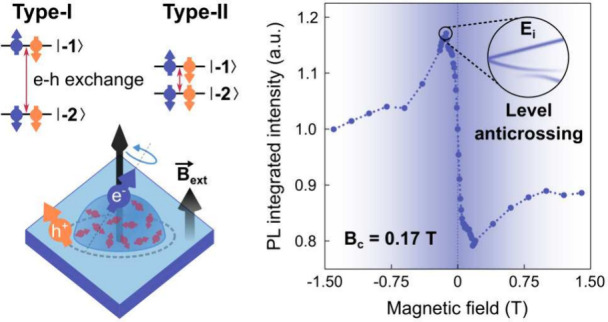 Figure 5
 Figure 6
 Figure 7
 Figure 8
 Figure 9
 Figure 10
 Figure 11
 Figure 12
 Figure 13
Peer Reviews
No public reviews on file for this paper yet. If you reviewed it on a platform where reviews are public (OpenReview, ICLR, NeurIPS, ICML), you can paste yours below so the community can read it here.
Videos
No videos yet. Explain this paper in a talk, walkthrough, or lecture? Add one.
Taxonomy
TopicsQuantum and electron transport phenomena · Semiconductor Quantum Structures and Devices · ZnO doping and properties