
TL;DR
Camille Lacarrière-Keïta discusses her research on autophagy inhibition in intestinal stem cells and its impact on cell differentiation.
Contribution
The study reveals how autophagy inhibition promotes enteroendocrine cell differentiation via Stat92E activity in intestinal stem cells.
Findings
Inhibiting autophagy in intestinal stem cells increases enteroendocrine cell differentiation.
Stat92E activity is crucial for this differentiation process.
The findings provide insights into intestinal cell development and disease mechanisms.
Abstract
First Person is a series of interviews with the first authors of a selection of papers published in Disease Models & Mechanisms, helping researchers promote themselves alongside their papers. Camille Lacarrière-Keïta is first author on ‘ Autophagy inhibition in intestinal stem cells favors enteroendocrine cell differentiation through Stat92E activity’, published in DMM. Camille conducted the research described in this article while a PhD student in Professor Steve Jean's lab at Université de Sherbrooke, Sherbrooke, Canada. She is now a postdoc researcher in the lab of Dr Edward A. Fon and Dr Ziv Gan-Or at McGill University, Ville-Marie, Canada, investigating GCase lysosomal trafficking and activity in dopaminergic neurons harbouring a reduced expression of lysosomal Parkinson's disease-risk genes.
Genes, proteins, chemicals, diseases, species, mutations and cell lines named across the full text — each resolved to its canonical identifier and authoritative record.
Click any figure to enlarge with its caption.
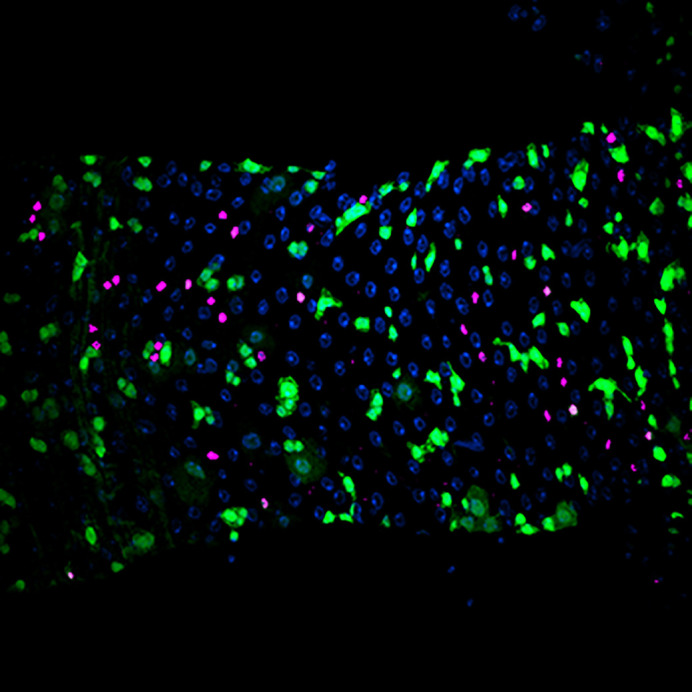 Figure 1
 Figure 2
Peer Reviews
No public reviews on file for this paper yet. If you reviewed it on a platform where reviews are public (OpenReview, ICLR, NeurIPS, ICML), you can paste yours below so the community can read it here.
Videos
No videos yet. Explain this paper in a talk, walkthrough, or lecture? Add one.
Taxonomy
TopicsAutophagy in Disease and Therapy · Lysosomal Storage Disorders Research · Parkinson's Disease Mechanisms and Treatments