Geospatial analysis of human-elephant conflict zones in the Jeli District: implications for mitigation and land-use planning
Hazizi Husain, Amal Najihah Muhamad Nor, Muhamad Azahar Abas, Aainaa Amir, Nur Hairunnisa Rafaai, Siti Balqis Jaafar, Ashiah Rosdi, Farah Nabila Ahmad, Fazrin Munirah Atan, Ahmad Shahdan Kasim, Hairulazim Mahmud, Salman Saaban, Kamarul Hambali

TL;DR
This study uses GIS to analyze human-elephant conflicts in Jeli District, identifying key areas for mitigation and better land-use planning.
Contribution
The study introduces a geospatial approach to identify HEC hotspots in Jeli, offering actionable insights for land-use planning and conflict mitigation.
Findings
High conflict intensity zones overlap with agricultural areas like oil palm plantations.
Loss of continuous forest cover and limited movement routes intensify HEC.
GIS analysis reveals spatial patterns useful for developing coexistence strategies.
Abstract
Human-elephant conflict (HEC) is a growing challenge in the Jeli District, largely driven by habitat fragmentation due to agricultural expansion, human settlements, and changing land use patterns. As elephants are pushed out of their natural habitats, they increasingly come into contact with human populations, especially in agricultural areas such as oil palm plantations. These encounters often result in crop damage, economic losses, and safety concerns for local communities. The conflict is intensified by the loss of continuous forest cover and the limited availability of safe, natural movement routes for elephants. This study examines the spatial patterns and drivers of HEC in Jeli using Geographic Information System (GIS) tools, including distribution mapping and hotspot analysis, to identify areas with high conflict intensity. The findings highlight critical zones where human and…
Genes, proteins, chemicals, diseases, species, mutations and cell lines named across the full text — each resolved to its canonical identifier and authoritative record.
Click any figure to enlarge with its caption.
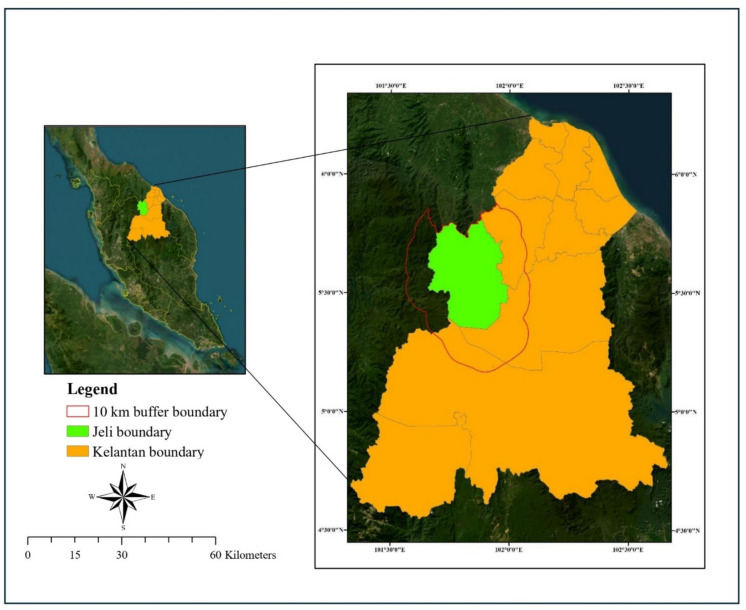 Figure 1
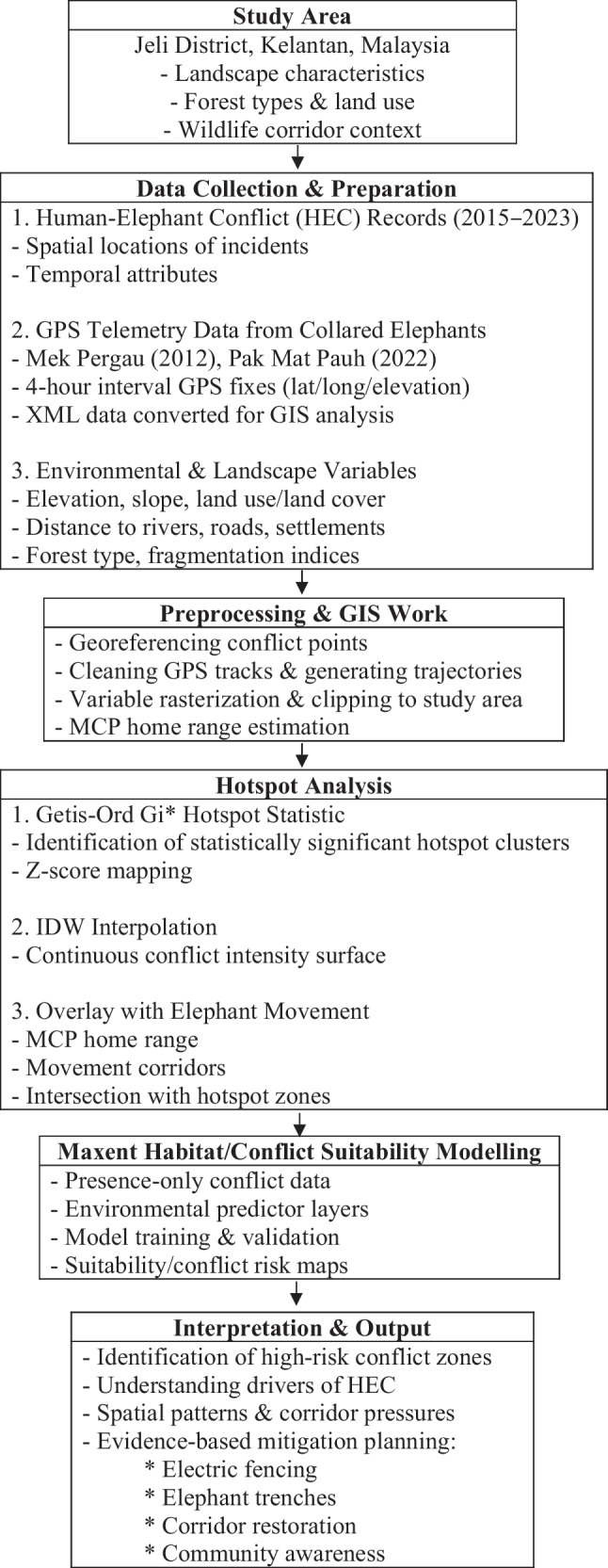 Figure 2
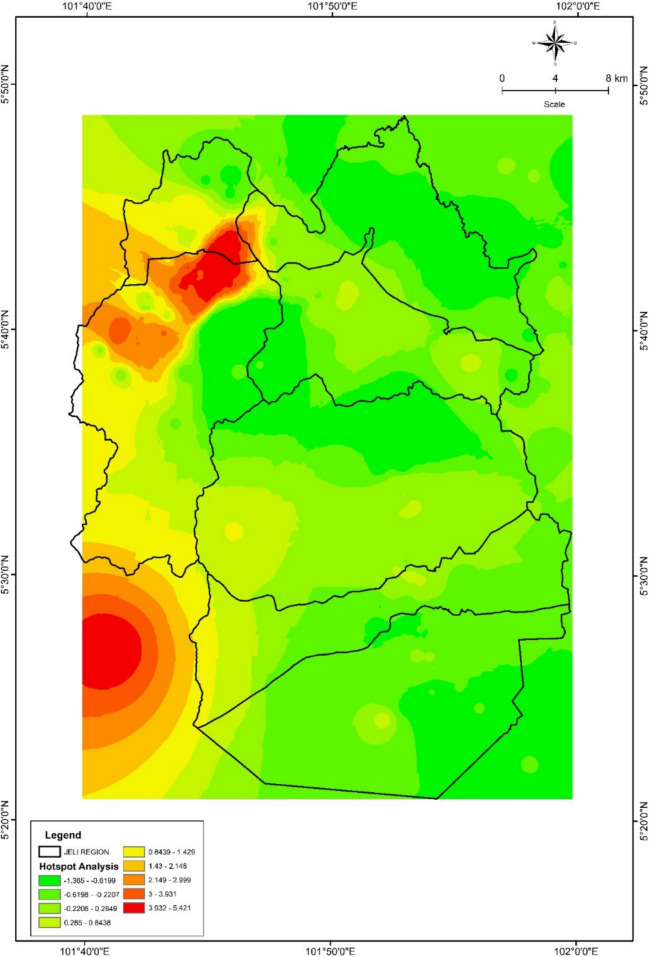 Figure 3
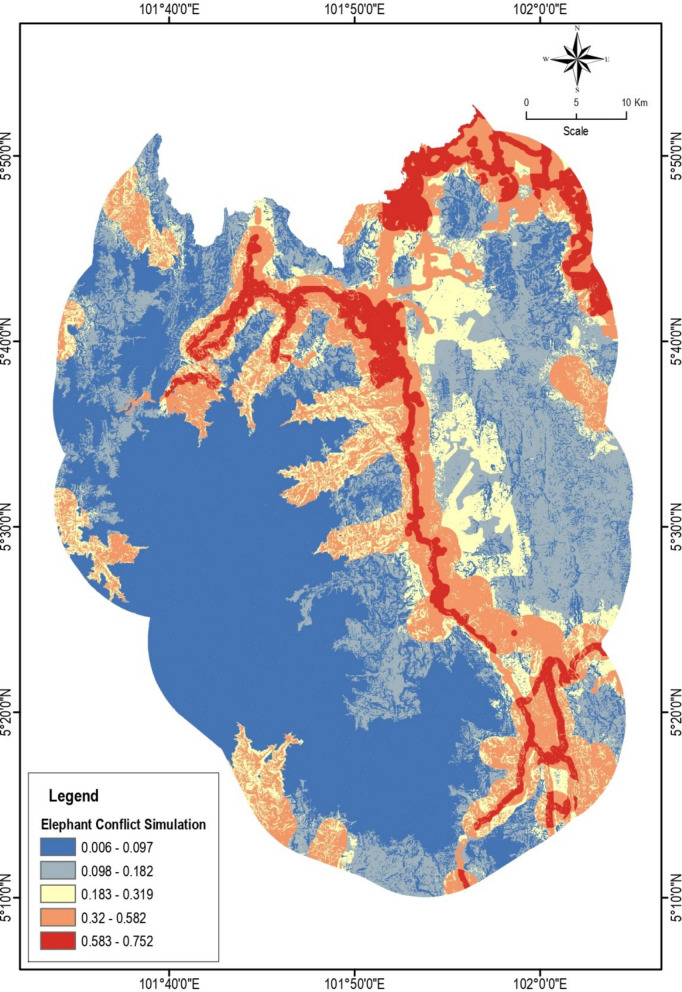 Figure 4
Peer Reviews
No public reviews on file for this paper yet. If you reviewed it on a platform where reviews are public (OpenReview, ICLR, NeurIPS, ICML), you can paste yours below so the community can read it here.
Videos
No videos yet. Explain this paper in a talk, walkthrough, or lecture? Add one.
Taxonomy
TopicsWildlife Ecology and Conservation · Wildlife-Road Interactions and Conservation · Conservation, Biodiversity, and Resource Management