Chemoselective Aza-Michael Addition of Enolizable Heterocyclic Imine-Thiols to Levoglucosenone
Anastasia Mauger, Rubi Mahato, Zbigniew J. Witczak, Roman Bielski, Donald E. Mencer

TL;DR
A new chemical reaction was discovered where certain sulfur and nitrogen compounds react with levoglucosenone to form specific products without forming expected byproducts.
Contribution
A novel chemoselective aza-Michael addition reaction involving enolizable heterocyclic imine-thiols and levoglucosenone is reported.
Findings
Only aza-Michael addition products were formed, with no S-adducts detected.
All products were crystalline and obtained in good to excellent yields.
Product structures were confirmed using NMR, MS, and single-crystal X-ray analysis.
Abstract
Heterocyclic sulfur and nitrogen containing compounds capable of forming an equilibrium: thiol/imine = thione/amine (N=C-S-H ⇌ H-N-C=S) were reacted with levoglucosenone (LG) in the presence of triethylamine. Unexpectedly, the only isolated products were the result of the aza-Michael addition. No S-adducts were detected. All products were crystalline with good to excellent yields. The structure of products was determined using NMR, MS, and single-crystal X-ray analysis.
Genes, proteins, chemicals, diseases, species, mutations and cell lines named across the full text — each resolved to its canonical identifier and authoritative record.
Click any figure to enlarge with its caption.
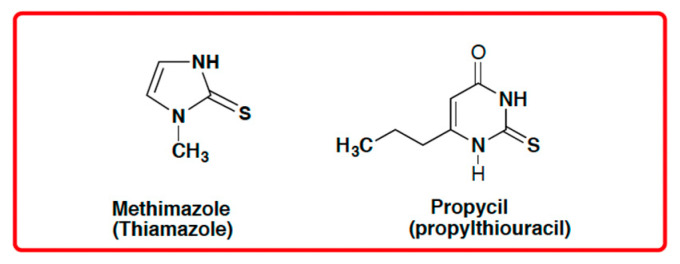 Figure 1
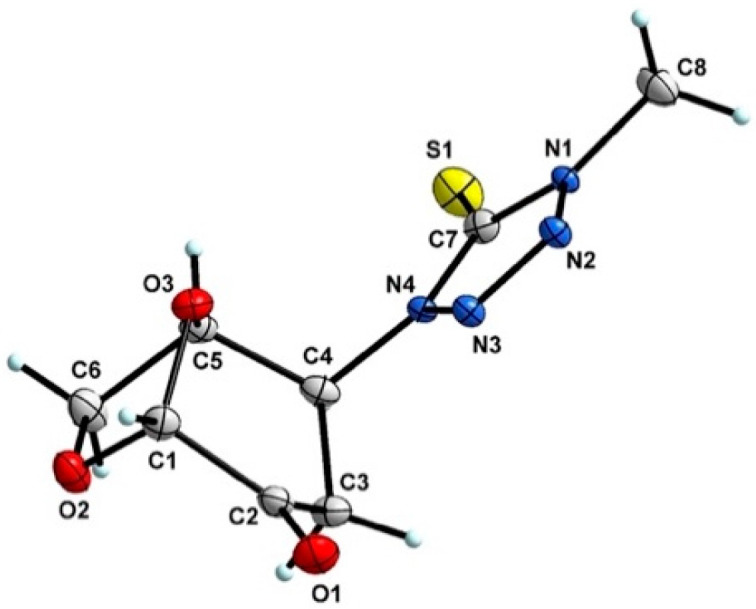 Figure 2
 Figure 3
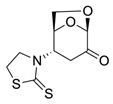 Figure 4
 Figure 5
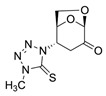 Figure 6
 Figure 7
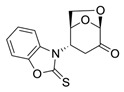 Figure 8
 Figure 9
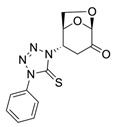 Figure 10
 Figure 11
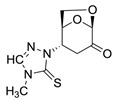 Figure 12
 Figure 13
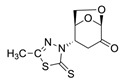 Figure 14
 Figure 15
 Figure 16
 Figure 17
 Figure 18
 Figure 19
 Figure 20
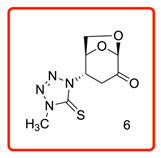 Figure 21
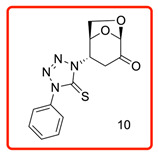 Figure 22
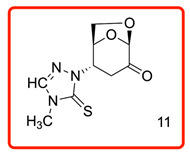 Figure 23
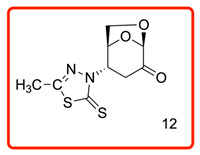 Figure 24
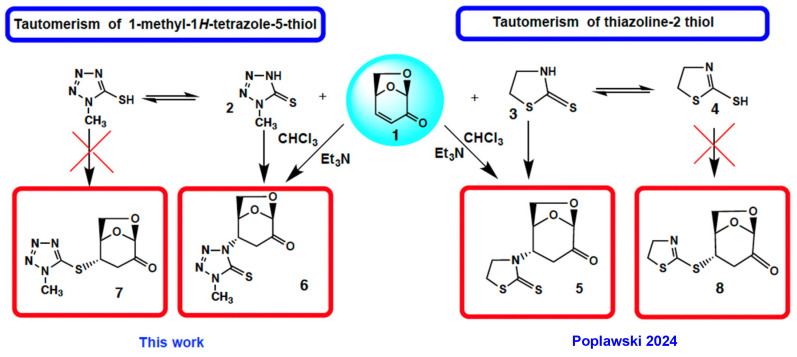 Figure 25
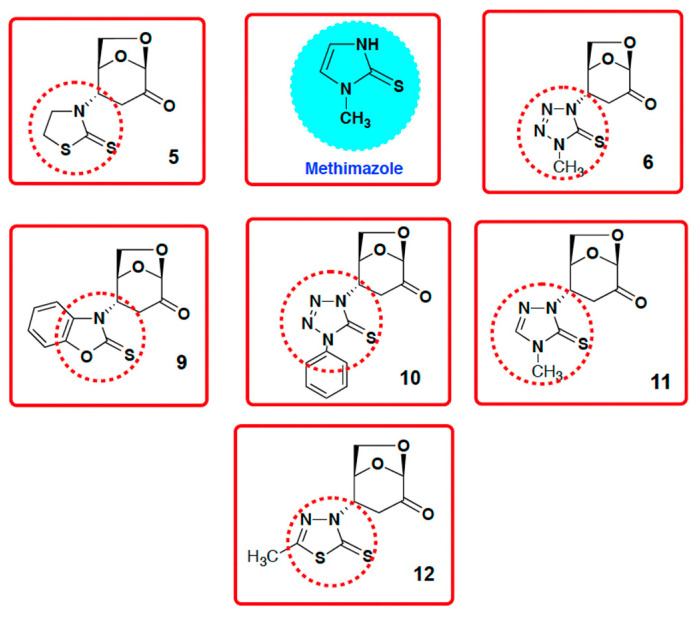 Figure 26
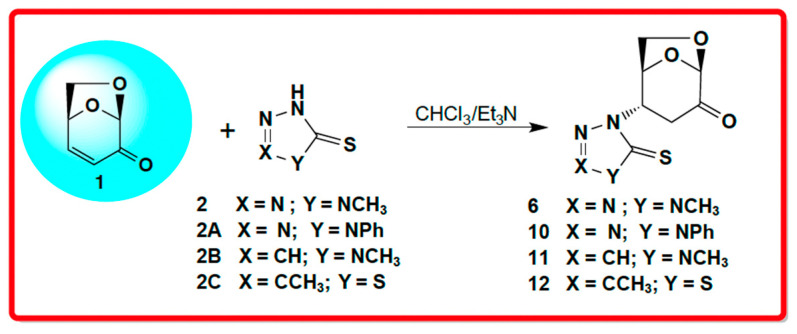 Figure 27
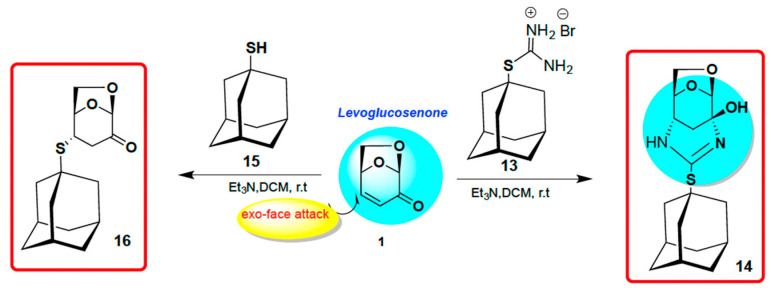 Figure 28
Peer Reviews
No public reviews on file for this paper yet. If you reviewed it on a platform where reviews are public (OpenReview, ICLR, NeurIPS, ICML), you can paste yours below so the community can read it here.
Videos
No videos yet. Explain this paper in a talk, walkthrough, or lecture? Add one.
Taxonomy
TopicsSulfur-Based Synthesis Techniques · Carbohydrate Chemistry and Synthesis · Microwave-Assisted Synthesis and Applications
1. Introduction
Thiols bonded to the five membered rings of thiazole, thiazoline, or thiadiazole are nucleophiles capable of reacting with a conjugated unsaturated system of levoglucosenone 1 [1]. Michael addition could proceed through either the thiol or amine groups to produce the corresponding S or N adducts (or both).
We have investigated the conjugate Michael addition reaction of thiols for many years [2,3,4], but recently [5] we noticed that heterocyclic iminethiols (N=C-S-H ⇌ H-N-C=S) form only N-adducts when reacted in chloroform with levoglucosenone, as depicted in Scheme 1. This is unexpected, since thiols are excellent nucleophiles in Michael additions [6]. Moreover, under certain conditions when thiophenol and aniline addition to acrylonitrile was promoted by triethylammonium acetate, the only product was an S-adduct [7].
An observation of only N-addition of a similar compound (2-mercapto-benzoxazole) to levoglucosenone was previously reported by Spanevello et al. [8]. Recently, 2-mercapto-benzoxazole and 2-mercapto-benzothiazole were used in a Michael addition reaction to α,β-unsaturated esters [9]. Various aspects of thiono-thiol tautomerism of thiadiazole and oxadiazole have also been reported [10,11]. These data and our earlier observation of tautomeric nucleophile 4-thioxo-pyridine acylation [12] prompted us to further investigate the reactivity of enolizable/tautomeric imino-thiols. Interestingly, some substituted thioureas belonging to enolizable/tautomeric imino-thiols are well known FDA-approved drugs, such methimazole (Thiamazole) or propylthiouracil (Propycil), both used to treat hyperthyroidism (Figure 1). Drug disposition, delivery, and toxicity are known to be influenced by the presence of tautomers in some drugs and also by their respective metabolites [13,14].
The aza-Michael addition of imino-thiols to levoglucosenone (LG) can be considered as a type of glycorandomization [15] in which the LG molecule serves as a representative 1,6-anhydro protected sugar. Glycorandomization [15,16,17] has been reported as a universal platform methodology to modify the physico-chemical character of many natural products, and drugs. Scheme 2 provides an example of glycorandomization of levoglucosenone and representative thiones with six various functional motifs.
Other authors [18] synthesized relevant N-adducts via Michael reaction addition to levoglucosenone under aqueous conditions. Interestingly, several of the synthesized levoglucosenone N-adducts exhibited promising properties against disorders such as cancer, autoimmune, and heart diseases. Greatrex et al. [19] published some new data on the synthesis of aza LG adducts from the reaction with reactive amines. Mroczek et al. [20] reported some chromatographic characteristics of tautomers of 1,2,4-triazole-3-thione and 3-thiol tautomers. Mloston et al. [21] recently published important studies of the reactivity of enolizable 1-substituted 5-mercapto-1H-tetrazoles in the cycloaddition reaction with dimethyl 2-arylcyclopropane dicarboxylates. Ring-opening reactions of donor–acceptor cyclopropanes with enolizable aza-heterocyclic thiones were also reported [22]. Published studies on 1H-benzo[d]imidazole-2-thiols [23] and 2-thioxo-4-thiazolidinone [24] present interesting applications and discuss their structural features and reactivities.
2. Results and Discussion
In order to study the addition of enolizable/tautomeric imine-thiols to levoglucosenone (LG), we initiated a study with a series of five-member heterocyclic thiols bearing a nitrogen atom in the α-position to the C=S group, as shown in Table 1. In each case, only N-adducts, and no trace of S-adducts, were observed as products. Additionally, the stereoselectivity of the addition reaction was influenced by the structure of the levoglucosenone moiety, directing the addition to take place from the bottom of the molecule via exo-attack.
Products were characterized by ^1^H, ^13^C NMR along with single-crystal X-ray diffraction of compound 6. Crystals of 6 were grown from methanol, and the X-ray analysis revealed the structure presented in Figure 2. The ORTEP diagram for 6 confirms the N-linkage of tetrazole moiety connected to C4 of the bicyclic 1,6-anhydrosugar unit, the presence of the thiono group C=S, and the stereospecificity of the addition reaction.
The summary of the aza-Michael addition is presented in Scheme 3. One possible explanation for the aza-Michael addition being favored over the thia-Michael addition would be that the starting material exists essentially as only the thione-containing tautomer.
To explore this possibility, we examined the NMR, Raman, and IR spectra of the reacting substrates and found no evidence for the presence of the thiol-enamine tautomer. While it is not definitive proof, this explanation is likely to be correct.
The ^13^C chemical shifts for the thiocarbonyl groups for compounds (6, 10–12) were compared with those observed for the enolizable thiols used in this study and chemical shift correlation tables as summarized in Table 2. These specific observations, together with all analytical data, are consistent with the aza-Michael addition reaction of the enolizable heterocyclic thiols to levoglucosenone.
It is worth adding that we also investigated the Michael addition reaction of a masked thiol in the form of thiouronium salt 13 to levoglucosenone [25]. The only product formed under mild basic conditions was polycyclic compound 14. It must have derived from the initial Michael addition at C4 of LG followed by cyclization to form the six-membered ring. Interestingly, the reaction with corresponding thiol 15 gave the expected Michael S-adduct 16, as depicted in Scheme 4 [25].
3. Material and Methods
CCDC Deposition: Complete crystallographic data for compound 6 have been deposited at the Cambridge Crystallographic Data Centre as supplementary publication numbers CCDC-2212586. These data can be obtained free of charge from the Cambridge Crystallographic Data Centre via https://www.ccdc.cam.ac.uk/structures/ (accessed on 10 December 2025) see Supplementary Materials.
General information: All reagents and solvents were used as purchased without further purification.
^1^H NMR and ^13^C NMR spectra were recorded on a Bruker Avance III 400 Ultrashield Plus spectrometer (Bruker BioSpin GmbH, Rheinstetten, Germany). Two-dimensional (COSY and HSQC) experiments were performed to enhance assignments. Chemical shifts (δ–scale) are reported in ppm with TMS (0 ppm) and the residual solvent signals (CDCl_3_: 7.26 ppm) for ^1^H NMR and (CDCl_3_: 77.16 ppm) for ^13^C NMR as internal standards.
Thin-layer chromatography was performed on silica gel-coated TLC plates and visualized under UV light (at 254 nm); detection was executed by exposing to iodine (I_2_) vapor. The melting points (mps) were obtained on an ElectroThermal FARGO MP-2D (Electrothermal Engineering Ltd, Rochford, England, UK) capillary melting point apparatus and were uncorrected. Chemical names were generated by ChemDraw Professional V.15.1.0.144 software.
Starting materials: Levoglucosenone (1) was prepared from cellulose by sulfuric acid-assisted pyrolysis, following a known procedure [26] and provided as a generous gift from Circa Ltd. (Parkville, Victoria, Australia). All imine-thiols used in the aza-Michael reaction addition were purchased from Sigma-Aldrich (St. Louis, MO, USA).
4. Synthetic Procedures and Characterization Data
General Procedure for the Synthesis of 4-N-Functionalized Dihydrolevoglucosenones
To a solution of levoglucosenone (1) 1.26 g (0.01 mole) in 35 mL of chloroform, 0.01 mole of thiol 2 (2A–2C) was added and magnetically stirred for 5 min. After that time, 1 mL of triethylamine was added dropwise, and the solution was stirred for 24–48 h at room temperature. Upon overnight cooling at 5 °C the crystalline residue was filtered off and recrystallized from methanol. The crystalline products were air-dried.
Characterization data
(1S,2S,5R)-2-(4-methyl-5-thioxo-4,5-dihydro-1H-tetrazol-1-yl)-6,8-dioxabicyclo[3.2.1]octan-4-one (6)
The reaction was carried at room temperature for 24 h. White crystals m. p. 192–194 °C; (1.58 g, 65% yield); R_f_ = 0.26 (Hex/EA 1/1), [α]^D^30-54.6 (c 1.0, CHCl_3_); ^1^H NMR (400 MHz CDCl_3_) δ 2.90 (ddd, J = 16.0 Hz, J = 5.4 Hz, J = 1.4 Hz 1H), 3.19 (dd, J = 16.0 Hz, 8.4 Hz, 1H), 3.93 (s, 3H), 4.12 (dd, J = 8.4 Hz, J = 5.4 Hz, 1H), 4.23 (dd, J = 8.4 Hz, J = 5.4 Hz, 1 H), 5.05 (d, J = 4.0 Hz, 1H), 5.25 (d, J = 1.4 Hz, 1H), 5.26 (d, J = 2.8 Hz, 1H); ^13^C{1H} NMR (100 MHz, CDCl_3_) δ 34.67, 34.70, 58.08, 65.88, 73.11, 101.57, 163.59 (C=S), 194.94 (C=O); APCI-MS calculated monoisotopic mass for [M+H]+ 243.06 u with detected mass 243.1 u.
(1S,2S,5R)-2-(4-phenyl-5-thioxo-4,5-dihydro-1H-tetrazol-1-yl)-6,8-dioxabicyclo[3.2.1]octan-4-one (10)
The reaction was carried out under ambient temperature for 48 h. White crystals m. p. 158–160 °C; (1.95 g, 64% yield); R_f_ = 0.22 (Hex/EA 1/1), [α]^D^30-51.6 (c 1.0, CHCl_3_); ^1^H NMR 400 MHz CDCl_3_) δ 2.96 (d, J = 17.2 Hz, 1H), 3.24(dd, J = 17.2 Hz, 7.6 Hz, 1H), 4.14 (dd J = 8.0 Jz, J = 6.0 Hz, 1H), 4.25 (d, J = 8.0 Hz, 1H), 5.14 (d, J = 4.8 Hz, 1H), 5.32 (s, 1H), 5.39 (d, J = 7.6 Hz, 1H), 7.46–7.59 (m, aromatic, 3 H), 7.95 (d, J = 8.0 Hz, aromatic 1H); ^13^C{1H} NMR (100 MHz, CDCl_3_) δ 34.82, 58.00, 65.94, 73.12, 101.63, 123.73, 129.36, 129.88 134.41 162.52 (C=S), 194.95 (C=O); APCI-MS calculated monoisotopic mass for [M+H]+ 305.07 u with detected mass 305.1 u.
(1S,5R)-2-(4-methyl-5-thioxo-4,5-dihydro-1H-1,2,4-triazol-1-yl)-6,8-dioxabicyclo[3.2.1]oct-2-en-4-one (11)
The reaction was carried out under ambient temperature for 24 h. White crystals m. p. 178–180 °C; (1.63 g, 68% yield); R_f_ = 0.29 (Hex/Acetone 1/1), [α]^D^30-52.6 (c 1.0, CHCl_3_); ^1^H NMR (400 MHz CDCl_3_) δ 2.79 (d, J = 16.0 Hz, 1H), 3.09 (dd, J = 16.0, 7.6 Hz, 1H), 3.62 (s, 3H), 4.07 (dd, J = 8.0, J = 5.6 Hz, 1H), 4.1 9 (d, J = 8.4, Hz, 1H), 5.07 (d, J = 4.8 Hz, 1H), 5.23 (s, 1H), 5.34 (d, J = 8.0 Hz, 1H), 7.82 (s, 1H). ^13^C{1H} NMR (100 MHz, CDCl_3_) δ 32.61, 35.01, 58.06, 66.00, 74.07, 101.51, 139.67, 166.15 (C=S), 196.75 (C=O); APCI-MS calculated monoisotopic mass for [M+H]+ 242.06 u with detected mass 242.0 u.
(1S,2S,5R)-2-(5-methyl-2-thioxo-1,3,4-thiadiazol-3(2H)-yl)-6,8-dioxabicyclo[3.2.1]octan-4-one (12)
The reaction was carried out at room temperature for 24 h. White crystals m. p. 214–216 °C; (1.85 g, 72% yield); R_f_ = 0.28 (Hex/EA 1/1)), [α]^D^30-50.6 (c 1.0, CHCl_3_); ^1^H NMR (400 MHz CDCl_3_) δ 2.50 (s,3H), 2.81 (dd, J = 16.0, 6.4 Hz, 1H), 3.99 (dd, J = 15.0, 14.0 Hz), 3.88 (dt, J = 12.4, 6.0 Hz, 1H), 4.56 (d, J = 8.0 Hz, 1H), 4.94 (br s,1H), 5.20 (s, 1H), 5.77 (dd, J =5.2, 4.0 Hz,1H); ^13^C{1H} NMR (100 MHz, CDCl_3_) δ 34.81, 57.99, 65.93, 73.11, 73.4, 101.62, 123.73, 129.36, 129.87 134.41 162.52, 194.9, 5 (C=O); Minor peaks present are due to an unidentified impurity. APCI-MS calculated monoisotopic mass for [M+H]+ 259.01 with detected positive ion [M+H]+ 259.0 u.
5. Conclusions
The present study shows that the enolizable/tautomeric imine-thiols 2 (2A–2C) undergo Michael addition to levoglucosenone (LG) with the formation of N-adducts in good yield (64–72%). Only N-adducts were isolated and no S-adducts were found. In studied solvents the substrates exist only in the amine/thione tautomeric form and, arguably, this is why only the aza-Michael addition products are formed. However, it should be noted that only five-membered heterocyclic thiols were investigated and reported here. Future studies are underway which will attempt to determine under what conditions thia-additions might become favored and why aza additions are dominant in the discussed processes. The results will be published elsewhere.
The reference list from the paper itself. Each links out to its DOI / PubMed record.
- 1Essig M.G. Michael additions of thiols to levoglucosenone Carbohydr. Res.198615622523110.1016/S 0008-6215(00)90115-0 · doi ↗
- 2Witczak Z.J. Sun J. Mielguj R. Synthesis of L-fucopyranosyl-4-thiodisaccharides from levoglucosenone and their inhibitory activity on α-L-fucosidase Bioorg. Med. Chem. Lett.199552169217410.1016/0960-894X(95)00377-6 · doi ↗
- 3Witczak Z.J. Chhabra R. Chen H. Xie X.-Q. Thio-sugars II. The Novel Approach to Thiodisaccharides. The Synthesis of 3-deoxy-4-thiocellobiose from Levoglucosenone Carbohydr. Res.199730116717510.1016/S 0008-6215(97)00100-6 · doi ↗
- 4Witczak Z.J. Kaplon P. Dey P.M. Thio-sugars VII. Effect of 3-deoxy-4-S-(β-ᴅ-gluco- and β-ᴅ-galactopyranosyl)-4-thiodisaccharides and Their Sulfoxides and Sulfones on the Viability and Growth of Selected Murine and Human Tumor Cell Lines Carbohydr. Res.2003338111810.1016/S 0008-6215(02)00394-412504376 · doi ↗ · pubmed ↗
- 5Poplawski T. Galita G. Sarnik J. Macieja A. Bielski R. Mencer D.E. Witczak Z.J. New N-Adducts of Thiadiazole and Thiazoline with Levoglucosenone and Evaluation of Their Significant Cytotoxic (Anti-Cancer) Activity Cancers 20241621610.3390/cancers 1601021638201645 PMC 10777969 · doi ↗ · pubmed ↗
- 6Khiste S.A. Pakhare D.S. More V.S. Chakibanda G. Lokhande M.N. Thia-Michael Addition in Diverse Organic Synthesis Croat. Chem. Acta 20239614115210.5562/cca 4021 · doi ↗
- 7Verma A.K. Attri P. Chopra V. Tiwari R.K. Chandra R. Triethylammonium acetate (TEAA): A recyclable inexpensive ionic liquid promotes the chemoselective aza- and thia-Michael reactions Monatsh Chem.20081391041104710.1007/s 00706-008-0886-4 · doi ↗
- 8Giri G.F. Danielli M. Marinelli R.A. Spanevello R.A. Cytotoxic effect of levoglucosenone and related derivatives against human hepatocarcinoma cell lines Bioorganic Med. Chem. Lett.2016263955395710.1016/j.bmcl.2016.07.00727422336 · doi ↗ · pubmed ↗