A Retrospective Consecutive Controlled Case Series Analysis of the Assessment and Treatment of Elopement in Children with Autism in an Inpatient Setting
Rose E. Nevill, Michelle F. Crawford, Jennifer R. Zarcone, Elizabeth Maquera, Griffin W. Rooker, Jonathan D. Schmidt

TL;DR
This study analyzed treatments for elopement in children with autism, finding that combining strategies can effectively reduce this dangerous behavior.
Contribution
The study provides new insights into effective treatment strategies for elopement in children with autism based on functional analyses.
Findings
Elopement was most often maintained by access to tangible items or automatic reinforcement.
Effective treatments reducing elopement by at least 80% were developed for 13 out of 14 children.
Combining consequence-based and antecedent-based strategies was commonly used in successful treatments.
Abstract
This study included a retrospective consecutive controlled case series analysis of 17 function-based elopement treatments developed for 14 children with autism in an inpatient setting. Results from functional analyses indicated elopement was most frequently maintained by access to tangible items, followed by automatic reinforcement. All treatments used a combination of multiple consequence-based or antecedent- and consequence-based strategies. Individual treatment components and strategies for testing treatment generality are reviewed to provide examples of how such treatments may be implemented to reduce elopement attempts. Effective treatments, defined as reducing elopement by at least 80%, were developed for 13 children. These findings may help guide clinicians as they plan for the safe assessment and treatment of this difficult and dangerous behavior. The online version contains…
Genes, proteins, chemicals, diseases, species, mutations and cell lines named across the full text — each resolved to its canonical identifier and authoritative record.
Click any figure to enlarge with its caption.
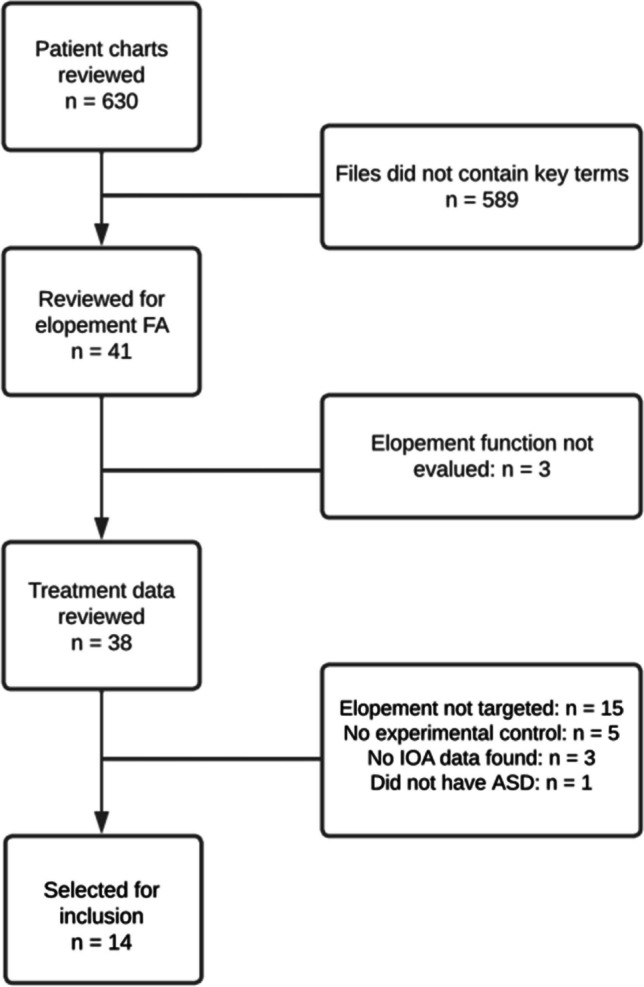 Figure 1
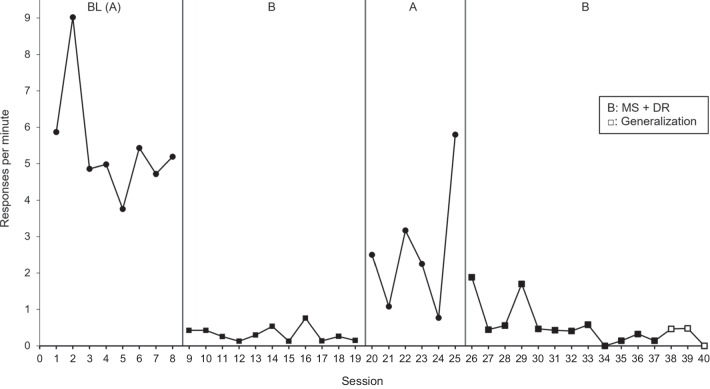 Figure 2
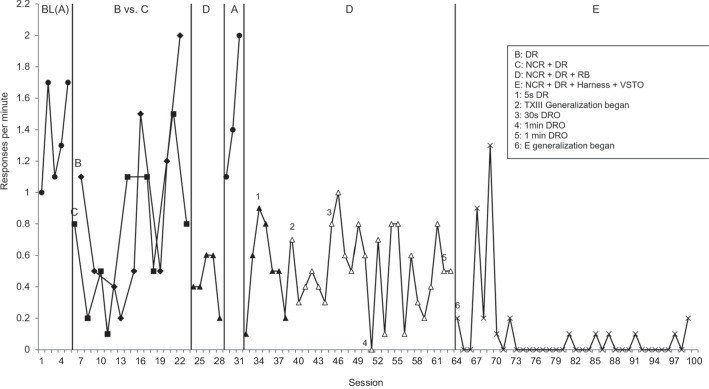 Figure 3
Peer Reviews
No public reviews on file for this paper yet. If you reviewed it on a platform where reviews are public (OpenReview, ICLR, NeurIPS, ICML), you can paste yours below so the community can read it here.
Videos
No videos yet. Explain this paper in a talk, walkthrough, or lecture? Add one.
Taxonomy
TopicsAutism Spectrum Disorder Research · Behavioral and Psychological Studies · Family and Disability Support Research