Context matters: Causality and global epidemiology of proton pump inhibitor safety
Shinji Okabayashi, Gilaad G. Kaplan

TL;DR
This paper discusses new evidence on whether long-term use of proton pump inhibitors causes upper gastrointestinal cancer.
Contribution
The paper introduces new causal evidence on the safety of prolonged proton pump inhibitor use.
Findings
A recent study provides new evidence on the causal link between prolonged PPI use and upper gastrointestinal cancer.
The paper highlights the importance of context in assessing the safety of proton pump inhibitors.
Abstract
Proton pump inhibitors revolutionized acid-related disorder therapy, yet widespread overuse has raised concerns about long-term safety. A recent study in PLOS Medicine presents new evidence assessing whether links between their prolonged use and upper gastrointestinal cancer are causal. In this Perspective, Gilaad Kaplan and Shinji Okabayashi highlight a recent study in PLOS Medicine that presents new evidence assessing whether links between prolonged proton pump inhibitor (PPI) use and upper gastrointestinal cancer are causal.
Genes, proteins, chemicals, diseases, species, mutations and cell lines named across the full text — each resolved to its canonical identifier and authoritative record.
Click any figure to enlarge with its caption.
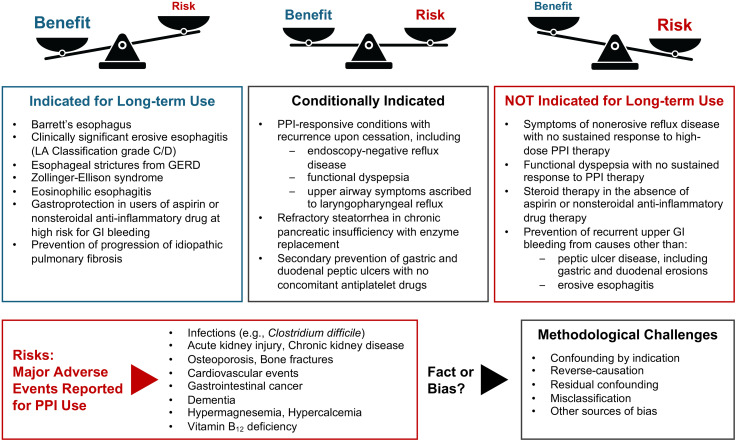 Figure 1
Peer Reviews
No public reviews on file for this paper yet. If you reviewed it on a platform where reviews are public (OpenReview, ICLR, NeurIPS, ICML), you can paste yours below so the community can read it here.
Videos
No videos yet. Explain this paper in a talk, walkthrough, or lecture? Add one.
Taxonomy
TopicsGastroesophageal reflux and treatments · Helicobacter pylori-related gastroenterology studies · Esophageal Cancer Research and Treatment