Drug susceptibility of a clinical isolate of Balamuthia mandrillaris, a pathogenic free-living amoeba
Pratima Dubey, Porntida Kobpornchai, Nongnat Tongkrajang, Suwipa Chaiyaloom, Chenyang Lu, Christopher A. Rice, Kasem Kulkeaw

TL;DR
This study tests how well various drugs kill a new strain of Balamuthia mandrillaris, a deadly amoeba, to help improve treatments for BAE.
Contribution
The study evaluates drug susceptibility of a new clinical isolate of B. mandrillaris and identifies nitroxoline as the most effective amoebicidal drug.
Findings
Nitroxoline showed the highest amoebicidal activity without recrudescence.
Topical antiseptics caused amoeba lysis at all tested doses.
The KM-20 isolate had reduced drug susceptibility compared to other strains.
Abstract
Balamuthia amoebic encephalitis (BAE) is a highly fatal infection caused by Balamuthia mandrillaris, an amoeba that lives in soil and water. In Thailand, three fatal cases of BAE have been documented, but no survivors have been reported, raising questions about current treatment regimens. Previous drug repurposing studies reveal some potent pharmacological compounds, but the drug susceptibility of the clinical isolate of pathogenic amoeba remains variable. Given the success in isolating B. mandrillaris from the human biopsied brain, this study aims to assess the amoebicidal effect of several previously repurposed drugs and suggested therapies for BAE. The trophozoites of a new clinical isolate, the KM-20 strain, were exposed to 12 compounds, including pentamidine, the most widely used antiprotozoal drug, and nitroxoline, the recent radical cure for BAE. The amoebicidal effect was…
Genes, proteins, chemicals, diseases, species, mutations and cell lines named across the full text — each resolved to its canonical identifier and authoritative record.
Click any figure to enlarge with its caption.
 Figure 1
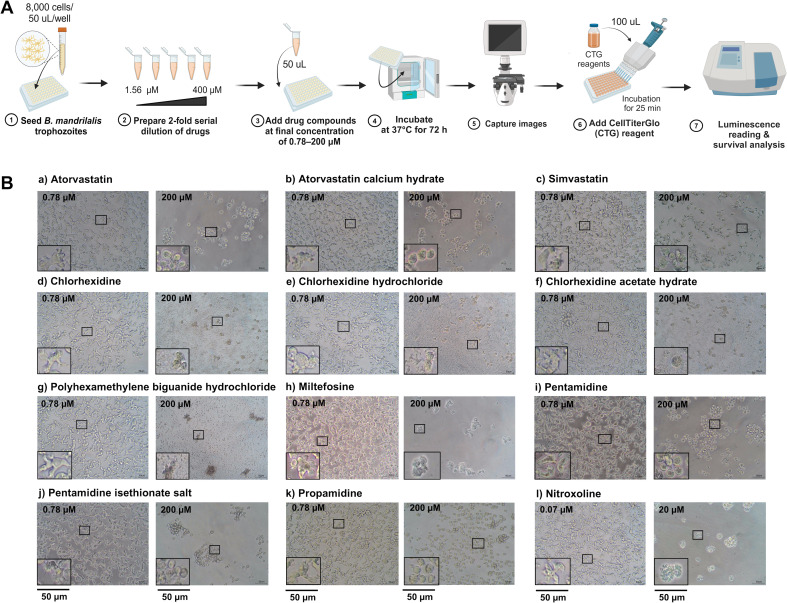 Figure 2
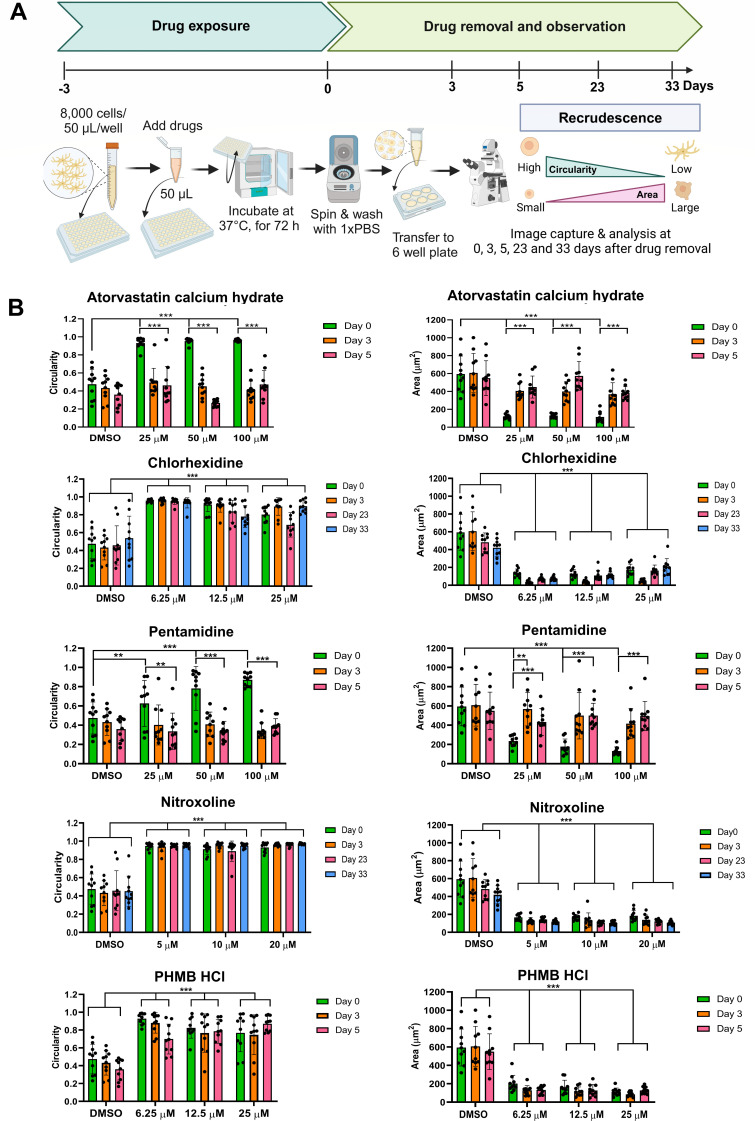 Figure 3
 Figure 4
Peer Reviews
No public reviews on file for this paper yet. If you reviewed it on a platform where reviews are public (OpenReview, ICLR, NeurIPS, ICML), you can paste yours below so the community can read it here.
Videos
No videos yet. Explain this paper in a talk, walkthrough, or lecture? Add one.
Taxonomy
TopicsLegionella and Acanthamoeba research · Amoebic Infections and Treatments · Protist diversity and phylogeny