PD-1 regulates CD4+ T cell-mediated CD8+ T cell responses in the brain to balance viral control and neuroinflammation
Arrienne B. Butic, Elia Afanasiev, Samantha A. Spencer, Mofida Abdelmageed, Anirban Paul, Kalynn M. Alexander, Katelyn N. Ayers, Todd D. Schell, Matthew D. Lauver, Ge Jin, Samantha M. Borys, Laurent Brossay, Jo Anne A. Stratton, Vonn Walter, Aron E. Lukacher

TL;DR
This study shows how PD-1 in CD4+ T cells helps control brain virus levels while preventing excessive inflammation during a viral infection.
Contribution
The study reveals that CD4+ T cell-intrinsic PD-1 signaling balances antiviral defense and neuroinflammation during polyomavirus infection.
Findings
PD-1 loss increases brain-infiltrating CD4+ and CD8+ T cells and virus-specific CD8+ T cell function.
Deleting PD-1 in CD4+ T cells alone reproduces the effects of global PD-1 loss.
PD-1-deficient CD8+ T cells show increased effector function and upregulated proliferation transcripts.
Abstract
Programmed cell death protein 1 (PD-1) is expressed by T cells during progressive multifocal leukoencephalopathy (PML), a life-threatening brain disease caused by the human-only JC polyomavirus. Why PD-1 blockade finds variable success in PML patients is unclear. Brain CD4+ and CD8+ T cells are PD-1high during mouse polyomavirus (MuPyV) encephalitis. Here, we show that PD-1 loss during MuPyV infection acts in a brain-autonomous manner to increase the magnitude of brain-infiltrating CD4+ and CD8+ T cells and the function of virus-specific CD8+ T cells; in concert, brain virus levels decline and neuroinflammation increases. Deletion of PD-1 in CD4+ T cells, but not CD8+ T cells, recapitulates effects of global PD-1 loss. Single-cell RNA sequencing shows that PD-1-deficient CD8+ T cells cluster as effectors while transcripts associated with proliferation and function are upregulated with…
Genes, proteins, chemicals, diseases, species, mutations and cell lines named across the full text — each resolved to its canonical identifier and authoritative record.
Click any figure to enlarge with its caption.
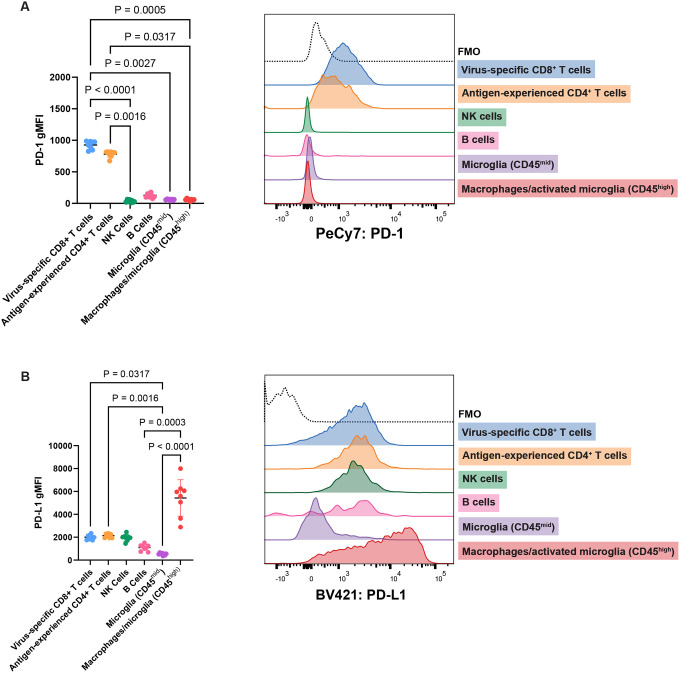 Figure 1
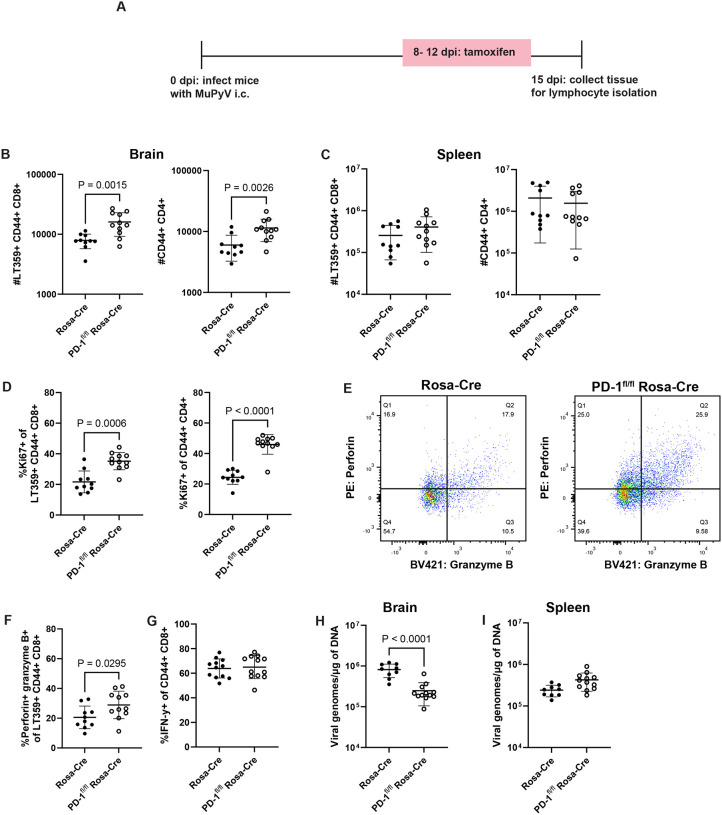 Figure 2
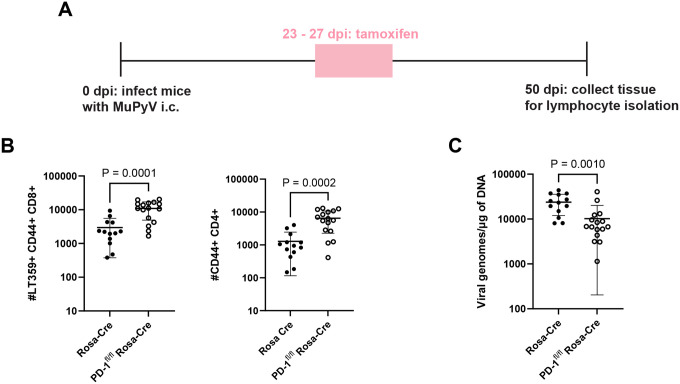 Figure 3
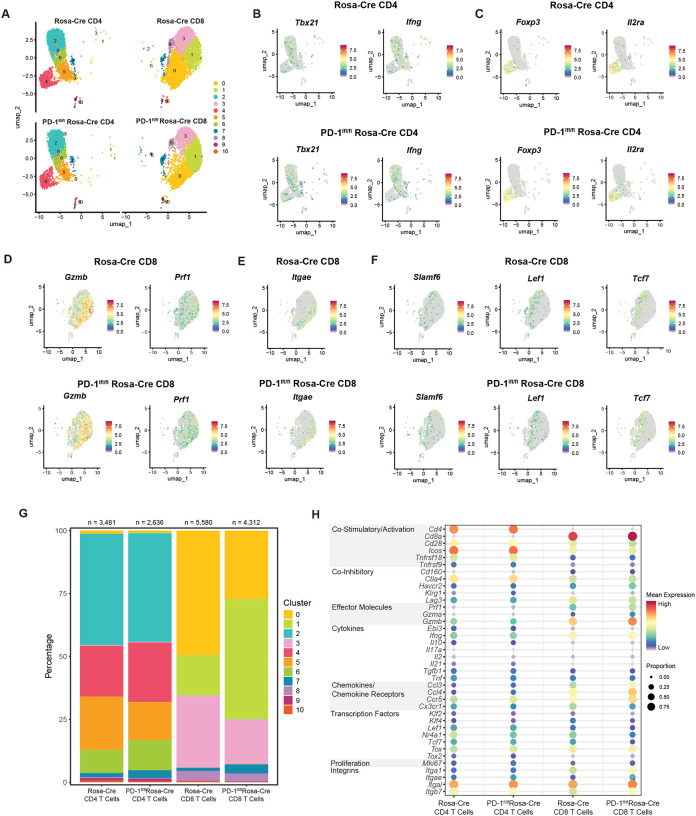 Figure 4
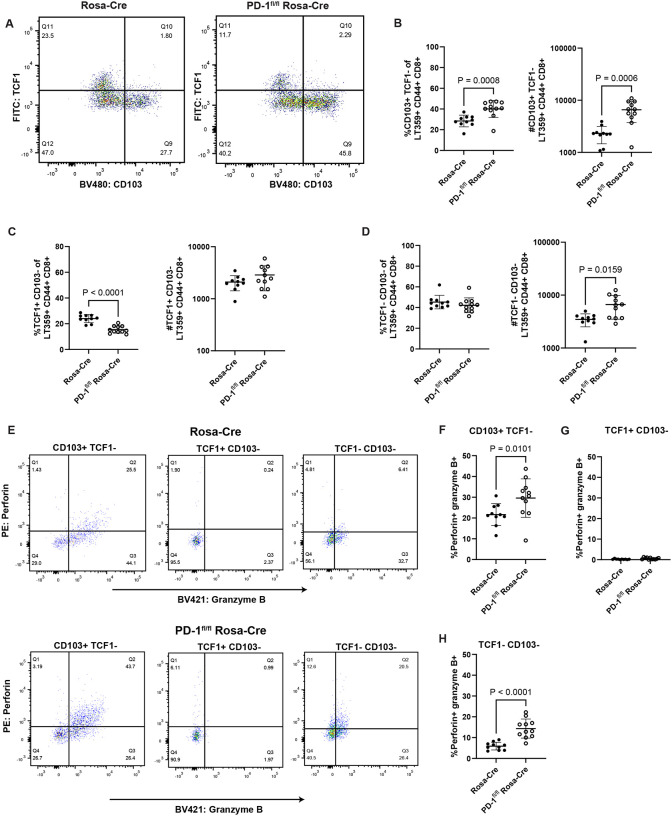 Figure 5
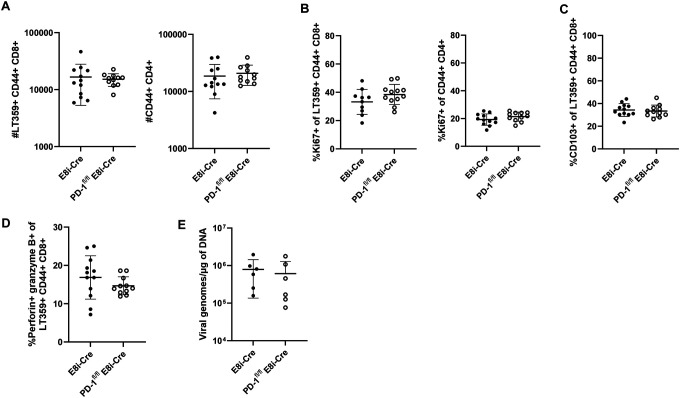 Figure 6
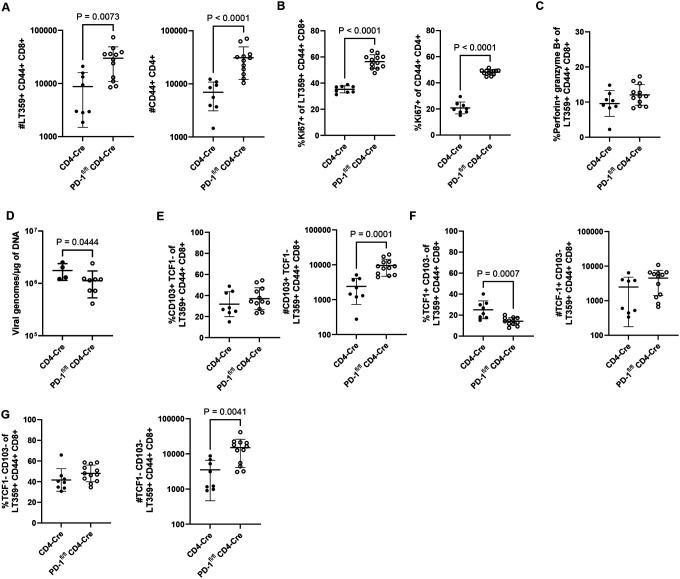 Figure 7
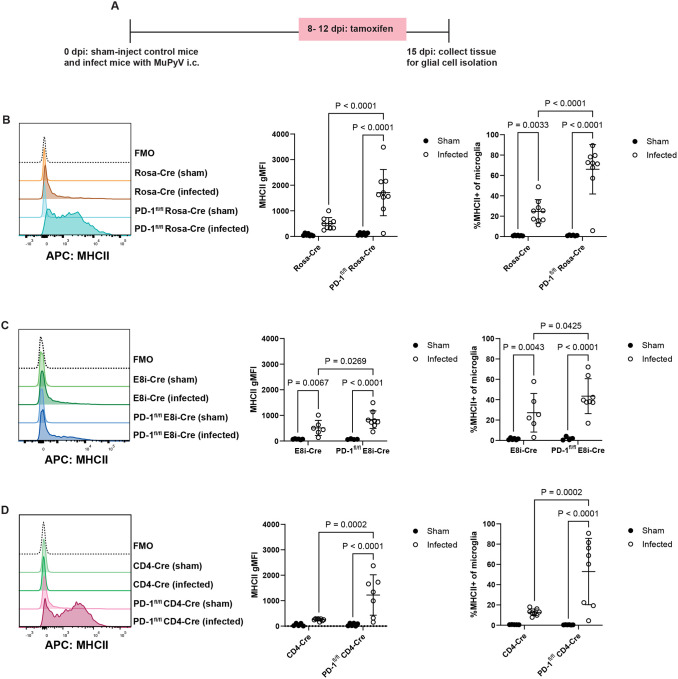 Figure 8
Peer Reviews
No public reviews on file for this paper yet. If you reviewed it on a platform where reviews are public (OpenReview, ICLR, NeurIPS, ICML), you can paste yours below so the community can read it here.
Videos
No videos yet. Explain this paper in a talk, walkthrough, or lecture? Add one.
Taxonomy
TopicsPolyomavirus and related diseases · Cancer Immunotherapy and Biomarkers · CAR-T cell therapy research