Sustainable electrochemical synthesis of aliphatic nitro-NNO-azoxy compounds employing ammonium dinitramide and their in vitro evaluation as potential nitric oxide donors and fungicides
Alexander S Budnikov, Nikita E Leonov, Michael S Klenov, Andrey A Kulikov, Igor B Krylov, Timofey A Kudryashev, Aleksandr M Churakov, Alexander O Terent’ev, Vladimir A Tartakovsky

TL;DR
A sustainable electrochemical method was developed to synthesize aliphatic nitro-NNO-azoxy compounds using ammonium dinitramide, which also showed potential as nitric oxide donors and fungicides.
Contribution
A green electrochemical synthesis method using ammonium dinitramide as both oxidant and reagent is introduced.
Findings
The method allows for atom- and step-economical synthesis of aliphatic nitro-NNO-azoxy compounds.
The synthesized compounds exhibit significant nitric oxide donor activity and fungicidal properties.
The process is scalable and practical, using constant current electrolysis in an undivided cell.
Abstract
An atom- and step-economical electrochemical method for the synthesis of aliphatic nitro-NNO-azoxy compounds from the corresponding nitroso compounds was developed employing ammonium dinitramide, a prospective green oxidant for aerospace propulsion applications, as both electrolyte and source of a =NNO2 group. The developed method is green, practical, and scalable due to constant current electrolysis in an undivided cell at high current densities. Synthesized products demonstrated pronounced NO-donor activity and fungicidal activity against phytopathogenic fungi.
Genes, proteins, chemicals, diseases, species, mutations and cell lines named across the full text — each resolved to its canonical identifier and authoritative record.
Click any figure to enlarge with its caption.
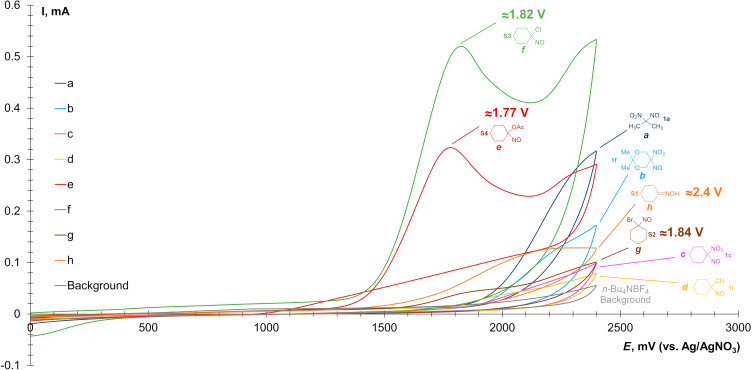 Figure 1
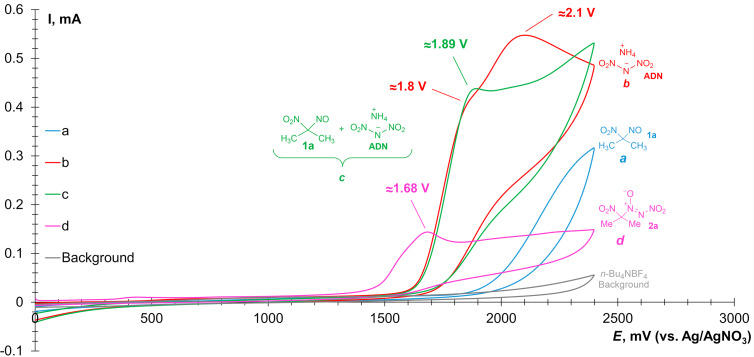 Figure 2
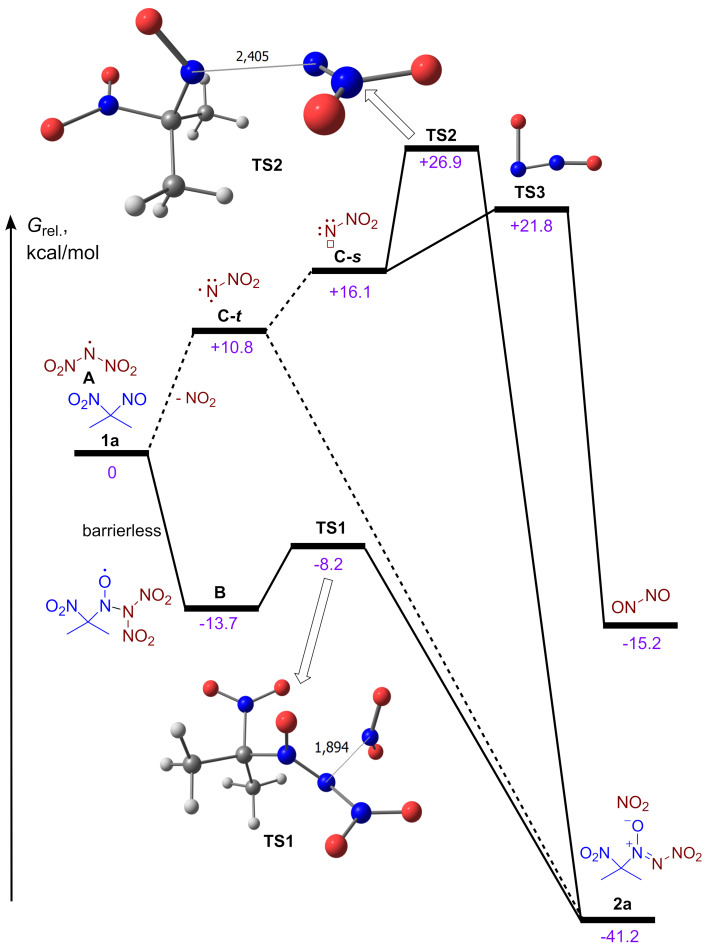 Figure 3
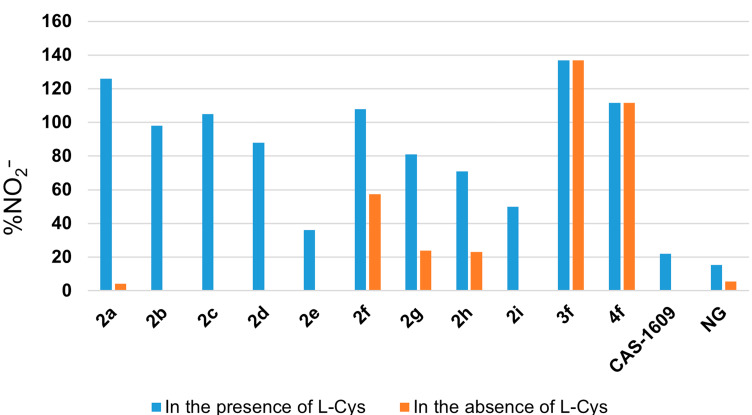 Figure 4
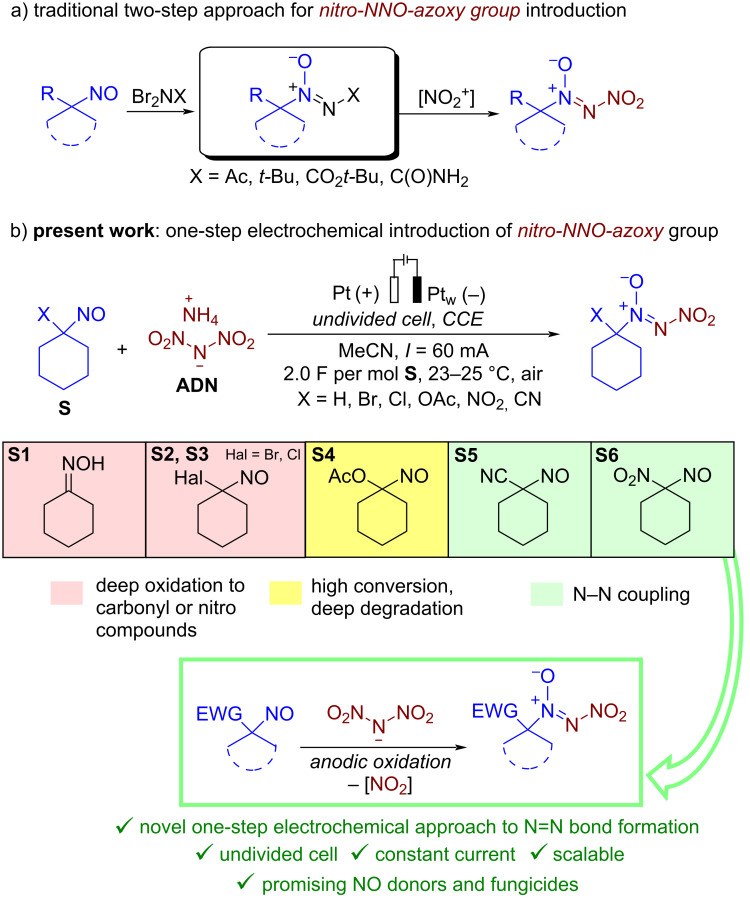 Figure 5
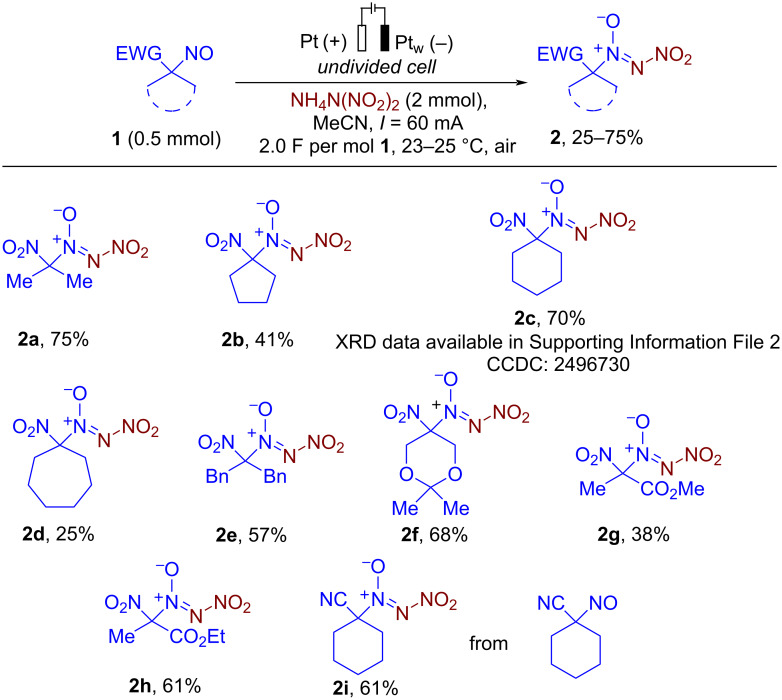 Figure 6
 Figure 7
 Figure 8
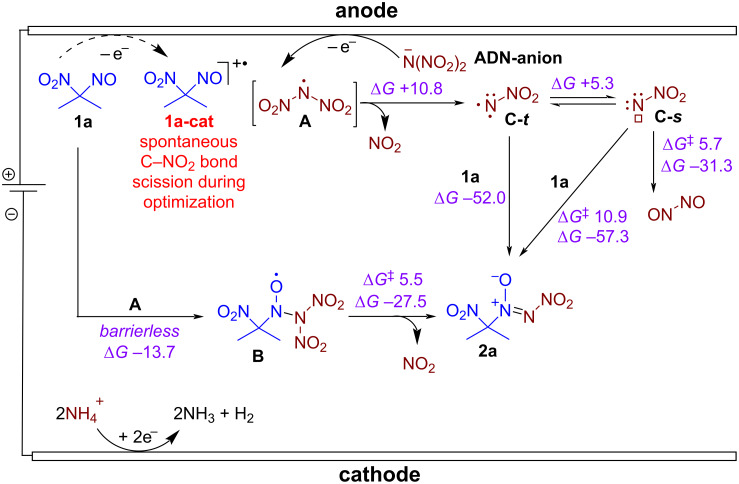 Figure 9
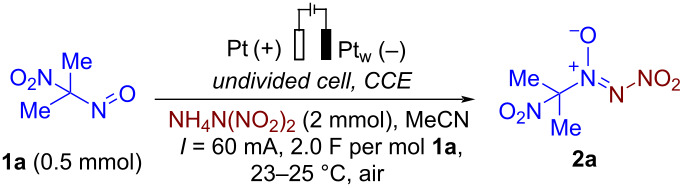 Figure 10
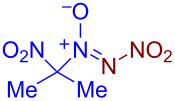 Figure 11
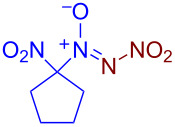 Figure 12
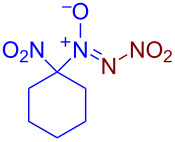 Figure 13
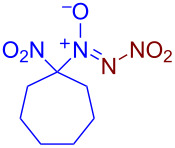 Figure 14
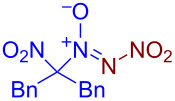 Figure 15
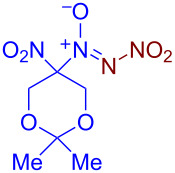 Figure 16
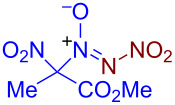 Figure 17
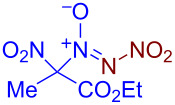 Figure 18
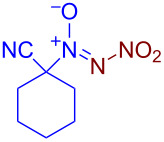 Figure 19
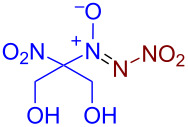 Figure 20
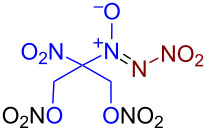 Figure 21
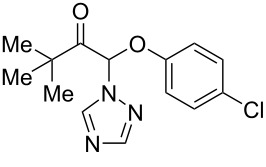 Figure 22
Peer Reviews
No public reviews on file for this paper yet. If you reviewed it on a platform where reviews are public (OpenReview, ICLR, NeurIPS, ICML), you can paste yours below so the community can read it here.
Videos
No videos yet. Explain this paper in a talk, walkthrough, or lecture? Add one.
Taxonomy
TopicsEnergetic Materials and Combustion · Oxidative Organic Chemistry Reactions · Advanced battery technologies research