Familial Cerebral Cavernous Malformations: Pathophysiology, Genetics, Biomarkers, and Treatment Perspectives
Fabrícia Lima Fontes‐Dantas, Gustavo da Fontoura Galvão, Alexandre Martins Cunha, Pedro de Sena Murteira Pinheiro, Verônica Morandi, Jorge Marcondes de Souza

TL;DR
This paper explores how genetic mutations cause brain vascular issues and how new imaging and biomarkers can help diagnose and treat the condition.
Contribution
The work integrates molecular mechanisms with clinical insights to advance precision medicine for familial cerebral cavernous malformations.
Findings
Genetic mutations in CCM1/2/3 genes disrupt endothelial function and lead to vascular instability.
MRI and circulating biomarkers like inflammatory cytokines and microRNAs can detect disease progression.
Targeting molecular pathways offers new therapeutic strategies for improved diagnosis and treatment.
Abstract
Familial cerebral cavernous malformations (FCCM) are a heritable neurovascular disorder defined by clusters of dilated, thin‐walled capillaries in the brain and spinal cord. Although rare, FCCM offers a tractable model for understanding how genetic disruptions in endothelial junction biology, mechanotransduction, and kinase signaling drive vascular instability in the central nervous system. Pathogenic loss‐of‐function variants converge on signaling abnormalities that promote barrier dysfunction, iron deposition, inflammation, and progressive lesional growth. Clinically, FCCM may manifest with seizures, headaches, focal deficits, or intracerebral hemorrhage, yet many carriers remain asymptomatic owing to incomplete and age‐dependent penetrance. Advances in neuroimaging have enhanced the detection of micro‐lesions and iron accumulation, establishing these modalities as central biomarkers…
Genes, proteins, chemicals, diseases, species, mutations and cell lines named across the full text — each resolved to its canonical identifier and authoritative record.
Click any figure to enlarge with its caption.
 Figure 1
 Figure 2
 Figure 3
 Figure 4
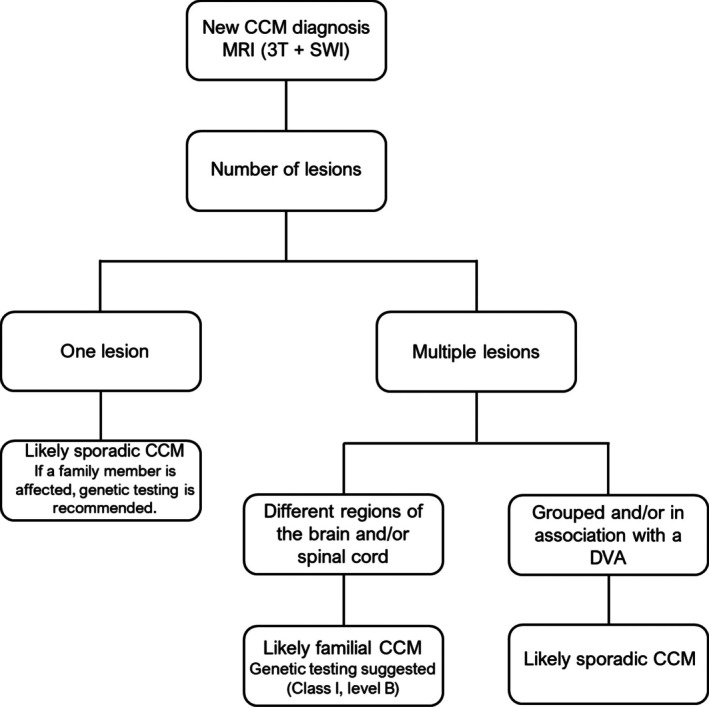 Figure 5
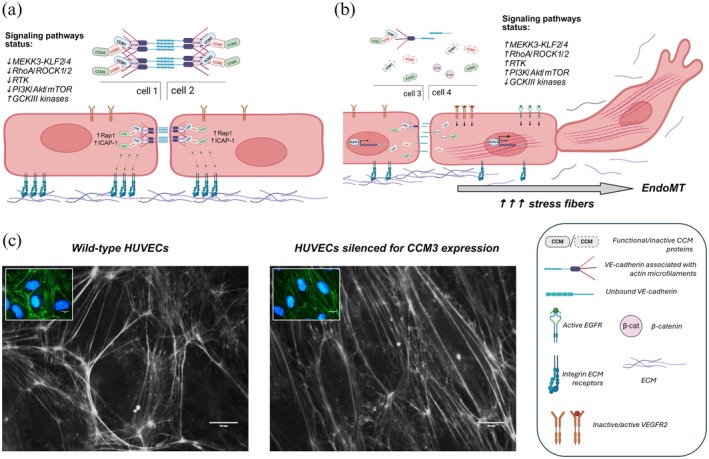 Figure 6
Peer Reviews
No public reviews on file for this paper yet. If you reviewed it on a platform where reviews are public (OpenReview, ICLR, NeurIPS, ICML), you can paste yours below so the community can read it here.
Videos
No videos yet. Explain this paper in a talk, walkthrough, or lecture? Add one.
Taxonomy
TopicsVascular Malformations Diagnosis and Treatment · Intracerebral and Subarachnoid Hemorrhage Research · Vascular Anomalies and Treatments