Pectin-modified PCN-222 for detecting nitrofurazone residues with dual signals in livestock, poultry, and aquatic products
Keyu Du, Jie Shen, Siyao Zhong, Hefei Wang, Yulou Qiu, Xuping Shentu, Xiaoping Yu, Zihong Ye, Haizhi Huang

TL;DR
This paper introduces a new method using pectin-modified PCN-222 to detect harmful nitrofurazone residues in food with high sensitivity and dual signals.
Contribution
A pectin-modified PCN-222 signal tag for dual-mode detection of nitrofurazone residues with improved sensitivity.
Findings
The PCN-222@Pectin-LFIA system has a linear range from 0.025 ng/mL to 100 ng/mL.
The method is 10- to 20-fold more sensitive than traditional colloidal gold nanoparticle-based LFIA.
The approach achieved recovery rates of 89.34% to 120.80% in real food samples.
Abstract
Nitrofurazone and its metabolite semicarbazide (SEM) residues present in food products pose substantial health hazards to humans. Herein, the colorimetric–fluorescent lateral flow immunoassay (LFIA) for 4[(4-carboxyphenyl)-methylene]-hydrazinecarboxamide (CPSEM) detection was developed using PCN-222@Pectin as a signal tag. Herein, the PCN-222 surface was subsequently modified with pectin to enhance its aqueous solubility and stability. The PCN-222@Pectin-LFIA system exhibited a broad linear range from 0.025 ng/mL to 100 ng/mL. The low limits of detection for the colorimetric and fluorescence-based detection methods were 0.1 and 0.05 ng/mL, respectively. Notably, these values represent a 10- and 20-fold higher sensitivity than that of the traditional colloidal gold nanoparticle-based LFIA. This method was successfully used to detect CPSEM in actual samples, with recovery rates of 89.34…
Genes, proteins, chemicals, diseases, species, mutations and cell lines named across the full text — each resolved to its canonical identifier and authoritative record.
Click any figure to enlarge with its caption.
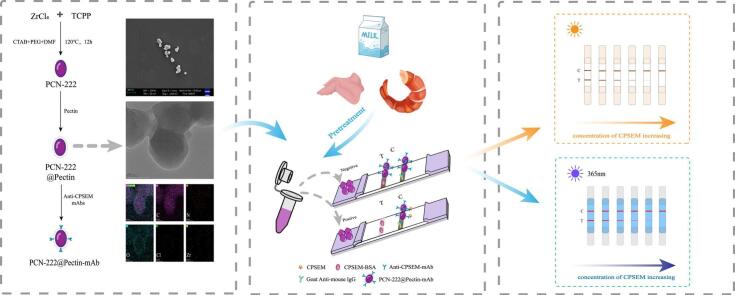 Figure 1
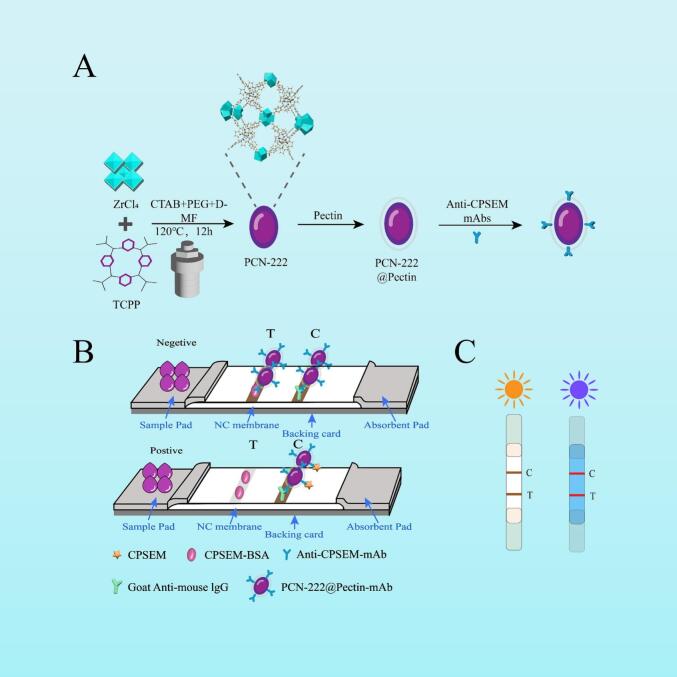 Figure 2
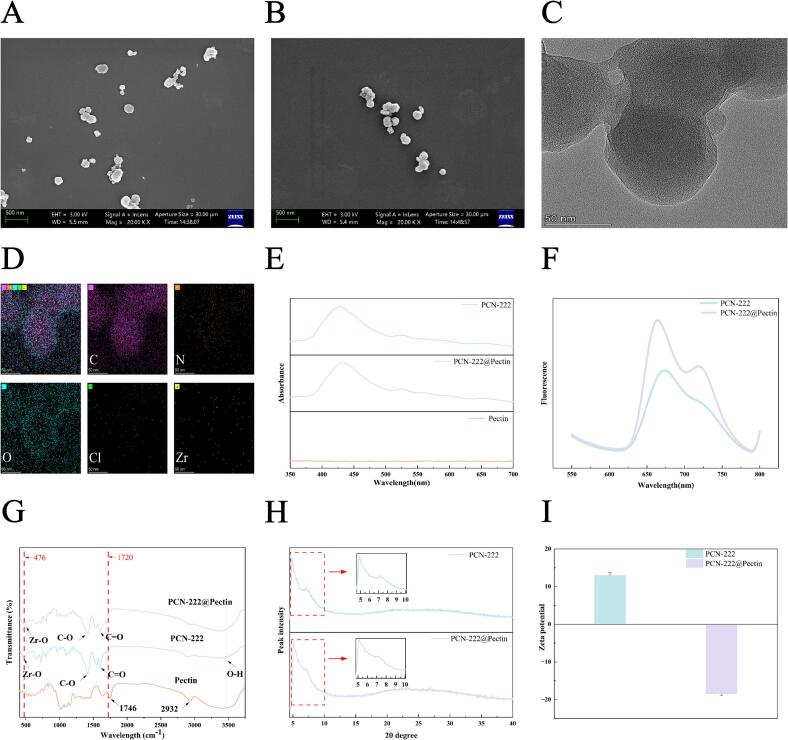 Figure 3
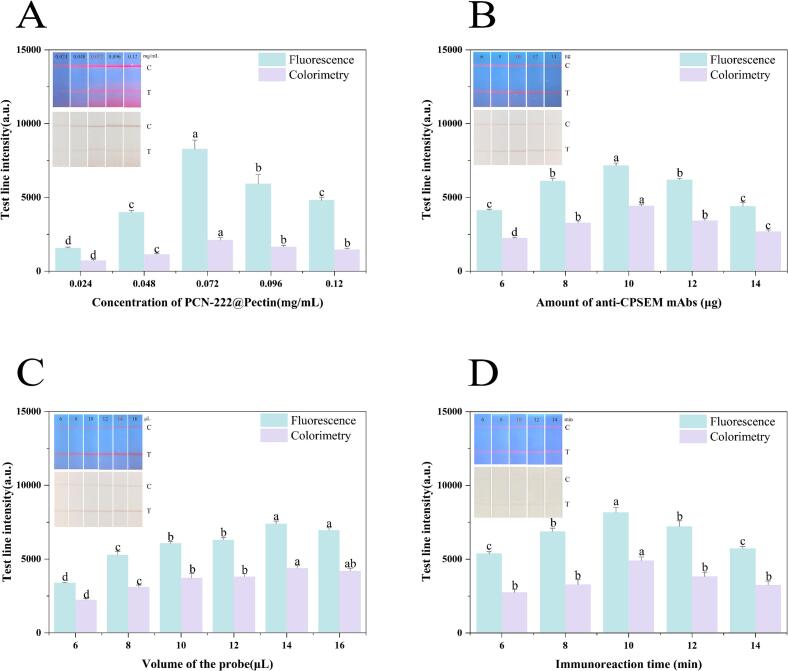 Figure 4
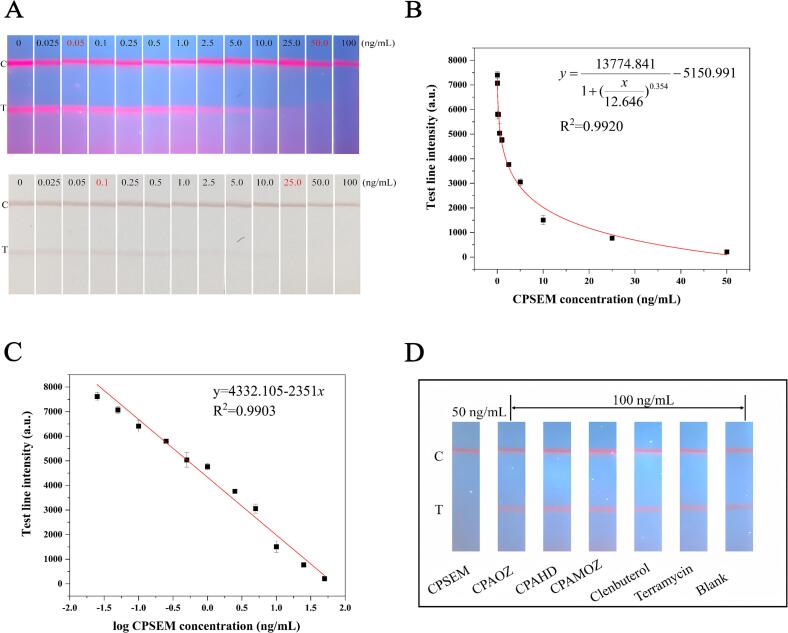 Figure 5
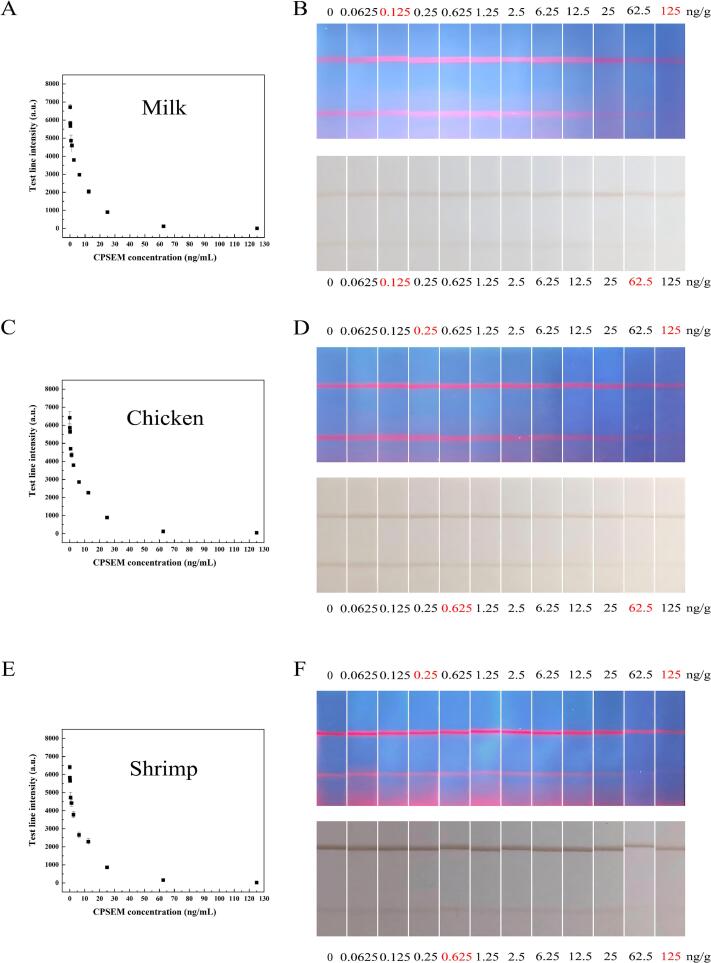 Figure 6
Peer Reviews
No public reviews on file for this paper yet. If you reviewed it on a platform where reviews are public (OpenReview, ICLR, NeurIPS, ICML), you can paste yours below so the community can read it here.
Videos
No videos yet. Explain this paper in a talk, walkthrough, or lecture? Add one.
Taxonomy
TopicsBiosensors and Analytical Detection · Analytical chemistry methods development · Pesticide Residue Analysis and Safety