Parietal Alpha Asymmetry as a Correlate of Internet Use Severity in Healthy Adults
Dovile Simkute, Povilas Tarailis, Inga Griskova-Bulanova

TL;DR
This study found that heavy internet use in healthy adults is linked to specific brain activity patterns, particularly in the parietal region.
Contribution
The study identifies parietal alpha asymmetry as a potential neural correlate of problematic internet use in non-clinical populations.
Findings
Higher internet use severity correlates with greater right parietal alpha power during the eyes open condition.
Individuals with higher internet use severity show reduced absolute frontal and parietal alpha power.
Alpha desynchronization was not associated with internet use severity or psychological symptoms.
Abstract
Background: Problematic Internet Use (PIU) is associated with emotional and cognitive dysregulation, yet its neural correlates, particularly in non-clinical populations, remain poorly understood. This study investigated association of the resting-state alpha asymmetry and desynchronization with psychological correlates of internet use within healthy regular internet users. Methods: A total of 129 participants (49 males, aged 18–35) were assessed using the Nine-Item Problematic Internet Use Questionnaire (PIUQ 9), alongside measures of anxiety, depression, and obsessive–compulsive symptoms. Resting-state EEG was recorded across Eyes Open (EO) and Eyes Closed (EC) conditions, with frontal and parietal alpha asymmetry and desynchronization indices analyzed in relation to internet use severity (Spearman rank correlations with non-parametric bootstrapping, 5000 replicates; FDR-corrected).…
Genes, proteins, chemicals, diseases, species, mutations and cell lines named across the full text — each resolved to its canonical identifier and authoritative record.
Click any figure to enlarge with its caption.
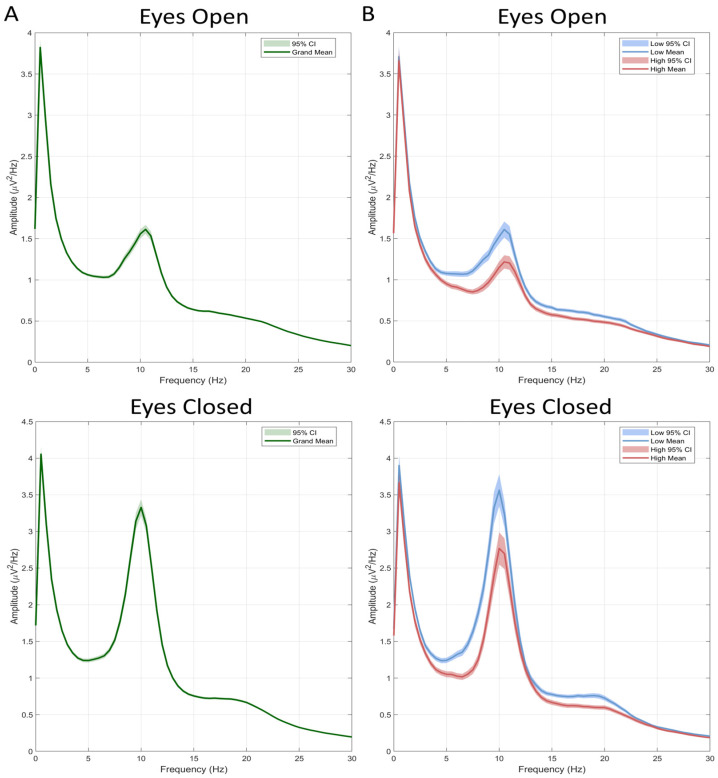 Figure 1
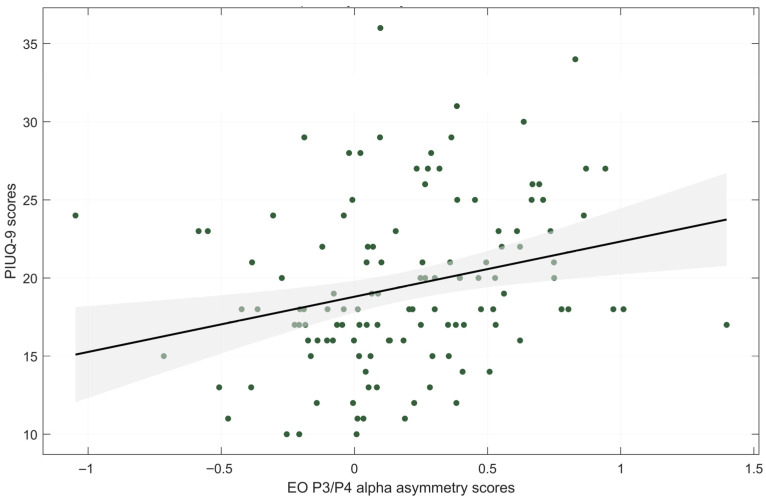 Figure 2
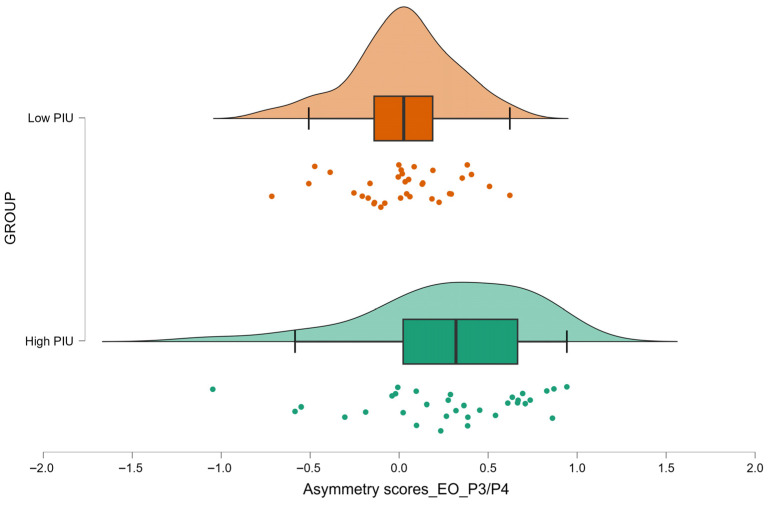 Figure 3
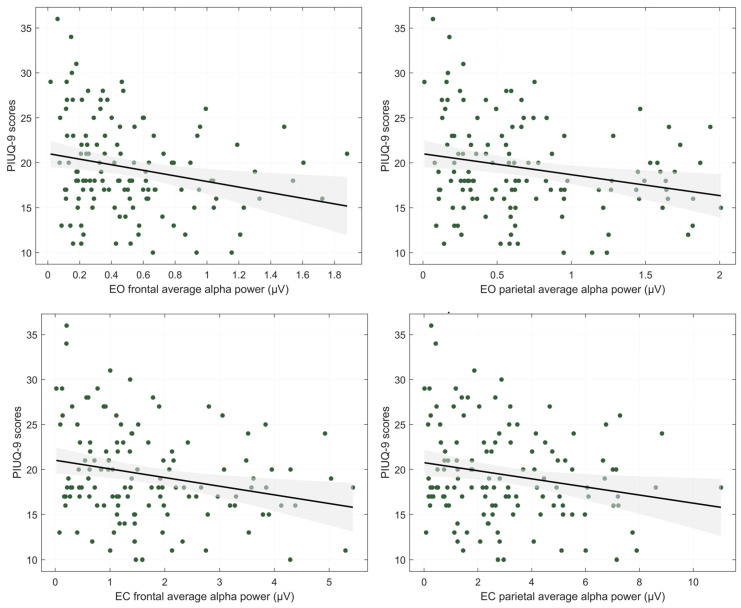 Figure 4
- —Research Council of Lithuania (LMTLT)
Peer Reviews
No public reviews on file for this paper yet. If you reviewed it on a platform where reviews are public (OpenReview, ICLR, NeurIPS, ICML), you can paste yours below so the community can read it here.
Videos
No videos yet. Explain this paper in a talk, walkthrough, or lecture? Add one.
Taxonomy
TopicsImpact of Technology on Adolescents · Digital Mental Health Interventions · Obsessive-Compulsive Spectrum Disorders
1. Introduction
The rapid expansion of internet technology has made digital interactions integral to daily life, blurring distinctions between online and offline worlds, particularly among younger demographics who report near-constant connectivity with digital platforms [1,2]. However, the psychological and behavioral consequences of internet use vary greatly depending on the nature and extent of individual engagement. While thoughtful and purposeful usage may foster personal development, knowledge acquisition, and social connectedness, excessive or maladaptive engagement can lead to significant psychosocial and functional impairments, broadly referred to as Problematic Internet Use (PIU) [3,4,5,6,7,8].
PIU, estimated to affect around 7% of the global population [9], is typically characterized by impaired control over internet use and significant negative outcomes, manifesting along a continuum that ranges from healthy to problematic involvement [4,5,10,11,12,13]. Core addiction-like symptoms are commonly reported in PIU [4,14,15,16], yet their expression and interpretation vary significantly across different online contexts, contributing to ongoing conceptual and diagnostic ambiguities [5,17,18,19,20,21,22]. Nonetheless, the pervasive role of internet use has prompted extensive exploration of PIU correlates, consistently revealing dynamic interactions among physical, psychological, social, cognitive, and neurophysiological factors [3,5,6,16]. Despite this growing body of work, significant gaps remain in understanding the mechanisms underlying the onset and maintenance of PIU.
A central challenge in addressing PIU lies in differentiating pathological behavior from high internet engagement which is not necessarily pathological [5,23]. Importantly, time spent online is not a reliable indicator of pathology; instead, the context of use and its consequences are critical factors [23,24,25]. The integration of internet use into daily life might mask the recognition of misuse and its warning signs, and problematic patterns can go unrecognized, both by users and their communities. Therefore, approaching PIU as a spectrum of engagement—ranging from healthy to excessive and problematic—offers a more nuanced perspective, enabling the identification of subthreshold, emerging, and acute manifestations, particularly within non-clinical populations [10,13]. However, despite this, a substantial portion of the literature continues to treat PIU as a binary condition (severely expressed vs. absent), which risks overlooking these spectrum-level nuances.
Neuroimaging studies, including EEG and fMRI, have documented characteristic alterations in brain activity during rest, suggesting their potential as candidate PIU biomarkers [26,27,28,29,30]. Particularly relevant might be the alpha activity (8–12 Hz), conceptualized as a mechanism for regulating the timing of neural inhibition and gating of information flow [31], contributing to inhibitory processes by facilitating the synchronization of large-scale neural brain networks [32,33]. The reduction in alpha power observed during eyes-open states compared to eyes-closed conditions, commonly referred to as alpha desynchronization, is generally interpreted as an index of increased arousal, reflecting a state in which large populations of neurons cease to oscillate synchronously during active information processing [34,35]. Furthermore, due to the inverse relationship between alpha power and cortical activity, greater alpha power in one hemisphere is interpreted as a sign of reduced neural activity in that region [32]. This hemispheric imbalance in alpha power is commonly examined through alpha asymmetry, defined as the relative difference in alpha power between homologous left and right brain regions [32,33]. Resting-state alpha parameters have been consistently associated with affective, motivational, and cognitive processes, with atypical patterns observed in various neuropsychiatric and neurodevelopmental conditions [36]. Some prior works identified its possible utility in PIU [29,37,38]; however, its potential in the context of PIU has not been fully addressed. Notably, while alpha asymmetry is a widely studied marker of brain lateralization, investigations have primarily focused on frontal regions, with parietal asymmetry receiving comparatively little attention despite its relevance to attention and sensory integration [39,40,41].
To address this gap, we aimed to investigate neurophysiological alpha activity-based markers (alpha power, alpha asymmetry, and alpha desynchronization) across frontal and parietal regions within a non-clinical population of internet users, thereby extending prior PIU work that has focused primarily on frontal measures. By relating these measures to continuous PIU severity and to high/low internet use contrasts, this spectrum-oriented approach targets subclinical manifestations between casual and disordered internet use and offers insights into neural patterns that may signal emerging dysfunction before substantial impairments develop. Given that regular internet users far outnumber problematic users, such approach extends a literature that has predominantly treated PIU dichotomously (present vs. absent).
2. Methods
2.1. Participants
A total of 161 participants (71 males and 90 females) with an age range of 18 to 35 years old (mean age of 24.21 ± 4.28 years) participated in the study. Participants had to be in good overall health; report no past or current psychiatric, neurological, or endocrine disorders; and have no psychoactive substance use or addictions; participant sampling, recruitment, and screening procedures are detailed in Simkute et al. [42]. All participants gave written informed consent after a full explanation of the procedures. The protocol was approved by the Vilnius Regional Biomedical Research Ethics Committee (Nr.2019/10-1159-649).
2.2. Questionnaires
The Nine-Item Problematic Internet Use Questionnaire (PIUQ-9) [43] has been established as a reliable tool for identifying the extent of internet misuse. It comprises nine items and retains the original three-factor structure of the 18-item Problematic Internet Usage Questionnaire [44]: obsession, neglect, and control disorder. The total score spans 9-45; a provisional cutoff of 22 flags Problematic Internet Use, with higher scores indicating greater internet use severity.
The Beck Anxiety Inventory (BAI) [45] is a widely used self-report measure for evaluating the severity of anxiety symptoms. The BAI comprises 21 items, each rated on a Likert-type scale from 0 (not at all) to 3 (severely) based on the individual’s reported experience of anxiety symptoms over the period of the last two weeks. Total scores can range from 0 to 63 points, with higher scores indicating greater severity of anxiety.
Beck’s Depression Inventory (BDI-II) [46] assesses depressive symptom severity and is widely used in both research and clinical contexts [47,48]. The inventory includes 21 items, each scored on a scale from 0 (completely disagree) to 3 (completely agree), based on the individual’s reported experience of depressive symptoms over the past two weeks, yielding a total score from 0 to 63, with higher scores indicating more severe depression.
The Clark–Beck Obsessive–Compulsive Inventory (CBOCI) [49] assesses the frequency and severity of obsessive and compulsive symptoms. It is a 25 item measure with two subscales—obsessions (14 items) and compulsions (11 items). Items are rated on four statements scored 0–3 (reflecting increasing frequency/severity), yielding a total score of 0 to 72, with higher scores indicating greater symptom severity.
2.3. EEG Recording and Processing
EEG acquisition and preprocessing followed standard procedures and are described in greater detail in our task-based ERP study [42]. Procedures specific to the present resting-state dataset are described herein.
Participants sat comfortably upright in a low-light, sound-attenuated, electrically shielded room. Resting-state EEG was acquired with a 64-channel WaveGuard cap (Ag/AgCl; international 10–10 montage) using ANT Neuro equipment (Hangelo, The Netherlands). Ocular activity was monitored with an electro-oculogram (EOG): vertical EOG from electrodes placed above and below the right eye, and horizontal EOG from electrodes positioned at the left and right outer canthi. All signals were referenced to the mastoids, with the ground near Fz, impedances were kept < 20 kΩ, and signals were digitized at 2048 Hz.
At the start of the resting-state EEG session, participants were instructed to keep their eyes open (EO condition) for the first two minutes of the session. Following an alarm indicating a change, they were asked to close their eyes (EC condition) for the next two minutes, while resting-state EEG signals were recorded. Research indicates that a 2 min EEG recording provides asymmetry scores with internal consistency and reliability comparable to an 8 min recording [50]. Throughout the session, participants were instructed to avoid movement and remain still, relax, and avoid engaging in specific thoughts. In the EO condition, they were directed to fixate their gaze on a white cross against a grey background on a screen placed in front, and not to fall asleep during the eyes-closed condition. Throughout the session, EEG recordings for all participants were actively monitored to ensure compliance with instructions.
The offline EEG data processing was performed in MATLAB (The Mathworks, Natick, MA, USA) using the EEGLAB toolbox (version 2022.0) [51]. The 50 Hz power line noise was attenuated using the CleanLine plugin for EEGLAB, after which independent component analysis (ICA) analysis (‘runica’, default settings) was used to identify and remove ocular and cardiac components. Records were then visually inspected; channels with exhibiting excessive noise were excluded and reconstructed via spherical spline interpolation [52]. Data were band-pass-filtered (0.1–30 Hz; second-order Butterworth), re-referenced to the average, and segmented into non-overlapping, artifact-free 2 s epochs with baseline adjustment across each segment. On average, EO yielded 53.86 ± 5.13 artifact-free epochs and EC 53.76 ± 6.16; participants were retained only if ≥40 clean epochs were available.
2.4. Alpha Power, Alpha Asymmetry, and Alpha Desynchronization Assessment
Power spectra (μV2) were derived from EEG data by applying MATLAB’s Fast Fourier Transform (FFT) function using a non-overlapping Hanning window (FieldTrip parameters mtmfft and Hanning). The mean frontal and parietal alpha power were calculated by averaging absolute power over predefined alpha frequencies (8–12 Hz) across respective electrodes (frontal: F7, F3, Fz, F4, F8, and parietal: P7, P3, Pz, P4, P8) and conditions (eyes open (EO) and eyes closed (EC)) for each participant.
Alpha asymmetry index (AAI) was computed as the log-transformed difference between right and left alpha power values [32,33]:
where L and R denote left (F3, F7, P3 or P7) and right (F4, F8, P4 or P8) electrode site responses, respectively. The FFT-derived alpha power was analyzed at four paired electrode sites to assess middle (F3/F4 and P3/P4) and lateral (F7/F8 and P7/P8) alpha asymmetry. Alpha asymmetry scores were calculated for each condition (EO, EC), with positive scores indicating greater right alpha power (and greater relative left hemisphere activity) and negative scores indicating greater left alpha power (and relative right hemisphere activity).
Alpha desynchronization index (D) was determined as the difference in the average alpha power between the eyes-open (EO) and eyes-closed (EC) conditions, and calculated as
across 10 electrode sites (F3, F4, Fz, F7, F8, P3, P4, Pz, P7, P8) for each participant.
2.5. Statistical Analysis
Two complementary sample evaluation strategies were implemented. Continuous associations (1): across the full sample (n = 129), relations among PIUQ-9, psychological measures (BAI, BDI-II, CBOCI), and EEG indices (alpha power, alpha asymmetry, alpha desynchronization) were quantified using Spearman rank correlations. Distributional assumptions were screened with Shapiro–Wilk tests; robustness was enhanced via non-parametric bootstrapping (5000 replicates), significance threshold was set at α = 0.05, and p values underwent False Discovery Rate (FDR) [53]-based multiple-comparison adjustment.
Group-based approach (2): Participants were classified in the bottom and top PIUQ-9 score quartiles (inclusive thresholds) as Low PIU (scores 10–16; n = 36) and High PIU (scores 23–36; n = 33). The lower bound of 23 closely aligns with the provisional cutoff score of 22 [43], supporting this approach in a non-clinical cohort. Group differences in alpha power, asymmetry, and desynchronization were evaluated with Mann–Whitney U tests following Shapiro–Wilk and Levene’s tests indicating violations of normality and homogeneity of variance. Non-parametric bootstrapping (5000 replicates) and FDR correction were applied.
Tables report raw p-values; effects surviving FDR correction (α = 0.05) are flagged with an asterisk, with FDR-adjusted p-values provided in text.
Statistical analyses were conducted using MS Excel (version 2053, Microsoft Corporation, Redmond, Washington, United States, 2018), JASP 0.18.3 (JASP Team, Amsterdam, Netherlands, 2024), and SPSS (version 29.0.2.0, IBM SPSS, Armonk, New York, United States). Statistical power was evaluated in G*Power (version 3.1.9.4). For the correlation analyses (n = 129, two-tailed α = 0.05 and 80% power), the minimal detectable effect was r = 0.245; an effect of r = 0.30 yields power = 0.94. For high (n = 33) and low (n = 36) PIU group comparisons (Wilcoxon–Mann–Whitney; two-tailed α = 0.05, power = 0.80), the minimal detectable effect was d = 0.70, corresponding to rank-biserial r = 0.38.
3. Results
Out of 161 enrolled participants, 31 datasets were excluded (technical issues: n = 12, poor recording quality: n = 7, outliers: n = 6), corresponding to 19.3% attrition and yielding a final sample of 129 (49 males, 80 females; age = 24 ± 4.02 years). The PIUQ-9 mean for the full sample was 19.39 ± 5.2 (range 10–36), below the provisional cutoff of 22 of PIU [43], although individual scores spanned from low to elevated severity.
Psychological questionnaires indicated a BAI group mean in the moderate range of anxiety, with a subset exceeding common clinical thresholds. The BDI-II scores were low on average but showed notable interindividual variability in depressive symptoms; CBOCI totals reflected heterogeneity in obsessive–compulsive traits, with obsession scores generally exceeding compulsion scores. Collectively, the current sample exhibits varying levels of psychological symptoms. Descriptive statistics are provided in Table 1.
Descriptive statistics for internet usage patterns and psychological measures within the sample are provided in Table 1.
3.1. Correlations Between Internet Use Severity and Psychological Measures
As anticipated, higher PIUQ-9 scores correlated with poorer psychological profiles, closely mirroring findings from our prior report on the same cohort [42]. PIUQ-9 correlated positively with all measures assessed—anxiety, depression, obsessions, compulsions, and total obsessive–compulsive symptoms (BAI: rs = 0.316, p < 0.001, FDR-corrected p < 0.001; BDI: rs = 0.285, p < 0.001, FDR-corrected p = 0.002; CBOCI obsessions: rs = 0.355, p < 0.001, FDR-corrected p < 0.001; CBOCI compulsions: rs = 0.349, p < 0.001, FDR-corrected p < 0.001; total CBOCI score: rs = 0.406, and p < 0.001, FDR-corrected p < 0.001). Detailed results are provided in the Appendix A Table A1.
3.2. Correlations Between Internet Use Severity and Alpha Power
The absolute power grand-averages across all participants during eyes-open (EO) and eyes-closed (EC) conditions are presented in Figure 1A. Descriptive statistics for absolute alpha power averaged within frontal and parietal regions are provided in Table 2. Significant negative correlations were observed between PIUQ-9 scores and alpha power at frontal (rs = −0.248, p = 0.005, FDR-corrected p = 0.015) and parietal (rs = 0.209, p = 0.018, FDR-corrected p = 0.022) regions during EO, and frontal (rs = −0.241, p = 0.006, FDR-corrected p = 0.015) and parietal (rs = −0.183, p = 0.038, FDR-corrected p = 0.038) regions during EC, but not with BAI, BDI or CBOCI scores. Correlation results and corresponding plots are provided in the Appendix A (Table A2 and Figure A1, respectively).
3.3. Correlation Between Internet Use Severity and Alpha Asymmetry Index
Descriptive statistics for alpha asymmetry scores during EO and EC conditions are presented in Table 2. A significant positive correlation was observed between PIUQ-9 scores and alpha asymmetry score at P3/P4 during the EO condition (rs = 0.317, p < 0.001, FDR-corrected p = 0.003) (Figure 2), indicating greater right parietal alpha power—and thus increased left hemisphere activity—with higher levels of internet use. Detailed statistical results are presented in Table 3, and correlations between asymmetry scores and psychological variables are provided in Appendix A Table A3.
3.4. Correlations Between Internet Use Severity and Alpha Desynchronization Scores
Although several initial associations were observed between internet use and alpha desynchronization scores, none remained significant after FDR correction. Additionally, no significant correlations were found between alpha desynchronization scores and psychological variables. Detailed statistical results are presented in Appendix A Table A4. Descriptive statistics for alpha desynchronization scores during EO and EC conditions are presented in Appendix A Table A5.
3.5. Low vs. High Internet Use Engagement
The Low (n = 36; 22 females; PIUQ-9 score 13.72 ± 2.07, range 10–16) and High PIU (n = 33, 24 females; PIUQ-9 score 26.49 ± 3.1, range 23–36) groups did not differ in age (p = 0.329). Groups diverged on all psychological measures (after FDR correction all p < 0.001), with the exception of BDI (also significant, FDR-corrected p = 0.018) (Table 4). Descriptive statistics are provided in Appendix A Table A6.
Comparisons of alpha power between High and Low PIU groups revealed significant differences across both EO and EC conditions over frontal (EO: p = 0.008, FDR-corrected p = 0.018; EC: p = 0.008, FDR-corrected p = 0.018) and parietal (EO: p = 0.046, FDR-corrected p = 0.049; EC: p = 0.049, FDR-corrected p = 0.049) regions. Detailed results are displayed in Table 5 and Figure 1B, with descriptive statistics provided in the Appendix A Table A6.
Consistent with the whole-sample correlations, the High PIU group showed higher alpha asymmetry values at P3/P4 during the EO condition than the Low PIU group (p = 0.002, FDR-corrected p = 0.024; 0.28 ± 0.46 vs. 0.02 ± 0.29, respectively) (Figure 3). Detailed statistics are provided in Table 6, with descriptive values in Appendix A Table A6.
No significant differences between the groups were found for alpha desynchronization scores; detailed results provided in Appendix A Table A7. Descriptive statistics are presented in Appendix A Table A6.
4. Discussion
The present study examined EEG resting-state alpha power, asymmetry, and desynchronization in relation to internet use severity, focusing on frontal and parietal regions in a sample of 129 healthy adults. Results revealed a significant association between internet use severity and alpha asymmetry at the P3/P4 site during the eyes-open condition when measured in the whole sample and compared between High and Low PIU groups. Specifically, higher PIUQ-9 scores were linked to greater left parietal activation during the eyes-open condition, and with lower absolute alpha power in both eyes-open and eyes-closed conditions. Moreover, no association emerged between alpha desynchronization and internet use or any of the psychological variables assessed (symptoms of depression, anxiety, obsessions–compulsions).
These findings align with a broader body of literature suggesting that PIU and internet-related disorders are associated with altered resting-state brain activity within frontal and parietal regions, with alterations significantly correlating with PIU severity [26,28,54]. In line with current findings, reduced frontal and parietal alpha power was observed in excessive gamers [55], and PIU with comorbid depression [27]; however, the latter finding implies that a decrease in global alpha power, even though commonly observed, is not specific to PIU.
Although significant associations between internet use severity and alpha power were found in the current study, no such relationship was observed for alpha desynchronization. Alpha desynchronization refers to the suppression of alpha activity, typically observed during transitions from a resting state (e.g., eyes closed) to an active state (e.g., eyes open or during sensory stimulation). This phenomenon, characterized by a reduction in alpha power and connectivity, reflects increased cortical activation and engagement of task-relevant neural regions [56,57,58]. The effect is most pronounced posteriorly, and is associated with heightened visual system activity and widespread thalamo-cortical communication, activating the entire cortex and indicating readiness for information processing [56]. By contrast, alpha synchronization is often interpreted as a top-down inhibitory mechanism that gates irrelevant input [35], whereas desynchronization reflects a transition to a more irregular, low-voltage state supporting stimulus processing [59]. In the context of PIU, prior work has reported reduced task-evoked frontal alpha/beta desynchronization during stop-signal tasks and negative links between Internet Addiction Test scores and resting frontal desynchronization [60]. In the present sample, however, alpha desynchronization showed no relation to internet-use severity.
The significant finding concerning alpha asymmetry warrants further discussion. A general theory posits that resting-state alpha asymmetry reflects trait-like predispositions toward affective (positive vs. negative) and motivational (approach vs. avoidance) orientations. According to the approach–withdrawal model [61], greater relative left frontal activity is linked to approach and positive affect, whereas right frontal dominance relates to withdrawal and negative affect [32,33,62,63]. Despite extensive work on frontal asymmetry, parietal alpha asymmetry remains comparatively underexplored [40,41], even though the parietal cortex is central to attention allocation and polymodal integration [39]. Within the valence–arousal model [64], higher left frontal activity has been associated with anxious apprehension (i.e., worry), whereas right parietal activity reflects anxious arousal (e.g., panic) [64,65,66]. Furthermore, parietal alpha asymmetry has also been associated with individual personality differences, emotion processing and emotional vulnerability, dysregulated behavioral activation, depression, anhedonia, and traits like rumination and self-criticism [40,66,67]. Notably, parietal asymmetry often exhibits patterns opposite to frontal asymmetry [40,67]. For instance, depressive symptoms, emotional vulnerability, internalizing symptoms, and greater behavioral activation (BAS) have been attributed to left-lateralized parietal activity, contrasting with right-lateralized frontal effects [40,67,68,69].
Furthermore, a review by Burleigh et al. [26] summarized increased right hemisphere alpha coherence (including parietal regions) in gamers, probably associated with consistent activation of visuospatial working memory and executive function in frequent gaming. In support, individuals with PIU exhibit reduced functional connectivity in the left parietal lobe of the right frontoparietal network [28], suggesting impaired cross-hemispheric network communication. Consistent right frontal activity has also been observed in Problematic Social Media users [37] and Internet Addiction (IA) groups [38], with this right-dominant frontal pattern linked to poorer emotion regulation choices in IA. To our knowledge, parietal alpha asymmetry has not been investigated within the PIU field. The present finding suggesting greater relative left-lateralized parietal activity among healthy individuals with more severe internet engagement might align with these findings, albeit speculatively, considering that parietal asymmetry often inverts frontal patterns [40,67]. Moreover, the current findings generally do not contradict but rather extend the results of a pilot study on recreational internet users by G. Y. Wang & Griskova-Bulanova [29]; also, no association between internet use and frontal alpha asymmetry was detected in the present larger sample, while identifying a parietal effect that was not assessed previously.
Notably, internet use severity was associated with greater left parietal activity only in the eyes-open (EO) condition, but not during the eyes-closed (EC) condition. This discrepancy likely reflects distinct neurophysiological baselines [56,70]: EC entails reduced sensory input and stronger thalamo-cortical rhythmicity (a lower arousal state), making it less sensitive to individual differences in attention or motivation, whereas EO—even under minimal visual stimulation—elicits alpha desynchronization and widespread cortical activation, including frontoparietal networks involved in attention control [56,70]. Moreover, brain regions associated with unconstrained mental activities (such as self-reflective thought, environmental monitoring, and mind wandering) may be differentially engaged under different resting-state conditions [71], and default mode network (DMN) regions involved in sensory monitoring and salience evaluation exhibit higher functional connectivity in EO than EC [72]. Consistent with this, IA induces widespread large-scale brain network alterations rather than isolated regional changes, with disruptions including DMN and reward pathways—pointing to shifts in reward valuation, impulsivity, salience attribution, and cue reactivity [72]—patterns that further justify the greater sensitivity of EO measures.
Furthermore, alpha asymmetry has been proposed as a neurophysiological index of both psychological traits and underlying regulatory mechanisms [33]. Parietal asymmetry, in particular, has been associated with behavioral approach/inhibition systems; greater left-sided parietal activity has been linked to higher behavioral activation [67], a profile that may characterize individuals with more compulsive internet engagement. Additionally, frontal and parietal asymmetries relate to attentional bias independent of subclinical mood or anxiety variation [73], suggesting that such asymmetry indexes underlie top-down attentional control tendencies and trait-like attentional biases rather than psychopathology per se. In line with this, heavy media multitaskers show heightened susceptibility to distraction, reduced filtering of irrelevant input, and a greater reliance on bottom-up, exploratory control relative to light multitaskers [74]. Such responsivity is expected to be more prominent during EO, when attentional systems are in a more reactive, externally focused state. Together with findings of reduced global alpha power in higher internet users (corresponding to increased cortical excitability and lower perceptual thresholds [75]), this interpretation aligns with theoretical PIU models emphasizing compulsive, stimulus-driven engagement and weakened top-down attentional regulation [4,76,77]. Taken together, EO and EC constitute qualitatively distinct conditions and highlight EO as a more sensitive context for detecting PIU-related asymmetry patterns, particularly those linked to attentional dysregulation in regular internet users.
Moreover, the current results did not identify an association between depressive symptoms and alpha asymmetry. Although alpha asymmetry has been widely examined in depression, findings are inconsistent and the direction of effects remains unresolved [78]. Some reports link left-lateralized hypoactivation and greater right frontal/parietal activity to depressive symptoms [29,32,79,80]. Notably, although in the current sample PIU and depression were correlated (rs = 0.285, p = 0.001), the initially observed negative association between depression symptoms and parietal asymmetry did not survive FDR correction; only PIU retained a positive association with parietal alpha asymmetry. This pattern tentatively points to divergent lateralization: a trend towards greater right parietal activity in association with depression (in line with prior research) versus greater left parietal activity in relation to PIU. This may suggest distinct lateralized neural processes underlying PIU and depressive symptoms, despite their overlapping psychological features within a non-clinical sample of regular internet users.
The present study advances the field of PIU research by identifying parietal alpha asymmetry as a potential specific correlate for internet use severity. This result is notable given that posterior alpha activity is maximal during rest and shows greater temporal stability and consistency across conditions than frontal asymmetry [40,66,81]. Our findings suggest that asymmetry-based indices may be more specific to the neural characteristics underlying PIU, whereas desynchronization—reflecting general cortical arousal—may not capture these vulnerabilities, as no associations were observed. Investigating parietal alpha asymmetry within PIU offers a novel yet theoretically grounded approach to investigate alterations and/or dysfunctions of neural mechanisms within increasing internet use, addressing a clear gap in the current literature.
5. Limitations
While alpha asymmetry is a well-established neurophysiological measure, it is not considered a sufficient standalone diagnostic biomarker; rather, it may serve as a meaningful index of symptom expression, risk status, or treatment response [32,36]. In the resting state, the interpretability of alpha asymmetry is constrained by spontaneous, internally driven cognitive processes that fluctuate across individuals and time and may modulate both affective and cognitive components [32]. Whether the alpha power/asymmetry pattern observed here reflects a pre-existing risk factor or a consequence of excessive internet use remains unresolved and warrants future investigation. Furthermore, the present study was restricted to scalp-level EEG alpha power and alpha asymmetry derived from predefined frontal and parietal electrode pairs; network-level metrics (e.g., functional connectivity or connectivity asymmetry) were not assessed. Future studies should test whether connectivity provides explanatory value beyond the scalp-level alpha indices in non-clinical samples of internet users.
6. Conclusions
As PIU unfolds on a continuum of maladaptive online engagement, brief resting-EEG markers may help characterize spectrum-level variation in internet use severity within non-clinical populations. Addressing a gap beyond frontal alpha indices, the present findings from a sample of 129 healthy young adult regular internet users extend prior work on frontal asymmetry by demonstrating that parietal asymmetry may also serve as a meaningful neural index for problematic behaviors, such as PIU. This study showed that greater internet use severity is associated with distinct patterns in resting-state alpha activity, specifically increased left hemisphere activity at parietal sites. Additionally, individuals with higher PIU scores exhibited globally reduced alpha power, indicative of decreased cortical inhibition, while alpha desynchronization did not differentiate between levels of internet use severity or psychopathological symptoms. Furthermore, measured neurophysiological correlates did not reveal associations with any of the psychopathological variables assessed. Collectively, these findings highlight the potential relevance of lateralized parietal activity as a neurophysiological correlate of internet use severity, probably reflecting alterations in attentional control mechanisms. However, subsequent studies should confirm the effects.
The reference list from the paper itself. Each links out to its DOI / PubMed record.
- 1Massarat EAV Risa Gelles Watnick and Navid. Teens, Social Media and Technology 2022. Pew Research Center 2022 Available online: https://www.pewresearch.org/internet/2022/08/10/teens-social-media-and-technology-2022/(accessed on 8 March 2025)
- 2Pew Research Center Internet, Broadband Fact Sheet. Pew Research Center 2024 Available online: https://www.pewresearch.org/internet/fact-sheet/internet-broadband/(accessed on 3 March 2025)
- 3Fineberg N.A. Menchón J.M. Hall N. Dell’Osso B. Brand M. Potenza M.N. Chamberlain S.R. Cirnigliaro G. Lochner C. Billieux J. Advances in problematic usage of the internet research—A narrative review by experts from the European network for problematic usage of the internet Compr. Psychiatry 202211815234610.1016/j.comppsych.2022.15234636029549 · doi ↗ · pubmed ↗
- 4Ioannidis K. Hook R. Goudriaan A.E. Vlies S. Fineberg N.A. Grant J.E. Chamberlain S.R. Cognitive deficits in problematic internet use: Meta-analysis of 40 studies Br. J. Psychiatry 201921563964610.1192/bjp.2019.330784392 PMC 6949138 · doi ↗ · pubmed ↗
- 5Kuss D.J. Lopez-Fernandez O. Internet addiction and problematic Internet use: A systematic review of clinical research World J. Psychiatry 2016614317610.5498/wjp.v 6.i 1.14327014605 PMC 4804263 · doi ↗ · pubmed ↗
- 6Lissak G. Adverse physiological and psychological effects of screen time on children and adolescents: Literature review and case study Environ. Res.201816414915710.1016/j.envres.2018.01.01529499467 · doi ↗ · pubmed ↗
- 7Sun Y. Li Y. Bao Y. Meng S. Sun Y. Schumann G. Kosten T. Strang J. Lu L. Shi J. Brief Report: Increased Addictive Internet and Substance Use Behavior During the COVID-19 Pandemic in China Am. J. Addict.20202926827010.1111/ajad.1306632500608 PMC 7300868 · doi ↗ · pubmed ↗
- 8Weinstein A. Lejoyeux M. Internet Addiction or Excessive Internet Use Am. J. Drug Alcohol Abus.20103627728310.3109/00952990.2010.49188020545603 · doi ↗ · pubmed ↗