A Computational Model of the Respiratory CPG for the Artificial Control of Breathing
Lorenzo De Toni, Federica Perricone, Lorenzo Tartarini, Giulia Maria Boiani, Stefano Cattini, Luigi Rovati, Dimitri Rodarie, Egidio D’Angelo, Jonathan Mapelli, Daniela Gandolfi

TL;DR
Researchers developed a computational model of the PreBotzinger Complex to simulate and control breathing rhythms in real time.
Contribution
A novel computational model of the PreBötC with 1000 neurons that emulates respiratory CPG behavior and real-time chemoreception.
Findings
The model produced eupneic breathing at 0.22 Hz and responded rapidly to simulated hypercapnia.
Parallelized computing enabled real-time closed-loop simulations of the respiratory network.
Asynchronous neurons in the model successfully replicated chemoreception-driven breathing modulation.
Abstract
The human respiratory Central Pattern Generator (CPG) is a complex and tightly regulated network of neurons responsible for the automatic rhythm of breathing. Among the brain nuclei involved in respiratory control, excitatory neurons within the PreBotzinger Complex (PreBötC) are both necessary and sufficient for generating this rhythmic activity. Although several models of the PreBötC circuit have been proposed, a comprehensive analysis of network behavior in response to physiologically relevant external inputs remains limited. In this study, we present a computational model of the PreBötC consisting of 1000 excitatory neurons, divided into two functional subgroups: the rhythm-generating population and the pattern-forming population. To enable real-time closed-loop simulations, we employed parallelized multi-process computing to accelerate network simulation. The network, composed of…
Genes, proteins, chemicals, diseases, species, mutations and cell lines named across the full text — each resolved to its canonical identifier and authoritative record.
Click any figure to enlarge with its caption.
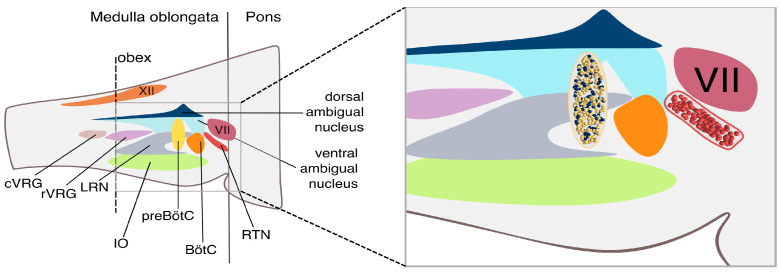 Figure 1
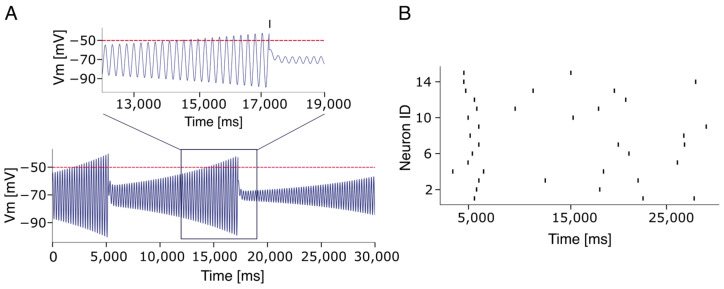 Figure 2
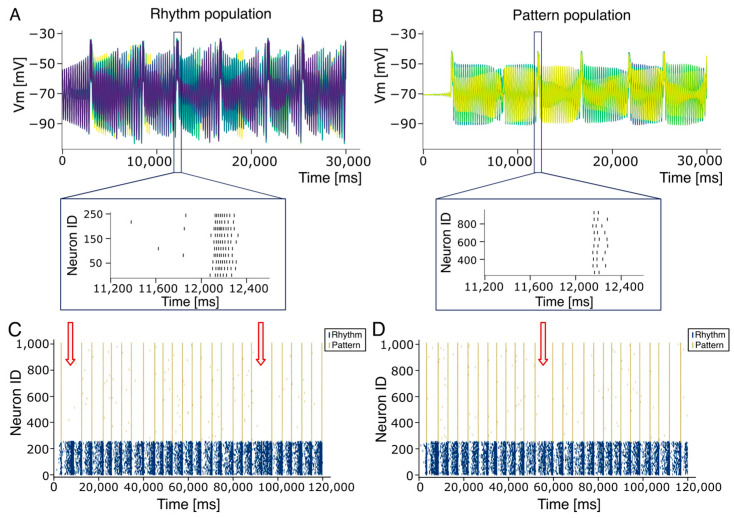 Figure 3
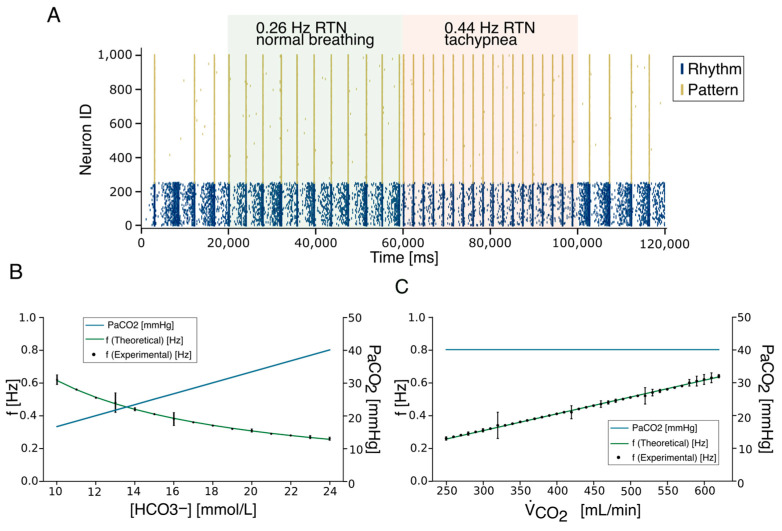 Figure 4
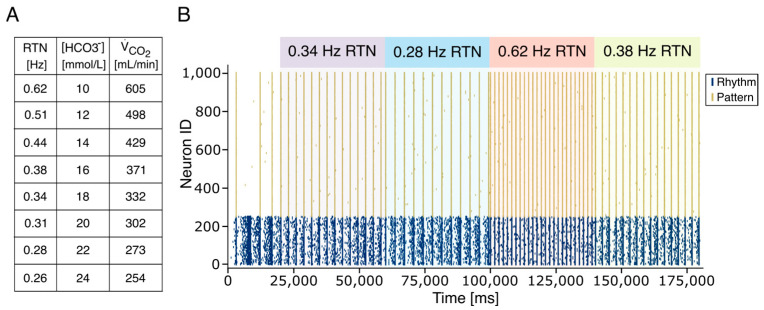 Figure 5
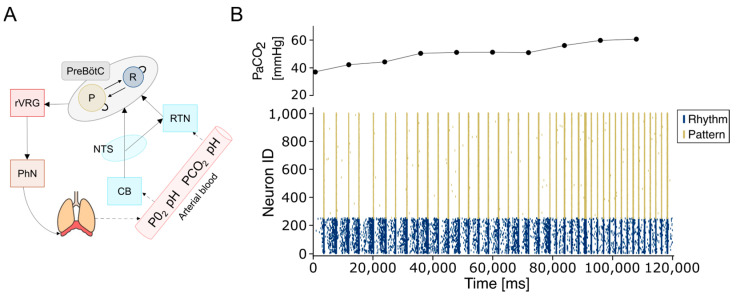 Figure 6
Peer Reviews
No public reviews on file for this paper yet. If you reviewed it on a platform where reviews are public (OpenReview, ICLR, NeurIPS, ICML), you can paste yours below so the community can read it here.
Videos
No videos yet. Explain this paper in a talk, walkthrough, or lecture? Add one.
Taxonomy
TopicsNeuroscience of respiration and sleep · Obstructive Sleep Apnea Research · Sleep and Wakefulness Research