New Insights into Potential Anti-Aging and Fatigue Effects of a Dietary Supplement from the Resveratrol Beverage in Aged SAMP8 Mice
Yu-Chien Chen, Ming-Yu Chou, Po-Hsien Li, Ying-Shen Lin, Mei-Due Yang, Ching-Hsin Chi, Ping-Hsiu Huang, Yun-Jhen Wei, Ming-Fu Wang, Chun-Yen Kuo

TL;DR
This study shows that a resveratrol-rich beverage can reduce fatigue and signs of aging in aged mice by improving physical performance and brain function.
Contribution
The study demonstrates that long-term resveratrol supplementation improves anti-aging and anti-fatigue effects in aged SAMP8 mice.
Findings
Medium- and high-dose resveratrol groups showed improved locomotion and grip strength.
Resveratrol reduced aging indices and improved learning and memory in SAMP8 mice.
Liver antioxidant activity increased and brain peroxide levels decreased in resveratrol groups.
Abstract
This study investigated the anti-fatigue and anti-aging benefits of continuous intake of resveratrol (RES)-rich beverages. Locomotion and forelimb grip strength performance were significantly improved in medium- and high-dose RES groups. In terms of aging indices, the scores for the medium- and high-dose groups were significantly lower than those of the control group. In the PAT and active shuttle avoidance tests, the three RES groups performed better than the control group. A significant increase in SOD and catalase activity in the liver and a reduction in TBARS and 8-OHdG levels in the brain were observed in the medium- and high-dose groups. Thus, supplementation with RES-rich beverages for 13 weeks significantly improved fatigue, locomotor performance, learning and memory abilities, and liver antioxidant activity and reduced brain peroxide levels in SAMP8 mice.
Genes, proteins, chemicals, diseases, species, mutations and cell lines named across the full text — each resolved to its canonical identifier and authoritative record.
Click any figure to enlarge with its caption.
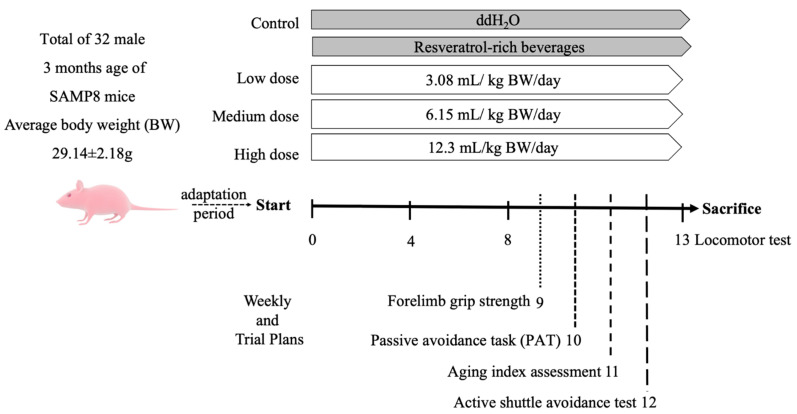 Figure 1
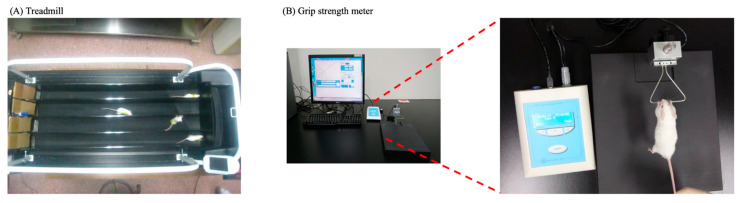 Figure 2
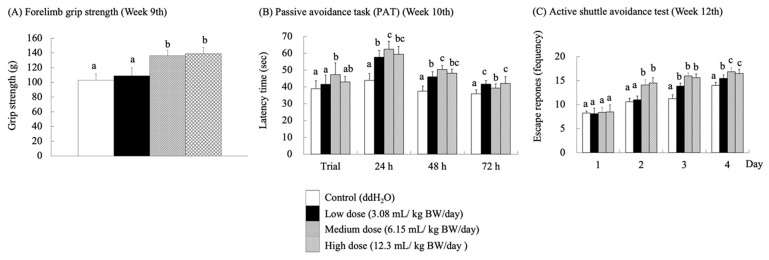 Figure 3
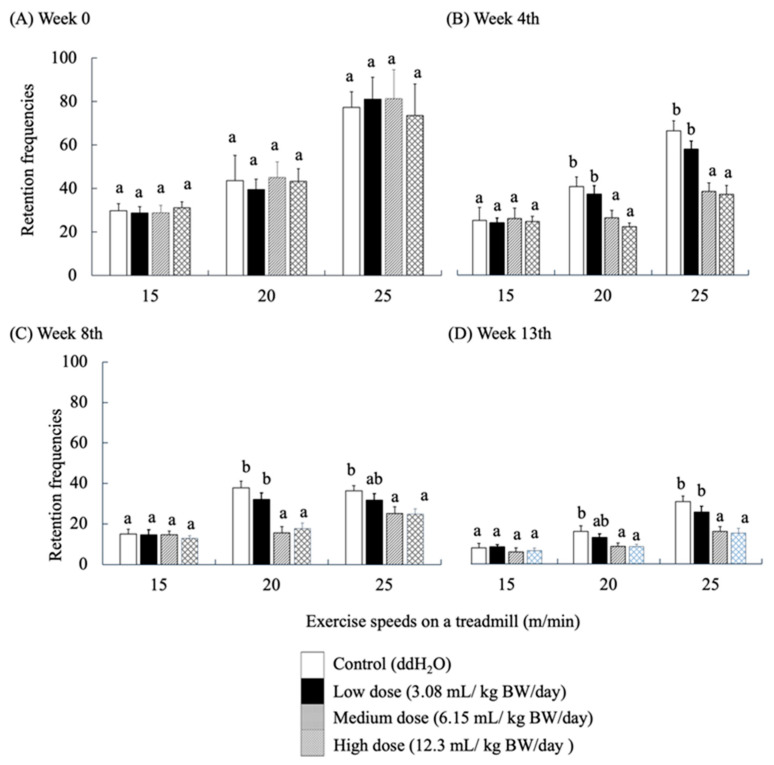 Figure 4
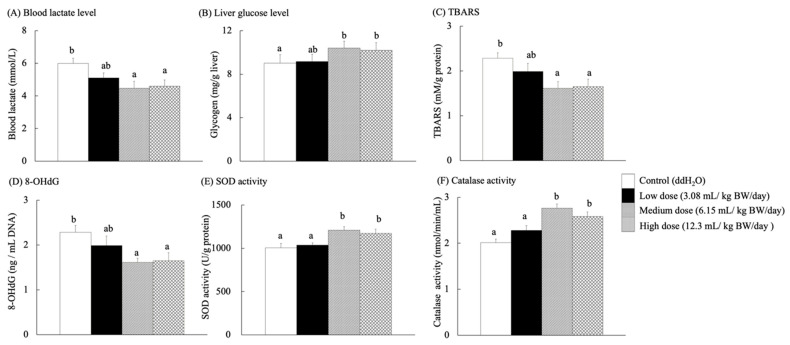 Figure 5
Peer Reviews
No public reviews on file for this paper yet. If you reviewed it on a platform where reviews are public (OpenReview, ICLR, NeurIPS, ICML), you can paste yours below so the community can read it here.
Videos
No videos yet. Explain this paper in a talk, walkthrough, or lecture? Add one.
Taxonomy
TopicsSirtuins and Resveratrol in Medicine · Muscle Physiology and Disorders · Genetics, Aging, and Longevity in Model Organisms