Implementation of a patient-focused psychosocial intervention guideline for people with severe mental illness: Cluster-randomised controlled trial
Markus Kösters, Andreas Allgöwer, Thomas Becker, Reinhold Kilian, Uta Gühne, Steffi Riedel-Heller, Alkomiet Hasan, Peter Falkai, Klemens Ajayi, Peter Brieger, Karel Frasch, Theresa Halms, Stephan Heres, Markus Jäger, Andreas Küthmann, Albert Putzhammer, Bertram Schneeweiß

TL;DR
A study tested a patient-focused guideline for psychosocial treatments in severe mental illness but found no significant boost in empowerment, though patients in the intervention group learned more about available treatments.
Contribution
This study evaluates the real-world impact of implementing a patient-focused psychosocial intervention guideline in clinical settings.
Findings
The intervention did not significantly increase patient empowerment compared to usual care.
Patients in the intervention group showed greater knowledge of available psychosocial interventions.
The pandemic and other factors like age and migration background may have influenced empowerment outcomes.
Abstract
Psychosocial interventions are vital in treating severe mental illness, yet their use remains limited, and patients often lack adequate information about them. Patient-focused versions of clinical guidelines are designed to enhance mental health literacy and inform patients about available treatments, but these resources are underutilized. This study evaluated the impact of implementing a patient-focused psychosocial intervention guideline on empowerment, knowledge, and use of psychosocial interventions among individuals with severe mental illness. Multicentre, cluster-randomised trial. The study population comprised adult patients with a severe mental disorder. The intervention group received a multimodal, structured, and protocol-led patient-focused guideline implementation, whereas the control group received treatment as usual. Data were analysed using hierarchical linear models.…
Genes, proteins, chemicals, diseases, species, mutations and cell lines named across the full text — each resolved to its canonical identifier and authoritative record.
Click any figure to enlarge with its caption.
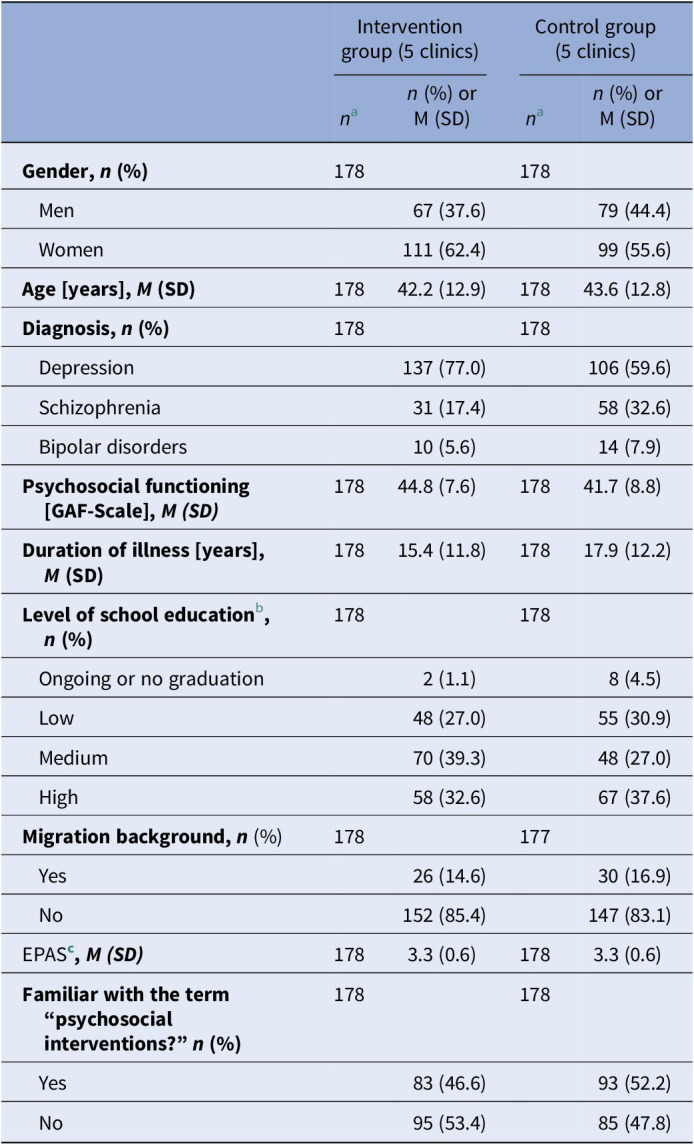 Figure 1
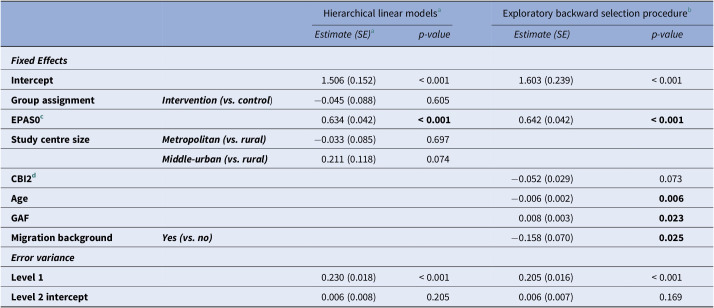 Figure 2
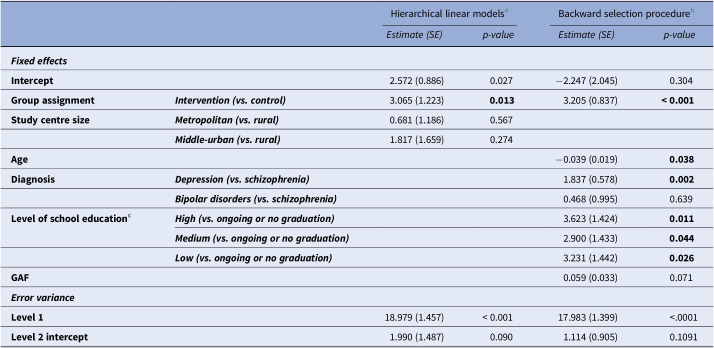 Figure 3
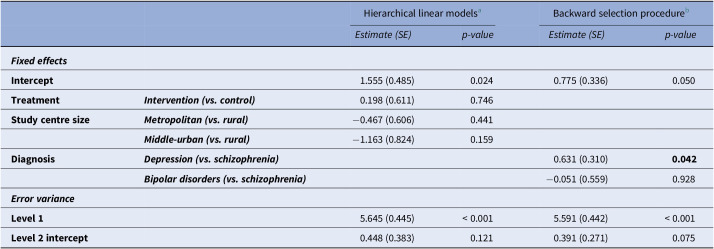 Figure 4
Peer Reviews
No public reviews on file for this paper yet. If you reviewed it on a platform where reviews are public (OpenReview, ICLR, NeurIPS, ICML), you can paste yours below so the community can read it here.
Videos
No videos yet. Explain this paper in a talk, walkthrough, or lecture? Add one.
Taxonomy
TopicsPsychiatric care and mental health services