Comparison of the antimicrobial reduction effect of photodynamic inactivation with the addition of chlorophyll and curcumin photosensitizer in Aggregatibacter actinomycetemcomitans and Enterococcus faecalis
Deny Arifianto, Suryani Dyah Astuti, Sarah Ratri Medyaz, Septia Budi Lestari, Samian Samian, Dezy Zahrotul Istiqomah Nurdin, Dita Ayu Hariyani, Yunus Susilo, Ardiansyah Syahrom, Min Wu, Suryani Dyah Astuti

TL;DR
This study compares how well curcumin and chlorophyll reduce harmful oral bacteria using light therapy, finding curcumin more effective.
Contribution
The study demonstrates that curcumin is more effective than chlorophyll in photodynamic inactivation of oral bacteria.
Findings
Curcumin achieved 89.42% reduction in E. faecalis compared to 69.30% with chlorophyll.
Curcumin achieved 89.82% reduction in A. actinomycetemcomitans compared to 64.39% with chlorophyll.
Photosensitizers significantly improved bacterial reduction compared to no PS.
Abstract
Background: Aggregatibacter actinomycetemcomitans and Enterococcus faecalis are pathogenic bacteria of the oral cavity that cause various diseases such as periodontitis and endodontics. These bacteria are easily resistant to antibiotics. Photodynamic inactivation (PDI) is a method of inactivating microorganisms that utilizes light to activate a photosensitizer agent (PS) that produces reactive oxygen species causing cell lysis. Methods: This study used the PDI method with a 405 nm diode laser at various energy density with the addition PS curcumin or chlorophyll Alfalfa, as much as 1.6 mg/ml on A. actinomycetemcomitans and E. faecalis bacteria. Results: The study on E. faecalis bacteria showed that the energy density diode laser irradiation of 1.59 J/cm² gave the percentage of E. faecalis bacteria death 36.7% without PS, 69.30% with the addition of chlorophyll Medicago sativa L and…
Genes, proteins, chemicals, diseases, species, mutations and cell lines named across the full text — each resolved to its canonical identifier and authoritative record.
Click any figure to enlarge with its caption.
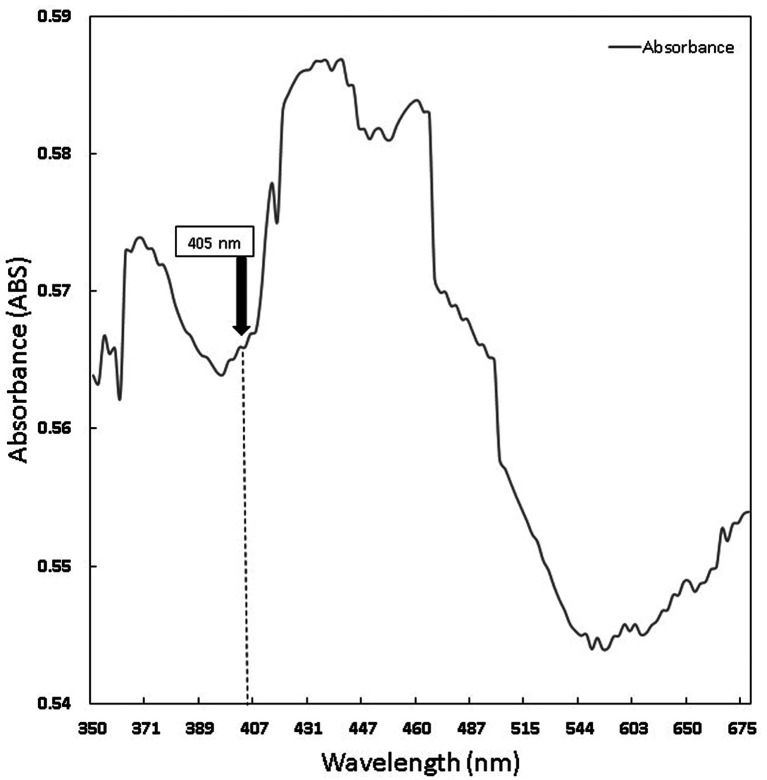 Figure 1
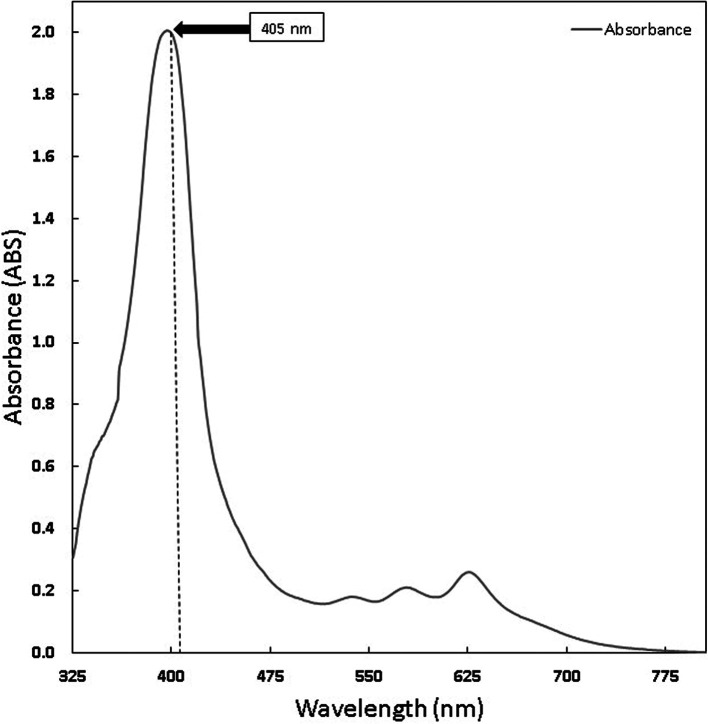 Figure 2
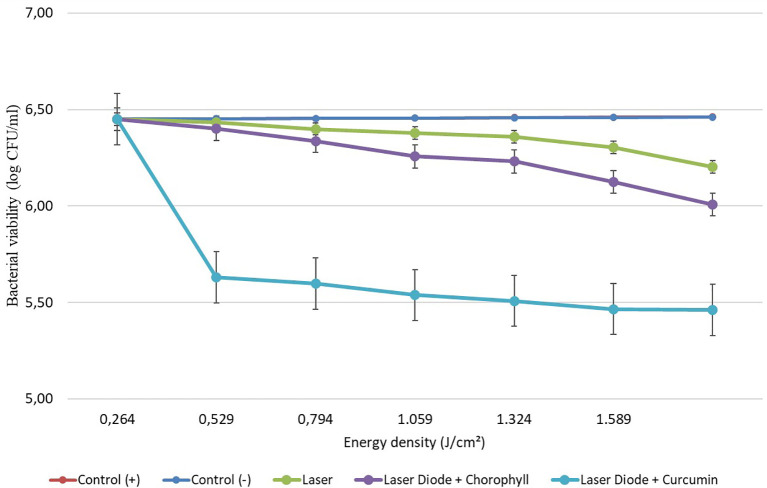 Figure 3
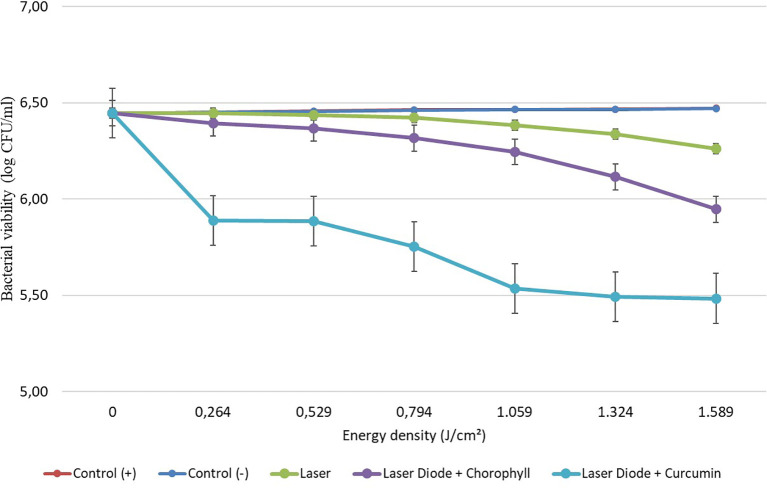 Figure 4
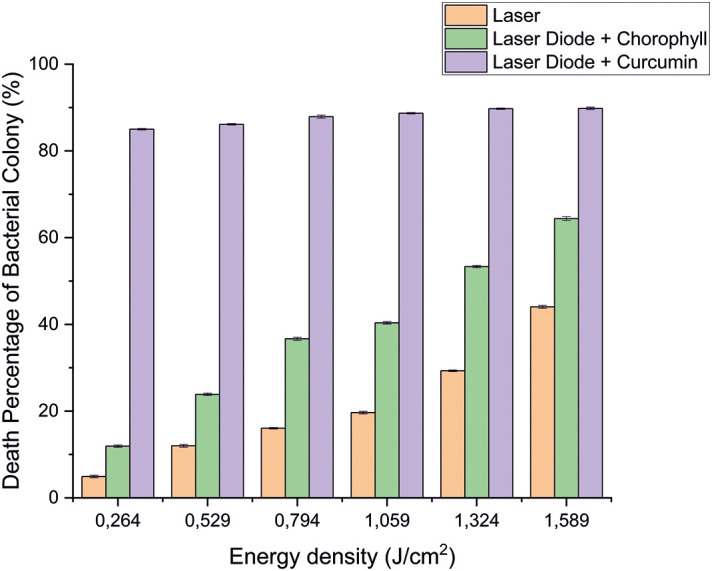 Figure 5
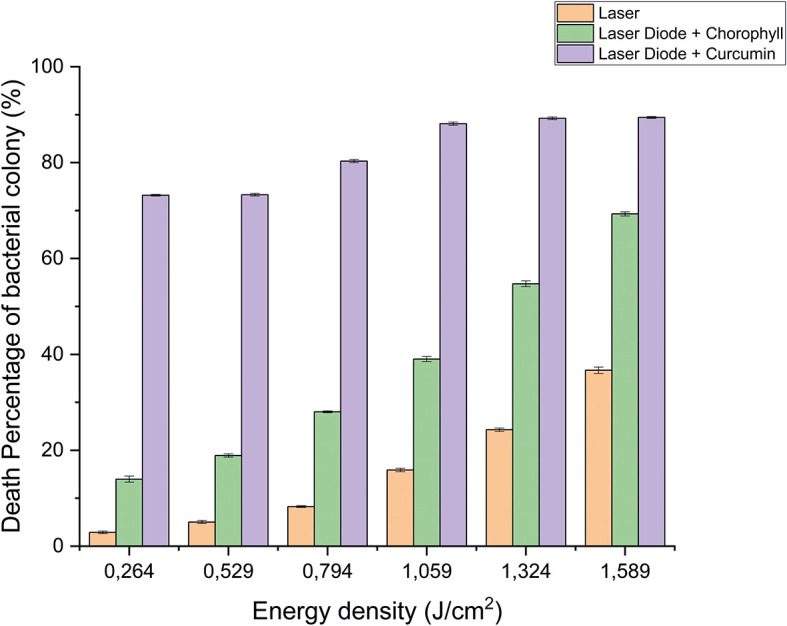 Figure 6
Peer Reviews
No public reviews on file for this paper yet. If you reviewed it on a platform where reviews are public (OpenReview, ICLR, NeurIPS, ICML), you can paste yours below so the community can read it here.
Videos
No videos yet. Explain this paper in a talk, walkthrough, or lecture? Add one.
Taxonomy
TopicsPhotodynamic Therapy Research Studies · Laser Applications in Dentistry and Medicine · Nanoplatforms for cancer theranostics