Sleep-related changes in astrocytic biomarkers are modulated by APOE ε4 genotype in cognitively unimpaired adults
Nuole Zhu, Miren Altuna, Javier Arranz, Íñigo Rodriguez-Baz, Maria Belén Sanchez-Saudinós, Laura Videla, Sílvia Valldeneu, Mireia Carrera-Vega, Sergio Romero, Juan Fortea, Alberto Lleó, Sandra Giménez, Daniel Alcolea

TL;DR
In healthy adults, sleep patterns are linked to brain fluid markers of astrocyte activity and Alzheimer’s disease risk, with these links influenced by a genetic variant called APOE ε4.
Contribution
This study reveals how sleep quality and structure are connected to biomarkers of astrocyte function and Alzheimer’s disease in cognitively healthy individuals, with APOE ε4 genotype playing a moderating role.
Findings
Lighter and more fragmented sleep is associated with higher levels of CSF YKL-40, Aβ40, pTau181, and tTau.
Deeper sleep is linked to lower levels of CSF GFAP and YKL-40.
APOE ε4 genotype moderates the relationship between sleep and astrocytic biomarkers like CSF YKL-40 and GFAP.
Abstract
Astrocytes are key regulators of sleep and neuroinflammatory responses. However, the relationship between objective sleep parameters and astrocytic fluid biomarkers in cognitively unimpaired individuals remains unclear. We examined how sleep architecture relates to astrocytic, neuroaxonal and Alzheimer’s disease-related fluid biomarkers in cognitively unimpaired adults and whether age, sex and APOE ε4 moderate these associations. This cross-sectional study included 51 cognitively unimpaired participants from the Sant Pau Initiative on Neurodegeneration cohort. One-night in-lab polysomnography was used to quantify sleep architecture, fragmentation, slow-wave activity and respiratory parameters. CSF biomarkers included glial fibrillary acidic protein (GFAP), chitinase-like-3 protein 1 (YKL-40), Aβ42, Aβ40, pTau181 and tTau; plasma biomarkers included GFAP and neurofilament light chain…
Genes, proteins, chemicals, diseases, species, mutations and cell lines named across the full text — each resolved to its canonical identifier and authoritative record.
Click any figure to enlarge with its caption.
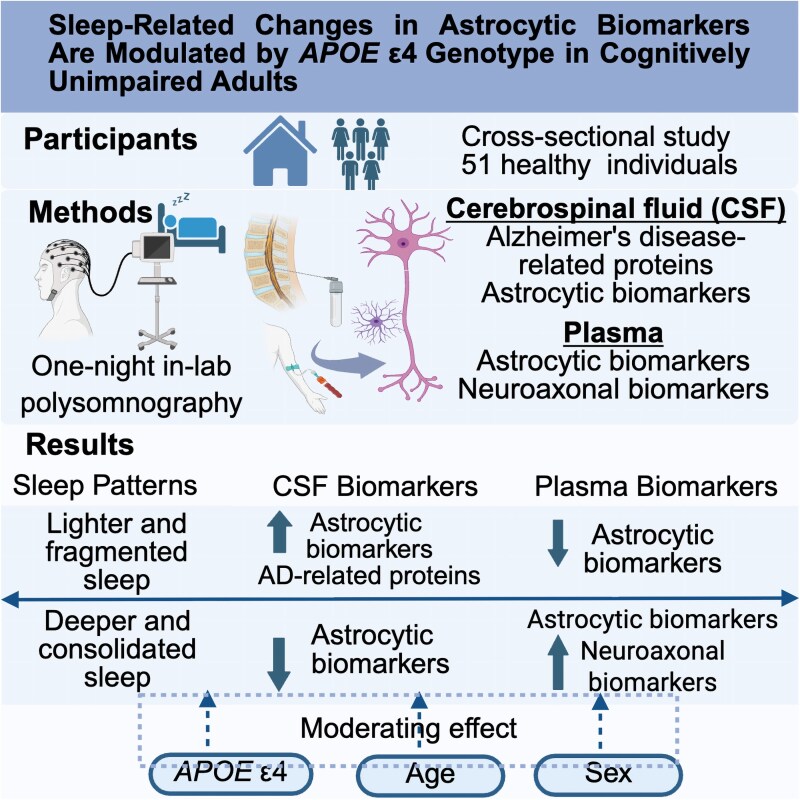 Figure 1
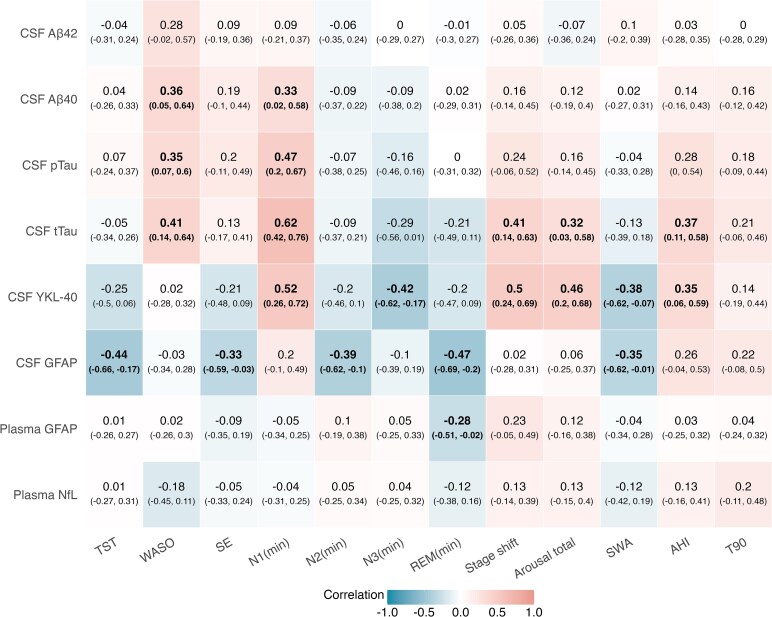 Figure 2
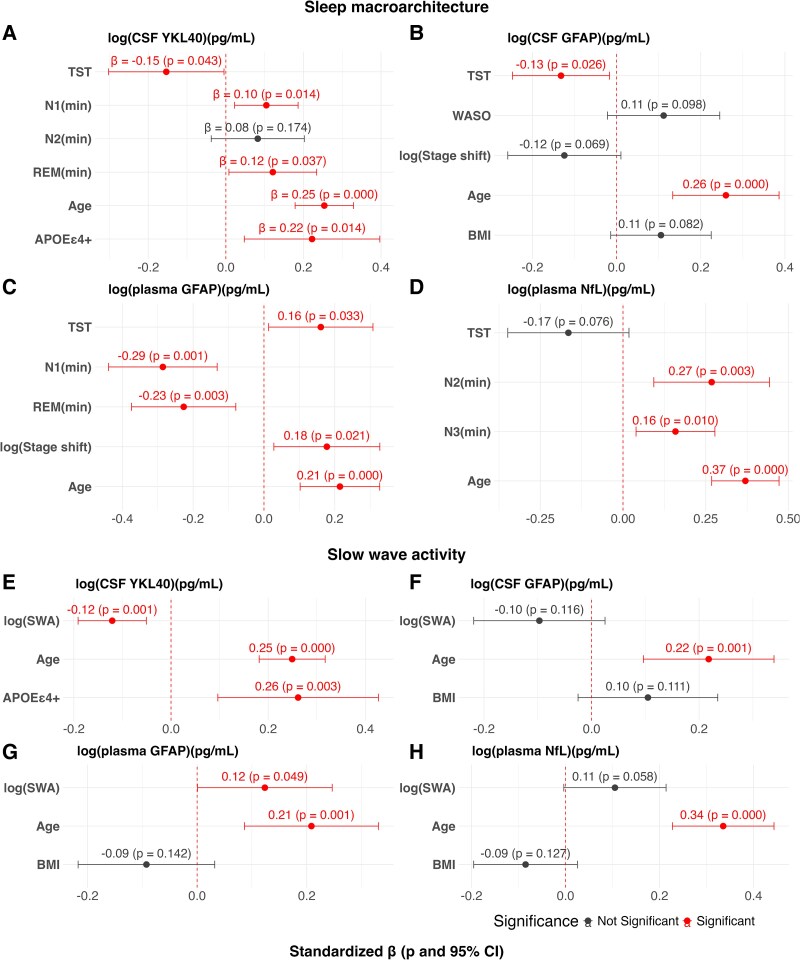 Figure 3
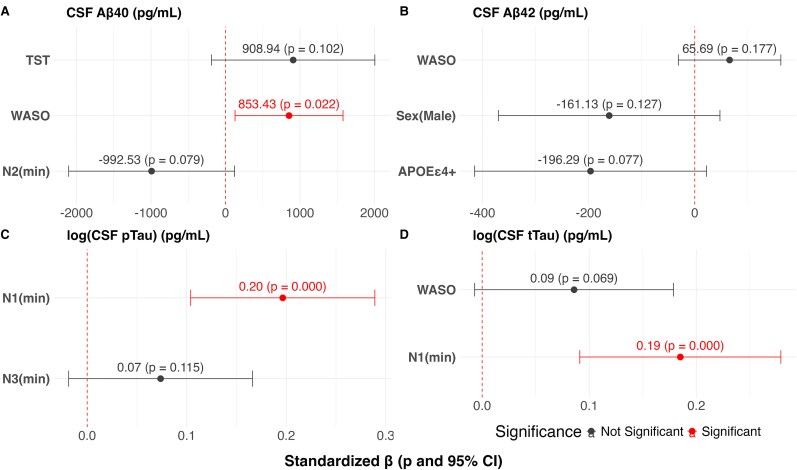 Figure 4
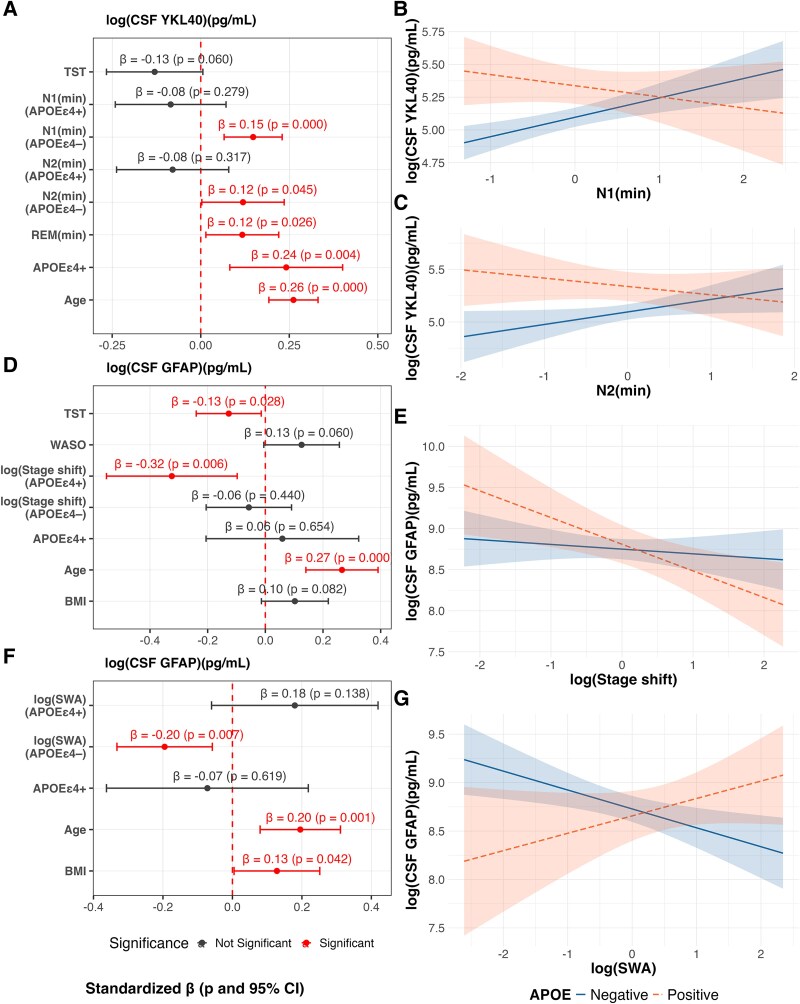 Figure 5
Peer Reviews
No public reviews on file for this paper yet. If you reviewed it on a platform where reviews are public (OpenReview, ICLR, NeurIPS, ICML), you can paste yours below so the community can read it here.
Videos
No videos yet. Explain this paper in a talk, walkthrough, or lecture? Add one.
Taxonomy
TopicsSleep and Wakefulness Research · Sleep and related disorders · Obstructive Sleep Apnea Research