Disrupting ribulose-5-phosphate metabolic flux enhances riboflavin production in Escherichia coli BL21(DE3)
Junhui Ying, Jin Lu, Qiming Liu, Yingjie Pan, Xianfeng Bao, Junjun Yin, Bing Fu

TL;DR
Scientists improved the production of riboflavin (vitamin B2) in E. coli by modifying its metabolism.
Contribution
A new metabolic engineering strategy was developed to significantly increase riboflavin production in Escherichia coli BL21(DE3).
Findings
Disrupting genes pfkA and edd-eda increased riboflavin production by 51.27% and 65.81%, respectively.
Disrupting gutQ increased production by 19.65%, while kdsD disruption had no significant effect.
The final engineered strain achieved a 287.35% increase in riboflavin titer compared to the starting strain.
Abstract
Riboflavin (vitamin B2) is an essential water-soluble vitamin. To increase its production in a previously engineered strain, R203, we employed metabolic engineering strategies to improve the supply of ribulose-5-phosphate, a key precursor. Disruption of the genes pfkA and edd-eda, which are aimed at promoting ribulose-5-phosphate generation, increased riboflavin production by 51.27% and 65.81%, respectively. To minimize the consumption of ribulose-5-phosphate, we disrupted kdsD and gutQ, both of which encode D-arabinose 5-phosphate isomerase. Only the disruption of gutQ was effective, increasing production by 19.65%, whereas kdsD disruption had no significant effect. Furthermore, disrupting yajO and inserting the pgl gene increased production by 8.65% and 18.80%, respectively. In contrast, inserting ribM, which encodes a riboflavin transporter from Streptomyces davawensis, reduced…
Genes, proteins, chemicals, diseases, species, mutations and cell lines named across the full text — each resolved to its canonical identifier and authoritative record.
Click any figure to enlarge with its caption.
 Figure 1
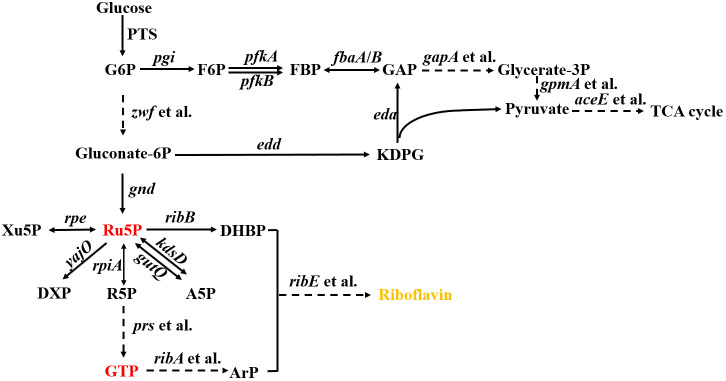 Figure 2
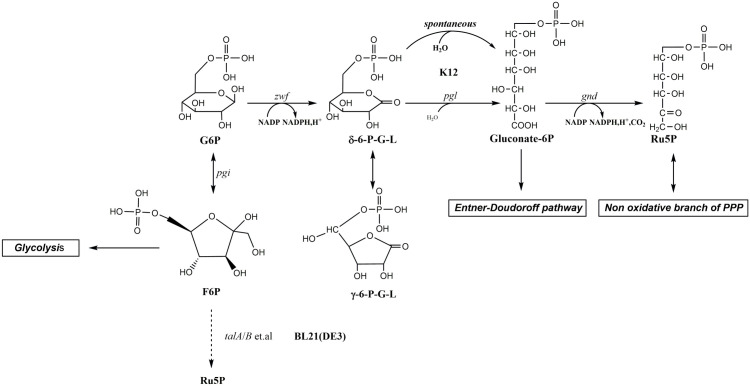 Figure 3
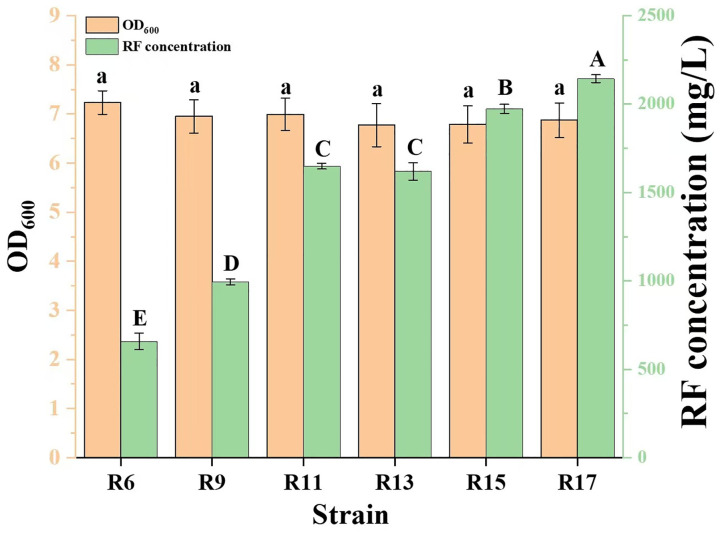 Figure 4
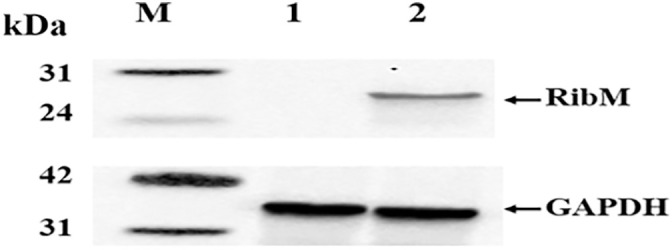 Figure 5
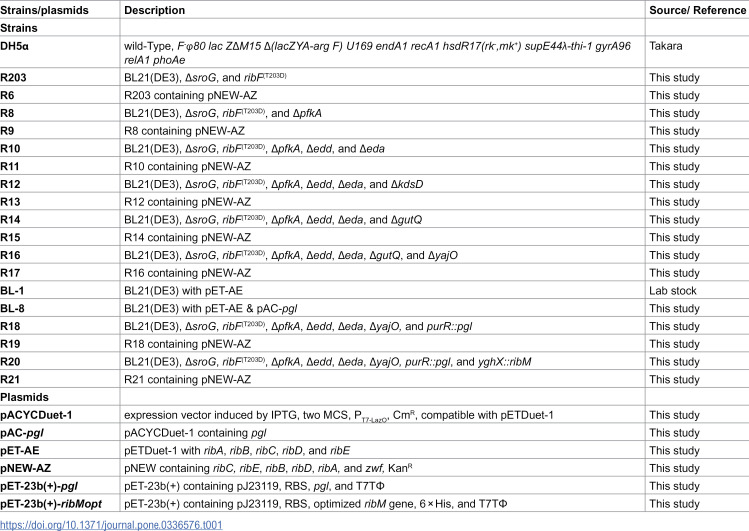 Figure 6
 Figure 7
 Figure 8
 Figure 9
 Figure 10
 Figure 11
Peer Reviews
No public reviews on file for this paper yet. If you reviewed it on a platform where reviews are public (OpenReview, ICLR, NeurIPS, ICML), you can paste yours below so the community can read it here.
Videos
No videos yet. Explain this paper in a talk, walkthrough, or lecture? Add one.
Taxonomy
TopicsMicrobial Metabolic Engineering and Bioproduction · Enzyme Structure and Function · Bacterial Genetics and Biotechnology