Non-resolving, Progressive, Non-ketotic Hyperglycemic Hemichorea-Hemiballismus Syndrome in an Elderly Male
Akash Chandani, Cyrine Cunanan, Sumathi Krishnan, Omar Rage

TL;DR
An elderly man with diabetes developed involuntary movements due to high blood sugar, which improved with treatment.
Contribution
This case emphasizes the role of metabolic factors in hemichorea-hemiballismus among elderly patients.
Findings
Hyperdensity in the right basal ganglia was observed in an elderly male with T2DM and involuntary movements.
Symptoms resolved with glycemic control and neuroleptic treatment.
The case underscores the importance of metabolic management in neurological conditions.
Abstract
Non-ketotic hyperglycemic hemichorea-hemiballismus syndrome is a rare neurological condition associated with hyperglycemia from uncontrolled diabetes mellitus. We present a case of a male patient in his late 80s with a background of T2DM who presented with a new onset of progressive involuntary movements involving the left side of his body. Imaging revealed hyperdensity in the right basal ganglia, suggestive of non-ketotic hyperglycemic hemichorea. Management included glycemic control and neuroleptic treatment, with resolution of symptoms in most cases. This case highlights the importance of considering metabolic causes of hemichorea-hemiballismus in elderly patients, glycemic control, and the correlation of these factors with quality of life.
Genes, proteins, chemicals, diseases, species, mutations and cell lines named across the full text — each resolved to its canonical identifier and authoritative record.
Click any figure to enlarge with its caption.
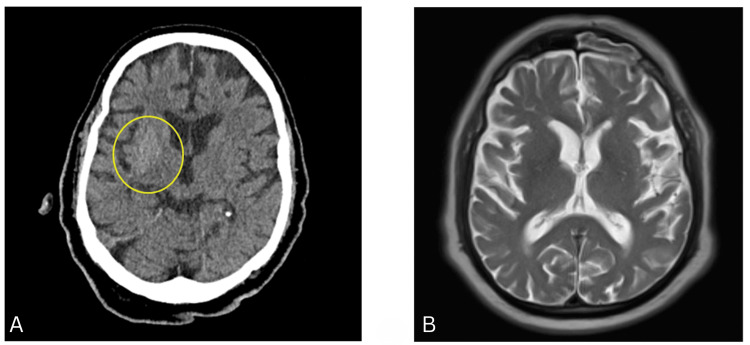 Figure 1
Peer Reviews
No public reviews on file for this paper yet. If you reviewed it on a platform where reviews are public (OpenReview, ICLR, NeurIPS, ICML), you can paste yours below so the community can read it here.
Videos
No videos yet. Explain this paper in a talk, walkthrough, or lecture? Add one.
Taxonomy
TopicsNeurological and metabolic disorders · Neurological disorders and treatments · Genetic Neurodegenerative Diseases